
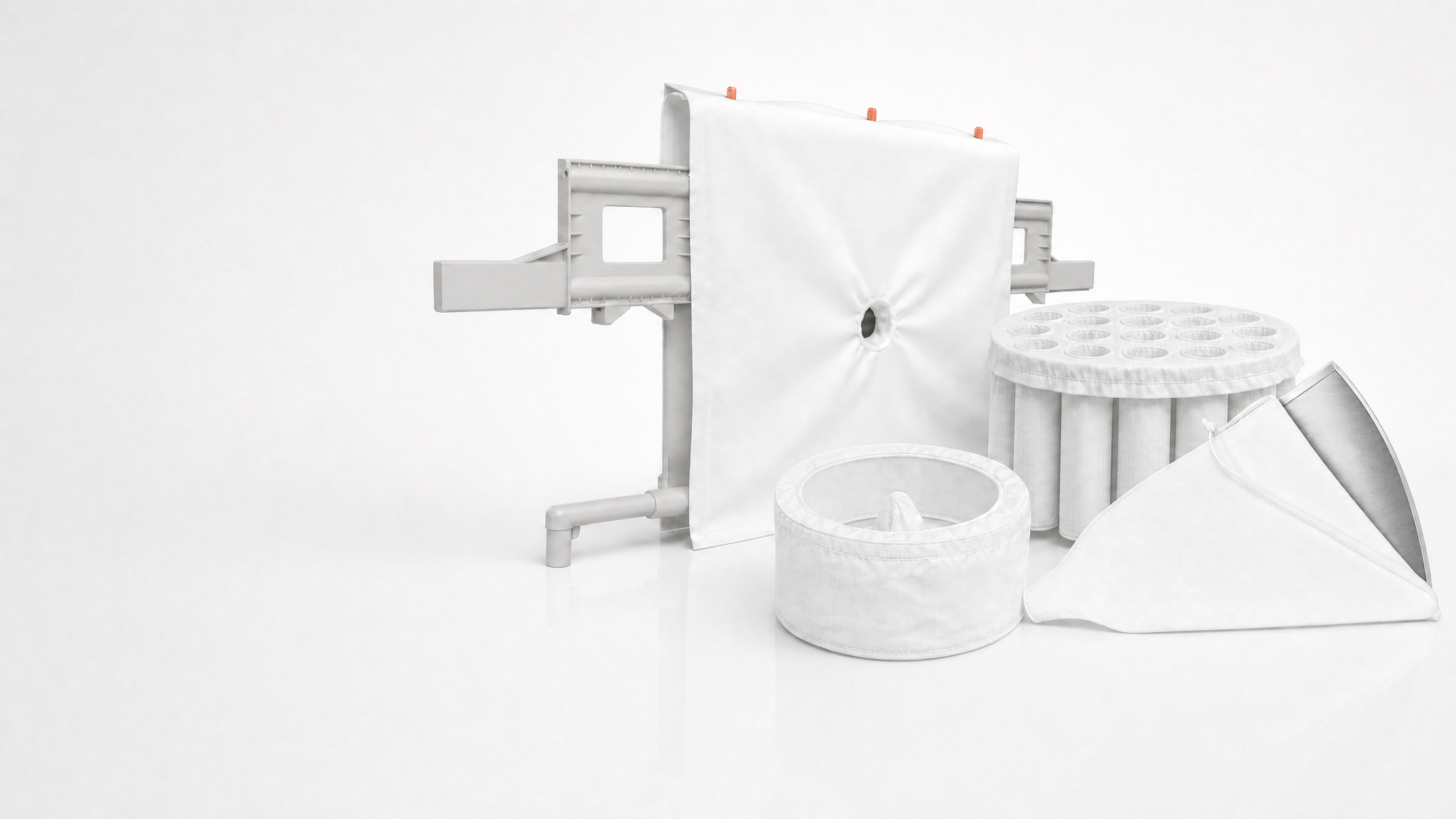
In pulp and paper mills, filter fabrics do much more than “catch solids.” They help keep pulp washing efficient, support stable black liquor filtration, and protect water treatment systems from costly upsets. For operators, the right fabric can mean better throughput, cleaner filtrate, and fewer unplanned stops.
🔑 Key Takeaways
- Filter fabrics directly affect wash efficiency, cake dryness, and filtrate clarity in paper mill operations.
- Pulp washing, black liquor handling, and wastewater treatment each place different demands on fabric design.
- Fouling, abrasion, and chemical exposure are the most common reasons for shortened fabric life.
- Matching the fabric to the machine and process conditions is the fastest way to improve uptime and reduce operating costs.
🏭 Where Filter Fabrics Fit in the Paper Mill
In a paper mill, you may see filter fabrics on a filter press, belt filter, centrifuge, or rotary disc filter. Each machine solves a different separation problem, but the fabric is always the working surface that decides how well the solids and liquids split.
That matters in three core areas:
- Pulp washing — to remove dissolved contaminants and recover useful fibers.
- Black liquor filtration — to handle aggressive, high-load streams with stable throughput.
- Water treatment — to dewater sludge and keep the mill’s water loop under control.
💡 Tip: In pulp and paper service, a fabric that runs well on day one can still fail early if it cannot handle long wet cycles, scaling, or sticky fiber fines. Always evaluate the full operating window, not just initial filtration results.
🔬 Pulp Washing: Efficiency Starts at the Fabric Surface
Pulp washing is often a balancing act between retention and drainage. If the fabric blinds too quickly, the wash water cannot pass through efficiently. If the open area is too aggressive, you risk poor solids capture and fiber loss. The goal is a stable fabric structure that supports consistent drainage while resisting plugging from fines and sticky organic matter.
Key operating challenges
- Fiber fines and fillers that migrate into the weave and reduce permeability.
- High moisture loading that slows drainage and increases cycle times.
- Repeated cleaning cycles that can weaken fabric structure over time.
Check fiber length, fines content, and temperature before selecting the fabric structure.
Choose a fabric that supports drainage without allowing excessive fiber carryover.
Track wash times, differential pressure, and cleaning frequency to spot performance drift early.
Rule of thumb: If wash performance starts dropping before the fabric looks visibly worn, the first suspect is usually blind buildup in the pore structure, not only mechanical damage.
⚗️ Black Liquor Filtration: Chemical Resistance and Stability
Black liquor is one of the toughest streams in the mill. It can be hot, alkaline, and loaded with dissolved organics and suspended solids. That means the fabric must do more than filter — it must survive continuous exposure without stretching, shrinking, or losing dimensional stability.
For these duties, operators often look at robust solutions for pressure or vacuum-driven systems such as a pressure leaf filter or vacuum filter. In some cases, a tailored RF-PLF Series pressure leaf filter fabric or RF-SP Series sparkler filter fabric may be appropriate where process conditions demand reliable retention and clean discharge.
⚠️ Caution: Hot caustic streams and elevated temperatures can accelerate hydrolysis, shrinkage, or seam failure. Do not select a fabric based only on particle retention — chemical compatibility and seam construction are just as important.
What operators should watch
- Dimensional stability after repeated hot wash cycles.
- Seam integrity under pressure and thermal stress.
- Resistance to blinding from fine carbonaceous solids.
- Ease of cleaning during shutdowns and maintenance windows.
💧 Water Treatment in Paper Mills: Dewatering Sludge Reliably
Paper mills generate sludge from primary clarification, biological treatment, and process water recovery. That sludge must be dewatered consistently, or the water loop gets overloaded and disposal costs rise. Here, filter fabrics on a belt press, filter press, or centrifuge need good release characteristics and stable wear resistance.
| Paper mill application | Typical machine | Main fabric priority | Common challenge |
|---|---|---|---|
| Pulp washing | Vacuum filter / disc filter | Drainage and fiber retention | Blinding from fines |
| Black liquor solids handling | Pressure leaf filter | Chemical and thermal stability | Caustic exposure |
| Wastewater sludge dewatering | Filter press / belt press | Cake release and durability | Drip leakage and wear |
📋 Pre-selection Checklist for Mill Operators
- What is the machine type and cycle time?
- What are the temperature and pH limits?
- How abrasive are the solids?
- Do you need faster cake release or finer retention?
- How often can the fabric be cleaned in practice?
🛠️ Common Problems: Why Fabrics Fail Too Early
Most fabric issues in pulp and paper are process-related, not just product-related. If the fabric clogs early, tears at seams, or releases cake poorly, the root cause is often a mismatch between the fabric and the actual operating conditions. You can also review related failure modes such as filter cloth clogging, short filter lifespan, and poor cake release.
- Clogging: fine fibers and pitch build up inside the structure.
- Short lifespan: abrasion, chemical attack, or heat fatigue reduce service life.
- Cake release problems: sticky sludge or poor surface finish slows discharge.
💡 Tip: If you see rising differential pressure, longer cycle times, or wetter cakes, inspect the fabric before changing operating chemistry. Many mills recover performance with a better-suited weave or permeability level.
For mills looking to streamline selection, it helps to find and configure the right filter fabric with our Solution Finder. You choose your filtration machine, answer a few operating questions, and receive a pre-filled, non-binding specification request for the most suitable fabric concept.
✅ Practical Takeaways for Better Mill Performance
The best fabric choice in pulp and paper service is the one that balances retention, drainage, chemical resistance, and cleanability. That balance changes depending on whether you are washing pulp, filtering black liquor, or dewatering wastewater sludge.
- Use the machine type as your first filter for selection.
- Match fabric openness to fines content and throughput target.
- Validate chemical resistance for caustic, heat, and cleaning agents.
- Track cake release and blinding as early warning signs.
📩 Need Help Choosing the Right Fabric?
Our technical team at R+F FilterElements can help you find the perfect filter fabric for your specific application. Get in touch for a free consultation — we will recommend the right solution based on your machine, process, and operating conditions.
Or use our Solution Finder to find and configure the right filter fabric online and receive a pre-filled, non-binding specification and inquiry for your paper mill process.