
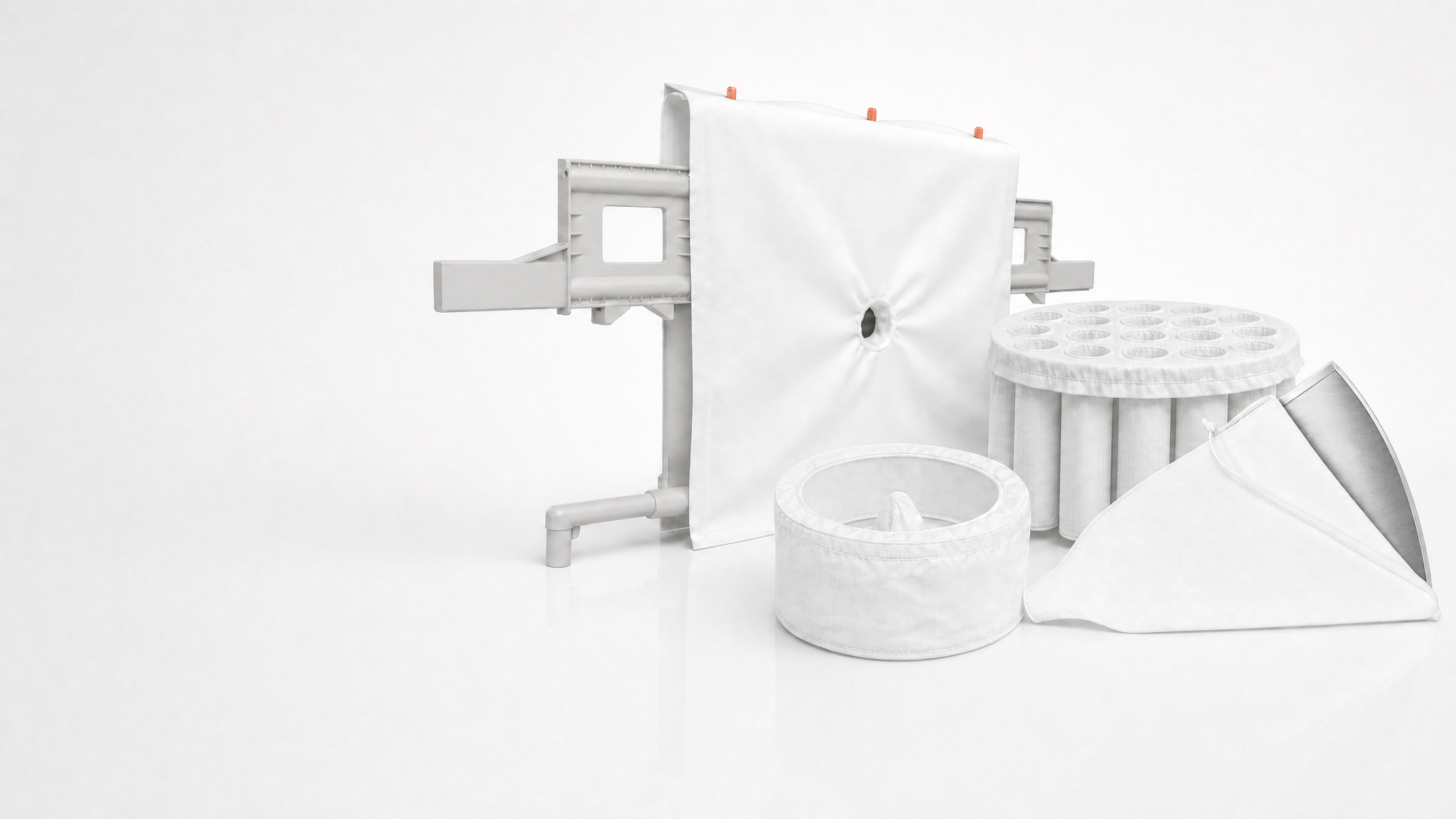
Application
Cement & Bulk Solids
Air slide fabrics, fluidisation textiles, and conveying media for cement plants, alumina refineries, and powder handling. Controlled air permeability for reliable, energy-efficient material transport.
The Challenge
Cement plants and bulk solids operations rely on gravity-assisted pneumatic conveying to transport powders like cement clinker, raw meal, fly ash, and alumina. Air slide systems use a permeable fabric membrane to distribute low-pressure air evenly beneath the material, creating a fluidised layer that flows by gravity along an inclined trough.
The fabric is the critical component: it must provide precisely controlled air permeability, withstand temperatures up to 220°C, resist abrasion from sharp mineral particles, and maintain consistent performance over years of continuous operation. Poor fabric selection leads to uneven fluidisation, material blockages, excessive air consumption, and costly downtime.
Typical Applications
Key Fabric Requirements
Air slide and conveying fabrics must meet strict performance parameters to ensure reliable material flow.
Controlled Air Permeability
Precisely engineered airflow rates (typically 3–10 m³/m²/min at 20 mbar) ensure uniform fluidisation across the entire slide length without channelling or dead zones.
Temperature Resistance
Cement and alumina processes involve hot materials up to 220°C. Fabrics must maintain dimensional stability and permeability at elevated temperatures without degradation.
Abrasion Resistance
Cement clinker and mineral particles are highly abrasive. High-tenacity polyester and aramid constructions provide extended service life in demanding environments.
Consistent Permeability
Uniform air distribution requires consistent permeability across the entire fabric. Tight manufacturing tolerances ensure even fluidisation and prevent material flow problems.
Anti-Static Properties
Powder conveying generates electrostatic charge. Antistatic treatments and conductive fibres prevent spark ignition — critical for ATEX zones in cement and chemical plants.
Long Service Life
Air slides run continuously. Premium fabrics maintain their air permeability for 5–10 years, minimising maintenance stops and replacement costs.
How Air Slide Conveying Works
Understanding the principle helps select the right fabric for your application.
Air Supply
Low-pressure air (10–50 mbar) is fed into the lower chamber of the air slide trough beneath the permeable fabric membrane.
Fluidisation
Air passes through the fabric uniformly, aerating the powder above. The material becomes a pseudo-fluid that flows by gravity along the inclined trough.
Gravity Transport
The fluidised material slides smoothly along the trough at 2–5° inclination — no moving parts, low energy, minimal wear. The fabric controls the entire process.
R+F Products for Cement & Bulk Solids
Precision-engineered fabrics for pneumatic conveying, fluidisation, and dust collection.
RF-AS Series
Air Slide Fabrics
Polyester fluidisation fabrics with controlled air permeability for cement, alumina, and bulk powder conveying in air slide systems.
Learn MoreRF-FBD Series
Fluid Bed Fabrics
Air distribution fabrics for fluid bed coolers and dryers in cement and mineral processing plants.
Learn MoreRF-FF Series
Filter Press Fabrics
For dewatering cement slurries, calcium carbonate, and mineral suspensions in filter presses.
Learn MoreMachines & Equipment
We supply fabrics for all key equipment in cement and bulk solids handling.
Related Challenges
Explore how our fabrics solve common problems in cement and bulk solids operations.
Antistatic / ATEX Compliance
Preventing electrostatic ignition in powder conveying and dust-laden environments.
Read MoreFilter Cloth Clogging
Maintaining permeability and flow rates in dust-laden and fine particle environments.
Read MoreShort Filter Lifespan
Extending fabric service life under abrasive mineral and cement conditions.
Read MoreNeed air slide fabrics or conveying textiles for your plant?
Tell us your material, temperature, and conveying requirements — we will recommend the right fabric specification.
Send Inquiry