
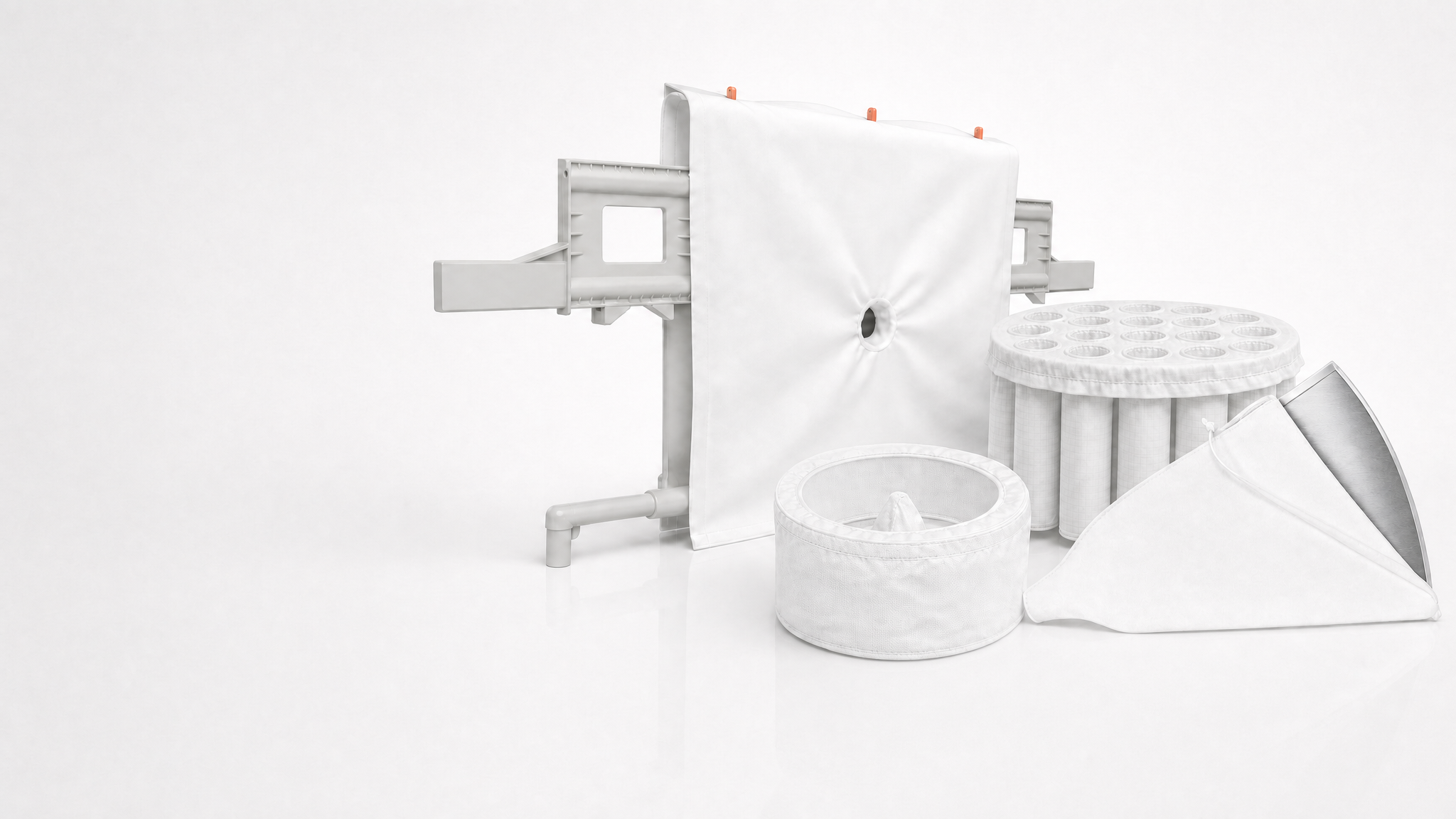
In flue gas desulphurisation, gypsum dewatering is not just a side step — it decides whether you leave the plant with a saleable by-product or a wet, contaminated cake that is costly to handle. For operators of wet limestone scrubbers, the right filter cloth can make a measurable difference in moisture content, throughput, and gypsum purity.
🔑 Key Takeaways
- FGD gypsum quality depends on efficient solid-liquid separation after wet limestone scrubbing.
- Horizontal belt filters are the most common dewatering machine in power-plant FGD lines; filter presses are used in smaller or specialised installations.
- Fabric choice affects cake moisture, chloride washout, abrasion resistance, and cloth life.
- R+F RF-BF Series belt filter fabrics are designed for demanding gypsum dewatering duty in power plants.
Power-plant operators know the FGD section is only as stable as the dewatering step downstream. If the gypsum cake carries too much water or too many dissolved salts, it affects transport, storage, and downstream use in cement and bulk-solids applications.
💡 Tip: When gypsum quality starts drifting, check the cloth first: fine blinding, poor wash efficiency, and uneven drainage often show up before the process alarms do.
🏭 How Wet Limestone FGD Produces Gypsum
In a wet limestone scrubber, flue gas passes through an absorber where sulfur dioxide reacts with limestone slurry. The process produces calcium sulfite/sulfate solids, and with oxidation the target product is gypsum (CaSO4·2H2O). The dewatering train then separates the gypsum crystals from the mother liquor so the plant can recover a manageable, stackable cake.
What the operator sees in practice
- Higher liquid load after absorber blowdown and oxidation control changes
- Fine crystal fractions that can block fabric pores
- Chlorides and soluble salts that must be washed out to meet product specs
For a process overview and related equipment context, see belt filter machines and chemical industry filtration applications.
🔬 Why Gypsum Quality Matters
FGD gypsum is not all the same. For wallboard producers, consistency is critical: moisture, chloride content, and crystal cleanliness influence handling, board setting behaviour, and quality control. For cement use, the main concern is stable chemistry and reliable feed characteristics.
In both cases, the cloth can influence whether you are producing a clean, well-drained cake or a wet product with excessive residual liquor. If cake release is poor, see our guidance on cake release problems.
⚙️ Belt Filters vs. Filter Presses in FGD
Horizontal belt filters are the most common solution in FGD gypsum dewatering because they combine continuous operation with good wash performance and manageable maintenance. Filter presses are less common, but they can be useful in smaller plants or where batch operation fits the process layout.
| Aspect | Horizontal Belt Filter | Filter Press |
|---|---|---|
| Operation | Continuous | Batch |
| Typical fit | Large power plants, steady gypsum flow | Smaller plants, intermittent duty |
| Wash efficiency | Very good for chloride reduction | Good, depends on cycle design |
| Fabric wear | High abrasion exposure | High pressure and cake-release stress |
| Operator priority | Drainage stability and cloth life | Filtrate clarity and easy release |
⚠️ Caution: In FGD service, a cloth that looks “fine” after installation can still fail early if it cannot handle abrasive gypsum crystals and chloride-rich liquor. Short life often starts with micro-blinding and poor washout.
🛠️ Fabric Selection Challenges in FGD Gypsum Dewatering
FGD is a harsh environment for filter fabrics. The slurry is abrasive, mildly acidic, and often chloride-bearing. That combination demands a fabric structure that balances permeability, surface cleanability, and mechanical strength.
Key stress factors
- Abrasive gypsum crystals: they wear the yarn structure and can polish the surface over time.
- Acidic slurry (pH 4–6): chemical resistance matters, especially during extended campaigns.
- Chloride content: can accelerate corrosion-related issues around seams, supports, and hardware.
- Fine solids distribution: promotes pore blocking and slower drainage.
For operators dealing with premature blinding, see filter cloth clogging and short filter lifespan.
📋 FGD cloth selection checklist
- Match fabric permeability to the required cake moisture target
- Confirm chemical resistance for pH 4–6 slurry conditions
- Check abrasion resistance for gypsum crystal load
- Review seam and edge design for continuous belt duty
- Verify washability and anti-blinding performance
- Coordinate fabric choice with wash water quality and spray pattern
💡 Belt Life Optimisation Strategies
Extending belt life is not only about buying a stronger fabric. It is about tuning the whole filtration package: slurry conditioning, wash water, tensioning, tracking, and cleaning frequency.
Keep absorber operation steady so the crystal size distribution does not swing from fine to coarse.
Use enough wash water and correct spray impingement to remove chlorides without over-saturating the cloth.
Mis-tracking and over-tensioning shorten life faster than many operators expect.
Do not wait for throughput loss; preventive cleaning protects drainage and cake release.
Rule of thumb: If the belt needs more wash water just to keep performance stable, the cloth is already telling you it is time to review weave, permeability, or replacement interval.
For belt-focused solutions, explore R+F RF-BF Series belt filter fabrics. If your plant uses batch dewatering instead, RF-FF Series filter press fabrics are a better starting point for selection.
To configure the right option online, you can find and configure the right filter fabric with our Solution Finder and send a pre-filled, non-binding inquiry based on your machine and operating conditions.
✅ R+F Support for FGD Power Plants
R+F FilterElements supplies engineered filter fabrics for demanding FGD duty, with a focus on belt filters in power plants. The goal is practical: stable drainage, predictable cake moisture, and long service life under abrasive, acidic conditions.
When you work with us, we look at the whole application, not just the machine name:
- type of absorber and oxidation system
- wash-water arrangement and chloride target
- cake discharge behaviour
- desired gypsum end use
If you operate a similar solid-liquid separation step in mining or minerals processing, see our mining filtration applications and related filter press machine guidance.
For more demanding dewatering environments, our engineers can also help you compare belt filter, disc filter, and pressure leaf options, depending on your process line and maintenance strategy.
📩 Need Help Choosing the Right Fabric?
Our technical team at R+F FilterElements can help you find the perfect filter fabric for your specific application. Get in touch for a free consultation — we will recommend the right solution based on your machine, process, and operating conditions.
If you want a fast starting point, use our Solution Finder to configure the right filter fabric online and receive a pre-filled, non-binding specification and inquiry for your FGD system.