
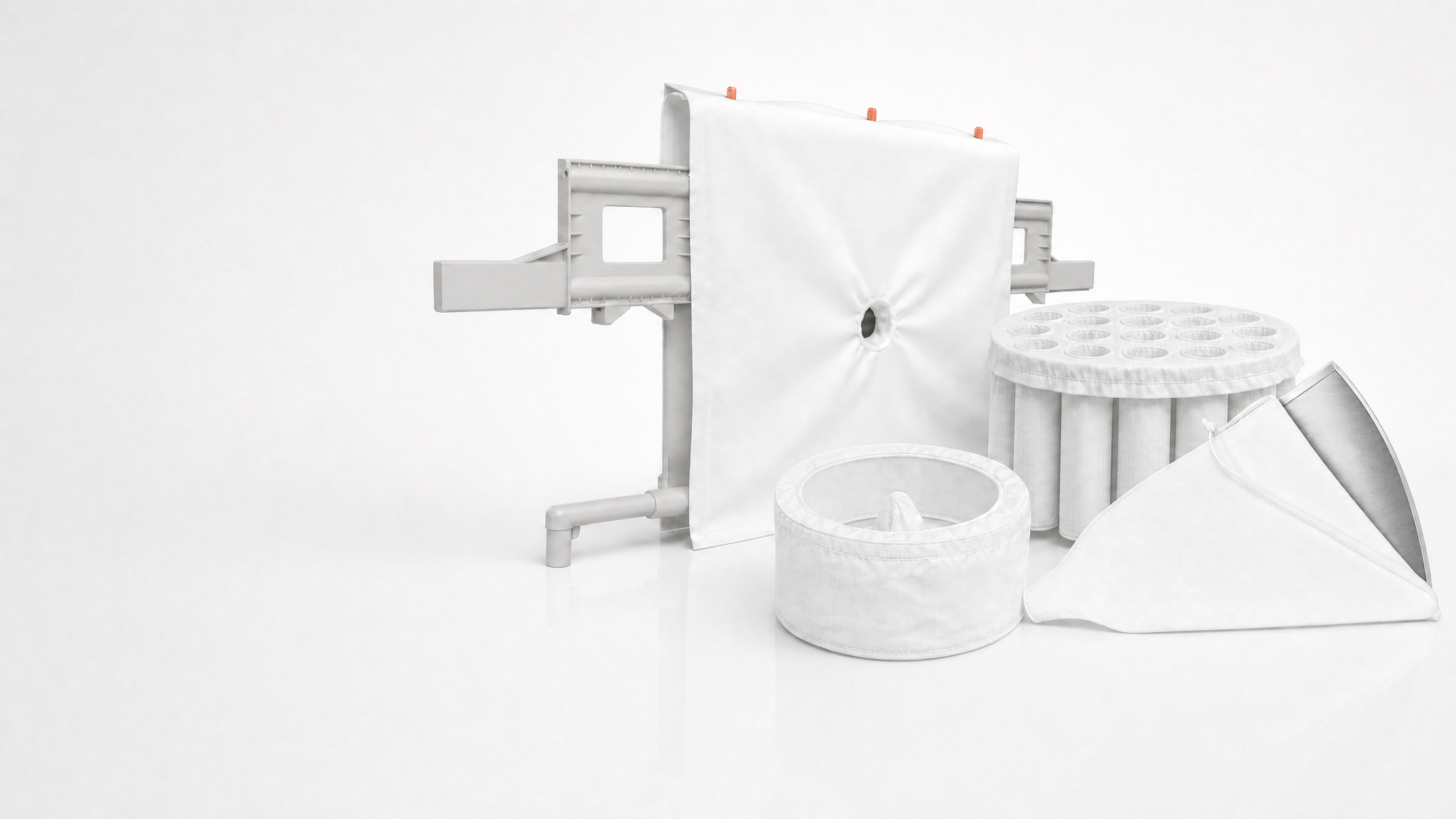
Vegetable oil winterisation is a critical finishing step when you need crystal-clear edible oil with low wax content and stable appearance in storage. In practice, the process is simple: cool the oil so waxes crystallise, then remove those crystals efficiently without slowing the line or compromising food safety.
🔑 Key Takeaways
- Winterisation removes wax crystals from sunflower, corn, and rice bran oil after controlled cooling.
- Fine-retention, food-grade filter fabrics help maintain clarity while keeping filtration rates practical.
- Pressure leaf filters and sparkler filters are the most common machines for this duty; filter presses are used in some setups.
- R+F PLF and SP series fabrics are designed for excellent cake release, clean discharge, and compliance-friendly operation.
For operators, the main challenge is balancing clarity, throughput, and cake release. If the wax crystals are too fine, filtrate flow drops fast, the filter cakes blind prematurely, and the cycle time climbs. That is why fabric selection matters as much as cooling strategy, especially in pressure leaf filters, sparkler filters, and selected filter press installations.
⚙️ How Vegetable Oil Winterisation Works
Winterisation is a controlled crystallisation step used to improve the cold stability and visual clarity of edible oils. The oil is first cooled to a temperature where waxes and higher-melting triglycerides form crystals. Those crystals are then separated by filtration before the oil moves to polishing, storage, or filling.
Typical operating sequence
Lower the temperature gradually so waxes crystallise uniformly instead of forming hard-to-filter fines.
Allow enough residence time for wax crystals to grow large enough to be retained efficiently.
Use a food-grade filter fabric with fine retention and strong cake release to recover clear oil.
In real plant operation, the quality of the crystal structure determines everything downstream. Small, sticky crystals can clog the medium quickly, so fabrics for winterisation must combine fine retention with low adhesion and reliable dimensional stability.
💡 Tip: Better crystal growth usually means easier filtration. If your cycle time is too long, check cooling rate, hold time, and whether your fabric surface is promoting wax release or premature blinding.
🏭 Common Oils and Equipment Used in Winterisation
Sunflower oil is the classic winterisation duty, but corn oil and rice bran oil also benefit from wax removal and clarity improvement. Each oil behaves a little differently, so the same fabric is not always the best choice across all products or temperatures.
| Oil type | Main issue | Typical filtration challenge | Operator priority |
|---|---|---|---|
| Sunflower oil | Wax haze at low temperatures | Fine crystal load and gradual blinding | Clear filtrate and good cake release |
| Corn oil | Cold stability and appearance | Moderate throughput with fine solids | Consistent flow and low drip loss |
| Rice bran oil | High wax and impurity load | Heavier cake formation and longer cycles | Robust retention and clean discharge |
Most winterisation lines use pressure leaf filters or sparkler filters because they handle large surface areas and can support either direct filtration or precoat operation. In some plants, a filter press is used where batch operation fits the process or where cake handling is already standardised.
🔬 Fabric Requirements for Wax Removal
The best winterisation fabrics are typically made from food-grade PP or PET and selected for stable performance in cold, oily service. For edible oil polishing, the fabric must retain fine wax crystals without trapping excessive oil in the cake.
📋 Fabric selection checklist
- Food-contact suitable material: PP or PET
- Fine retention in the 1–20 µm range
- Excellent cake release for wax crystals
- Low oil retention in the cake
- Compliance with FDA and EU 1935/2004
- Stable seam and edge construction for clean operation
⚠️ Caution: If cake release is poor, operators often increase pressure or extend cycle time to compensate. That can reduce throughput, raise residual oil losses, and make cleaning more difficult.
For many operators, the practical answer is to test both modes on the actual oil. If you are comparing RF-PLF Series pressure leaf filter fabrics and RF-SP Series sparkler filter fabrics, the best result usually comes from matching weave structure, permeability, and surface release behavior to the exact wax crystal profile.
🛠️ Operator Challenges: Throughput, Release, and Cleaning
Winterised oils are unforgiving when the fabric is not right. Fine wax crystals can seal the surface quickly, and once blinding starts, the pressure rises while flow falls. In practice, the operator sees longer cycles, more frequent cloth washing, and more variability in filtrate clarity.
- Slow filtration rates: caused by very fine crystals and dense cakes.
- Poor cake release: leads to wax carryback and extra downtime.
- Frequent cleaning: often needed when surface finish is too sticky.
- Oil losses in cake: increase if the cake holds too much entrained liquid.
Rule of thumb: If wax cake release is difficult by air blow or vibration alone, the fabric surface is probably too adhesive for your oil and temperature window.
That is where the find and configure the right filter fabric with our Solution Finder becomes especially useful. You can select your machine, operating conditions, and process goals, then receive a pre-filled, non-binding specification request for your winterisation line.
✅ Why R+F PLF and SP Series Work Well
For edible oil winterisation, the R+F PLF Series and SP Series are strong choices because they are built for fine retention, clean discharge, and repeatable operation in pressure leaf and sparkler systems. That matters when your plant is running around the clock and every extra minute of filter downtime affects throughput.
These fabrics are especially useful when you need:
- Stable retention of wax crystals without excessive pressure build-up
- Fast, clean cake release after each batch or cycle
- Food-contact suitable material selection for edible oil service
- Reliable operation across sunflower, corn, and rice bran oil applications
If you also use batch equipment elsewhere in the plant, compare winterisation requirements with your nutsche filter or chemical industry filtration standards to keep maintenance, cleaning, and validation practices aligned.
📩 Need Help Choosing the Right Fabric?
Our technical team at R+F FilterElements can help you find the perfect filter fabric for your specific application. Get in touch for a free consultation — we will recommend the right solution based on your machine, process, and operating conditions.
Or use our Solution Finder to find and configure the right filter fabric online and receive a pre-filled, non-binding specification and inquiry for your winterisation setup.