
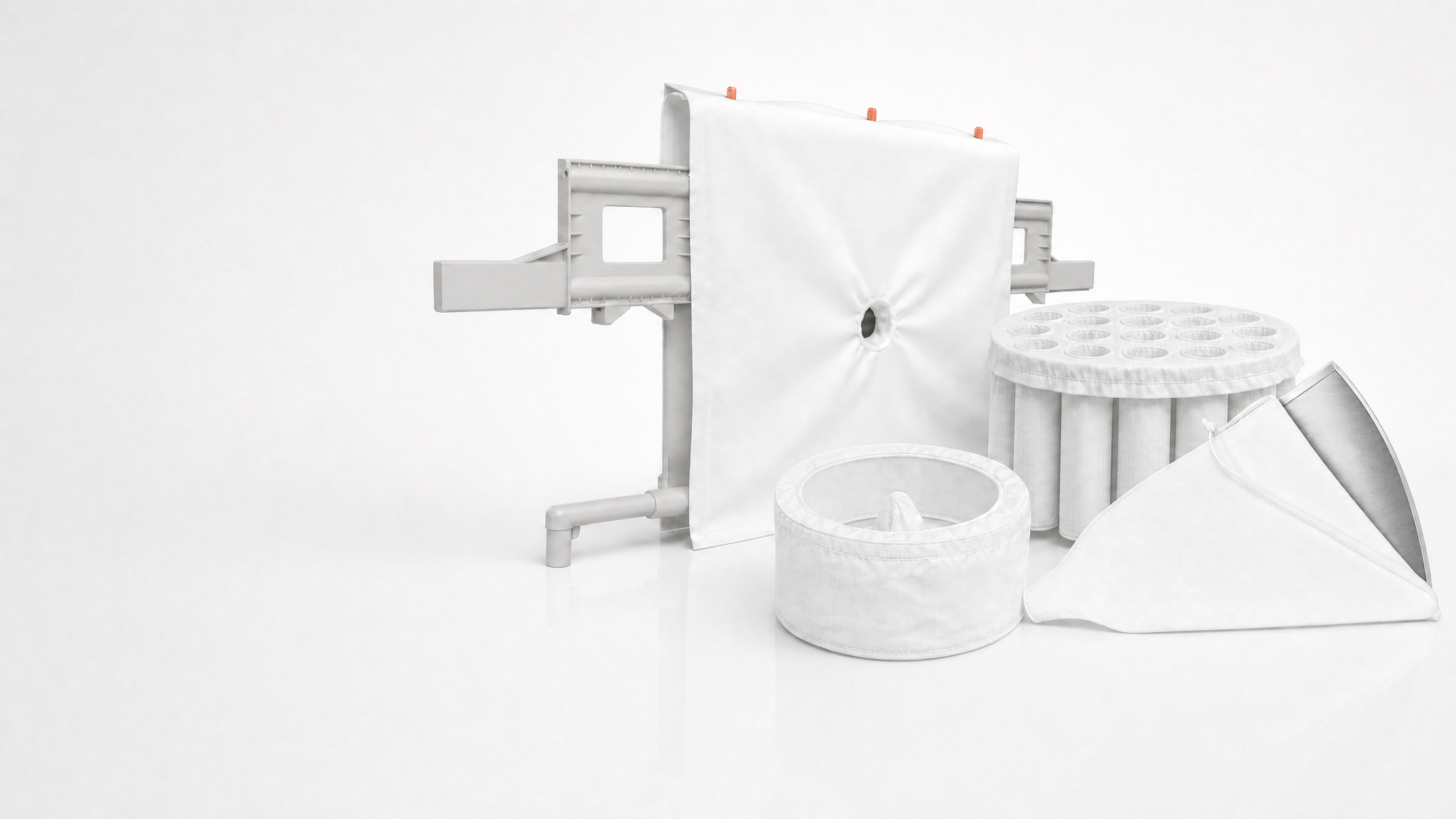
BHS-Sonthofen plants often run a mix of pressure and vacuum equipment, which means the filter media must match very different mechanical and process demands. If you operate a filter press, vacuum filter, centrifuge, or belt filter, having one compatible source for fabrics can simplify maintenance, reduce downtime, and improve consistency across units.
🔑 Key Takeaways
- One compatible supplier can cover multiple BHS-Sonthofen machine types with matched filter fabrics.
- Pressure and vacuum filtration need different fabric properties, so machine-specific selection matters.
- R+F can support operators with a Solution Finder to find and configure the right filter fabric online.
- Choosing the right media can improve cake release, throughput, and service life.
🏭 Why one source matters in a mixed BHS plant
Many plants do not run just one BHS-Sonthofen machine. A site may combine a filter press in the process area with a vacuum filter in a separate line, or pair solid-liquid separation with downstream drying and solids handling. In that setup, spare parts management becomes easier when one supplier can cover the full range of compatible filter media.
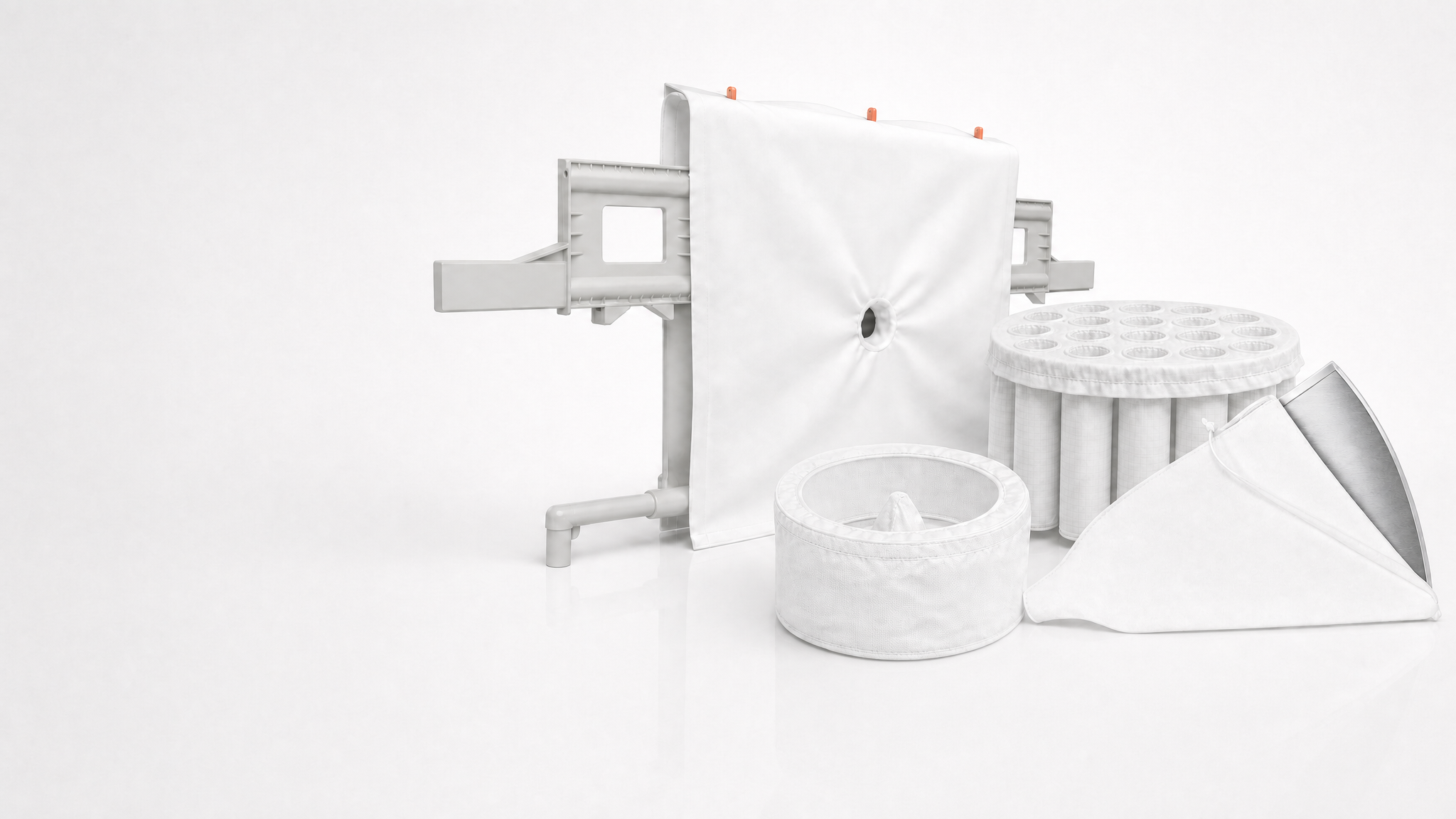
For operators, the main advantage is practical: fewer suppliers, fewer specification mismatches, and faster replacement decisions. R+F FilterElements supports this approach with compatible fabrics for pressure and vacuum applications, including media for filter press filter cloths and belt filter fabrics.
⚙️ Pressure vs. vacuum: why fabric selection changes
Even when the machine family comes from the same OEM, the fabric requirements can differ strongly. A pressure filter usually needs strong cake support, stable seam design, and controlled permeability. A vacuum system often demands excellent drainage, stable vacuum transfer, and low tendency to blind under continuous duty.
| Application type | Typical fabric priority | Operator focus | Common risk if misselected |
|---|---|---|---|
| Pressure filtration | Cake release, strength, seam integrity | Cycle time and dryness | Drip leakage or short cloth life |
| Vacuum filtration | Permeability, drainage, chemical resistance | Stable throughput and vacuum efficiency | Clogging or reduced filtration rate |
| Continuous solids separation | Wear resistance, uniform structure | Long service intervals | Frequent stoppages |
Rule of thumb: Match the fabric first to the process load, then to the machine dimensions. A well-fitting cloth that performs poorly in the process is still the wrong cloth.
🔬 Compatible filter media across BHS-Sonthofen machine types
R+F supports plants that want to standardize purchasing without compromising on technical fit. For pressure equipment, the RF-FF Series is a strong option for filter press applications, while the RF-BF Series is designed for belt filter duty. On the vacuum side, the compatible fabric concept extends to machines where drainage and continuous operation are critical, such as disc, drum, or other vacuum systems.
If your site also runs a chemical industry line or a mining circuit, the same sourcing logic helps you keep specifications aligned across different slurry behaviors, pH levels, and abrasion conditions.
📋 What to verify before ordering
- Machine type and exact model
- Filter area, cloth dimensions, and fastening style
- Process temperature and chemical compatibility
- Solids load, particle size, and cake release behavior
- Cleaning method, discharge pattern, and wear points
🛠️ How operators can reduce downtime
The fastest way to improve fabric performance is to treat the cloth as a process component, not just a spare part. When operators track blinding, leakage, and cake release behavior, the right replacement becomes obvious much sooner. If you have recurring issues, it is worth reviewing common failure modes such as filter cloth clogging, poor cake release, or short filter lifespan.
Confirm whether the machine runs in pressure or vacuum mode and note slurry conditions.
Select weave, permeability, and seam design to fit the process, not just the machine frame.
Check tension, alignment, and sealing to avoid drip leakage and premature wear.
⚠️ Caution: Incorrect fabric specification can cause leakage, unstable vacuum, or poor discharge. In hazardous or ATEX-relevant areas, always verify compliance requirements before installation.
💡 Choosing between machine families and media types
Operators often face a simple question: should the plant standardize broadly, or choose a different fabric for each machine family? The answer depends on how similar the duties really are. Standardization is attractive, but only when the process window is compatible.
💡 Tip: If you manage several BHS-Sonthofen assets, keep a shared specification sheet for each machine. That makes reordering faster and reduces the risk of mixing up dimensions, seams, or permeability levels.
✅ Start with the right machine data
Whether you operate a pressure filter or a vacuum unit, the best results come from accurate machine and process data. If you are still comparing options, start with the relevant machine page such as filter press machines or vacuum filter equipment, then use the product page that best matches the duty. For many plants, the quickest route is to find and configure the right filter fabric with our Solution Finder and receive a pre-filled, non-binding inquiry.
In short, BHS-Sonthofen operators do not need multiple disconnected suppliers for every machine in the plant. With compatible fabrics from R+F FilterElements, you can align performance, simplify sourcing, and keep critical filtration assets running with less effort.
📩 Need Help Choosing the Right Fabric?
Our technical team at R+F FilterElements can help you find the perfect filter fabric for your specific application. Get in touch for a free consultation — we will recommend the right solution based on your machine, process, and operating conditions.
If you want to speed up selection, use the Solution Finder to configure your machine online and send a non-binding, pre-filled request.