When your filter cloths or filter fabrics start to blind, leak, or lose cake release, downtime usually follows fast. The good news: a simple maintenance routine can keep your industrial solid-liquid separation equipment running more consistently and help you plan replacements before a failure stops production.
🔑 Key Takeaways
- Use a daily, weekly, monthly, and annual maintenance rhythm to catch wear early.
- Track clogging, drip leakage, cake release, and seam damage before they turn into stoppages.
- Match cleaning and inspection methods to the machine, from a filter press to a centrifuge.
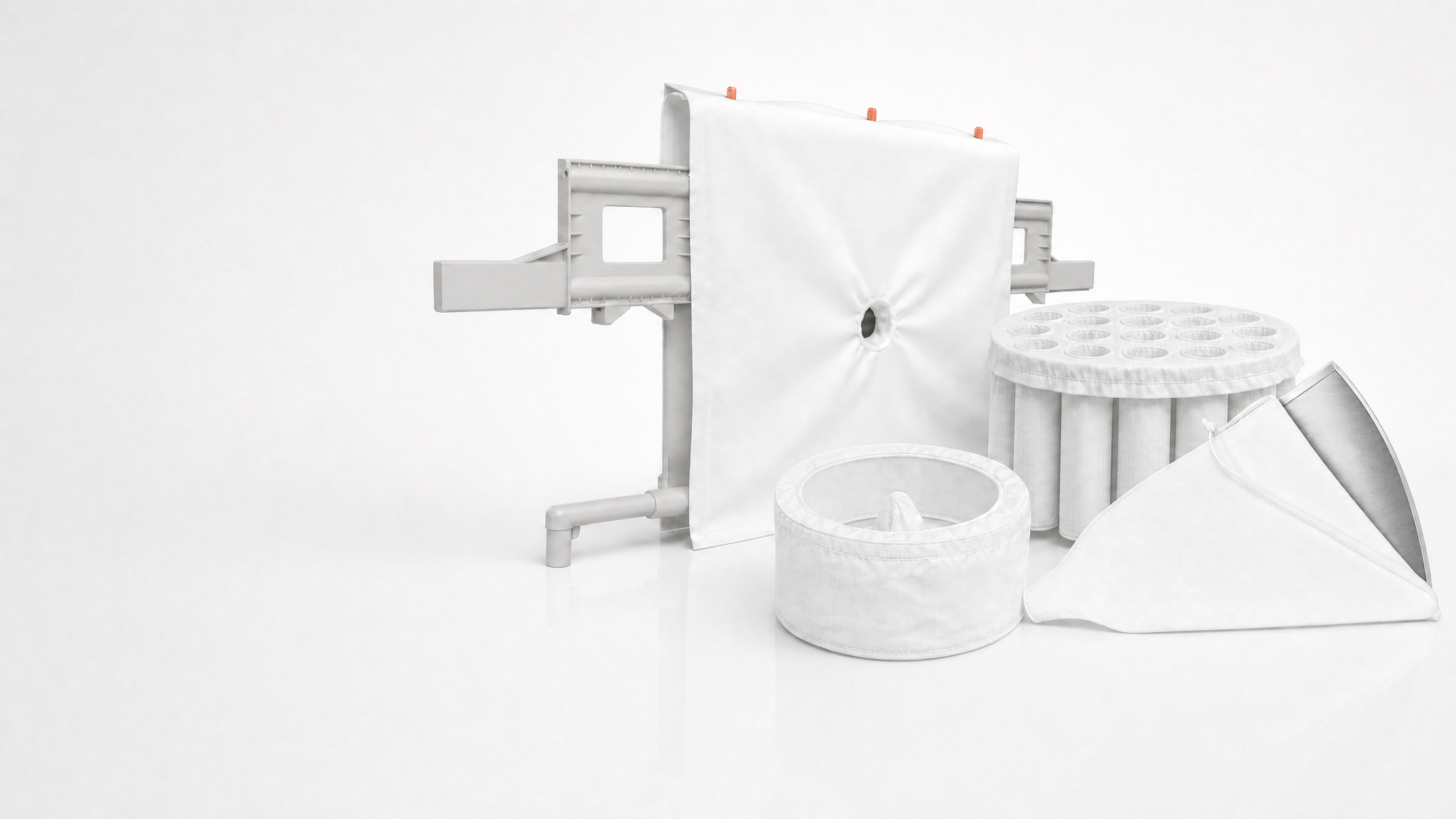
- Plan fabric renewal in advance with the right product series, such as RF-FF Series filter press fabrics or RF-BF Series belt filter fabrics.
⚙️ Why a Maintenance Schedule Prevents Unplanned Stops
In daily operation, filter fabrics are exposed to abrasion, pressure pulses, chemical load, temperature, and solids build-up. If you only react when throughput drops, you usually pay twice: once in lost production and again in emergency service or early replacement.
A structured schedule gives you a better view of fabric condition across your main units, whether you run a belt filter, a nutsche filter, or a fluid bed dryer. It also makes it easier to compare process behavior across shifts and spot gradual changes in drainage, cake release, or air permeability.
🛠️ Daily and Weekly Operator Checks
Short, routine checks are the easiest way to reduce downtime. They take little time, but they often reveal the first signs of filter cloth clogging, seam wear, or poor discharge before the issue becomes serious.
Look for tears, edge fraying, wrinkles, broken seams, contamination, and signs of cake sticking after each run or shift change.
Remove embedded solids, process salts, or oil films using the approved cleaning method for your fabric and machine type.
📋 Daily inspection checklist
- Check for visible holes, seam damage, or loose stitching.
- Inspect discharge behavior and cake release quality.
- Note any drip leakage at sealing edges or cloth joints.
- Watch for uneven loading, tracking issues, or wrinkles.
- Record pressure, cycle time, and filtrate clarity changes.
💡 Tip: If you see the same cloth area clogging repeatedly, the issue may be process-related, not just cleaning-related. Review particle size, feed consistency, and cycle settings before replacing the fabric.
⚠️ Caution: Never clean a fabric while the machine is not safely isolated. Follow lockout/tagout and plant-specific safety procedures, especially on pressurized systems and rotating equipment.
Weekly cleaning: keep pores open
Weekly cleaning should remove the buildup that cannot be shaken off during normal discharge. On a filter press, that may mean backwashing or targeted washing. On a centrifuge, it may mean checking for product residues that affect balance and filtration efficiency. For air-permeable systems such as air slide conveyors, dust and fines can also reduce performance if they are left to accumulate.
Use the gentlest effective method. Over-aggressive cleaning can shorten fabric life just as much as clogging can. This matters especially when you run specialized media such as RF-FBD Series fabrics for fluid bed dryers or RF-ANF Series Nutsche pharma fabrics, where cleanliness and process stability are both critical.
📊 Monthly Performance Check: Measure Before You Replace
Once a month, compare today’s performance with your baseline. This is the moment to turn observations into numbers and decide whether the fabric is still healthy or already driving downtime.
| Parameter | What to Watch | Action if It Deviates |
|---|---|---|
| Filtration time | Cycle time increases without process change | Inspect for blinding, clogging, or reduced permeability |
| Cake release | More residue remains on the cloth | Check fabric finish, wear, and discharge conditions |
| Filtrate clarity | More fines or visible carryover | Check seam integrity, damage, and fit |
| Pressure drop / airflow | Process resistance rises | Clean fabric, then reassess permeability |
If you are unsure whether the change comes from the fabric or from the process, use our find and configure the right filter fabric with our Solution Finder. You can select your filtration machine, configure the fabric online, and receive a pre-filled, non-binding specification and inquiry.
💡 Annual Replacement Planning: Avoid Emergency Purchases
Annual planning is where downtime prevention becomes a real cost-saving strategy. Review each installation’s runtime, cleaning history, operating temperature, chemical exposure, and mechanical wear. This is the best time to decide which fabrics should stay in service, which should be rotated to less critical duties, and which should be replaced before the next campaign.
For high-duty systems such as pressure leaf filters and sparkler filters, a planned exchange can be far less expensive than a mid-run failure. In abrasive applications like mining or cement and bulk solids, wear usually progresses faster and should be reviewed more often.
Rule of thumb: If you need to clean a fabric more often than expected just to maintain normal throughput, start replacement planning now — don’t wait for visible failure.
Annual review checklist
📋 Replacement planning checklist
- Compare current performance with the original baseline.
- Review downtime events linked to the fabric.
- Check spare-part stock and lead times.
- Confirm whether the process chemistry has changed.
- Identify any machines with repeated seal, seam, or discharge issues.
✅ Choosing the Right Fabric Series for Your Machine
Maintenance works best when the fabric itself is matched to the machine and duty. For example, the demands of a belt filter are different from a rotary disc filter, and a fabric designed for one may not be the best choice for the other.
| Machine | Typical Fabric Focus | Relevant R+F Series |
|---|---|---|
| Filter press | Cake release, sealing, pressure resistance | RF-FF Series |
| Belt filter | Drainage, tracking, continuous operation | RF-BF Series |
| Centrifuge | Mechanical stress, fine retention, balance | RF-CF Series |
| Nutsche filter | Cleanability, containment, chemical compatibility | RF-ANF Series |
For operators in chemical industry and pharmaceutical production, fabric selection is often about more than filtration efficiency. It also affects contamination control, batch consistency, and compliance risk. If antistatic behavior is a concern, review your setup against antistatic and ATEX requirements.
💡 Tip: Keep a simple fabric log for each machine: installation date, cleaning frequency, observed wear, and replacement date. This makes future planning much easier and helps you spot patterns across similar units.
📩 Need Help Choosing the Right Fabric?
Our technical team at R+F FilterElements can help you find the perfect filter fabric for your specific application. Get in touch for a free consultation — we will recommend the right solution based on your machine, process, and operating conditions.
For a faster start, use our Solution Finder to select your machine and find and configure the right filter fabric online. You’ll receive a pre-filled, non-binding specification and inquiry that makes the next step easier for your team.