
Temperature swings are one of the quietest ways to destroy a filter fabric. In daily operation, the cloth may look fine at first, but repeated heating and cooling can cause shrinkage, embrittlement, and a gradual loss of tensile strength that shows up later as poor cake release, leaks, or premature replacement.
For operators running a filter press, centrifuge, or fluid bed dryer, the material choice matters just as much as the machine setting. The right fabric for a variable-temperature process can extend service life, protect throughput, and reduce unplanned shutdowns.
🔑 Key Takeaways
- Thermal cycling stresses fibers more than steady heat alone.
- PP, PET, and PA react differently to shrinkage, embrittlement, and tensile loss.
- Process temperature swings can cause fit problems, leakage, and weak seams.
- Material selection should match both peak temperature and frequency of cycling.
⚙️ What Temperature Fluctuations Do to Filter Fabrics
In a stable process, a fabric expands or contracts within a manageable range. In a variable-temp process, however, the material keeps moving. That repeated expansion and contraction is what operators often experience as thermal cycling damage.
As a rule, the higher the temperature swing and the faster the cycle, the faster the fabric ages. You may not see immediate failure, but the cloth can slowly lose dimensional stability and start to behave differently under pressure, vacuum, or centrifugal force.
⚠️ Caution: A fabric that fits correctly at ambient conditions can become too tight, distorted, or brittle after repeated hot/cold cycles. Always check whether the peak temperature and the frequency of cycling are both within the material’s safe range.
🔬 How PP, PET, and PA Respond Differently
Not every polymer reacts the same way. In the field, this is the difference between a cloth that stays stable and one that suddenly shrinks, hardens, or starts cracking at the fold lines.
| Material | Strength in Variable Temps | Typical Risk | Operator Impact |
|---|---|---|---|
| PP (Polypropylene) | Good chemical resistance, but more sensitive to heat | Shrinkage and deformation | Loss of fit, edge pull, shortened life |
| PET (Polyester) | Better dimensional stability than PP in many processes | Gradual embrittlement at higher heat | Stiffer cloth, reduced flex life, seam stress |
| PA (Polyamide) | Tough and flexible, but can age under heat and moisture swings | Tensile loss over time | Stretching, lower support, poor cake discharge |
For hot, fluctuating service, PET often offers a more stable base than PP. PA can perform well in certain mechanical conditions, but if the process includes repeated heat spikes, moisture changes, or aggressive cleaning, the fabric can lose strength faster than expected.
📉 What Operators Notice First on the Machine
Damage from thermal cycling usually appears as process symptoms before it looks like a material failure. On a belt filter or pressure leaf filter, you may notice tracking changes, loss of tension, or uneven drainage. On a filter press, the cloth can start to wrinkle, pull at the seam, or release cake poorly.
- Shrinkage: cloth becomes too small after repeated heating.
- Embrittlement: the material feels stiffer and can crack under flexing.
- Tensile loss: the fabric stretches more easily and no longer supports the cake properly.
- Leakage or bypass: distorted cloth no longer seals as intended.
Rule of thumb: If a cloth needs frequent re-tensioning after warm-up, or if fit changes after cleaning cycles, thermal cycling is likely part of the problem.
If your issue is already showing up as leaks or poor discharge, it is worth reviewing related troubleshooting pages like drip leakage and cake release problems.
🛠️ How to Reduce Thermal Damage in Daily Operation
Good fabric life starts with realistic operating data. Peak temperature alone is not enough; you also need to know how fast the process heats up, how often it cools down, and what happens during cleaning or shutdown.
Record start-up, steady-state, cleaning, and shutdown temperatures — not just the nominal process value.
Inspect width, length, seam position, and edge tension after thermal cycles.
Hot caustic or thermal shock can accelerate embrittlement and shorten service life.
Choose the material that can survive your hottest and coldest operating condition, not only the average one.
📋 Pre-Selection Checklist for Variable-Temp Processes
- What is the minimum and maximum operating temperature?
- How many heat/cool cycles happen per day?
- Does the fabric see steam, hot water, solvent, or caustic cleaning?
- Is dimensional stability more important than maximum chemical resistance?
- Will the cloth be used on a filter press, centrifuge, or dryer?
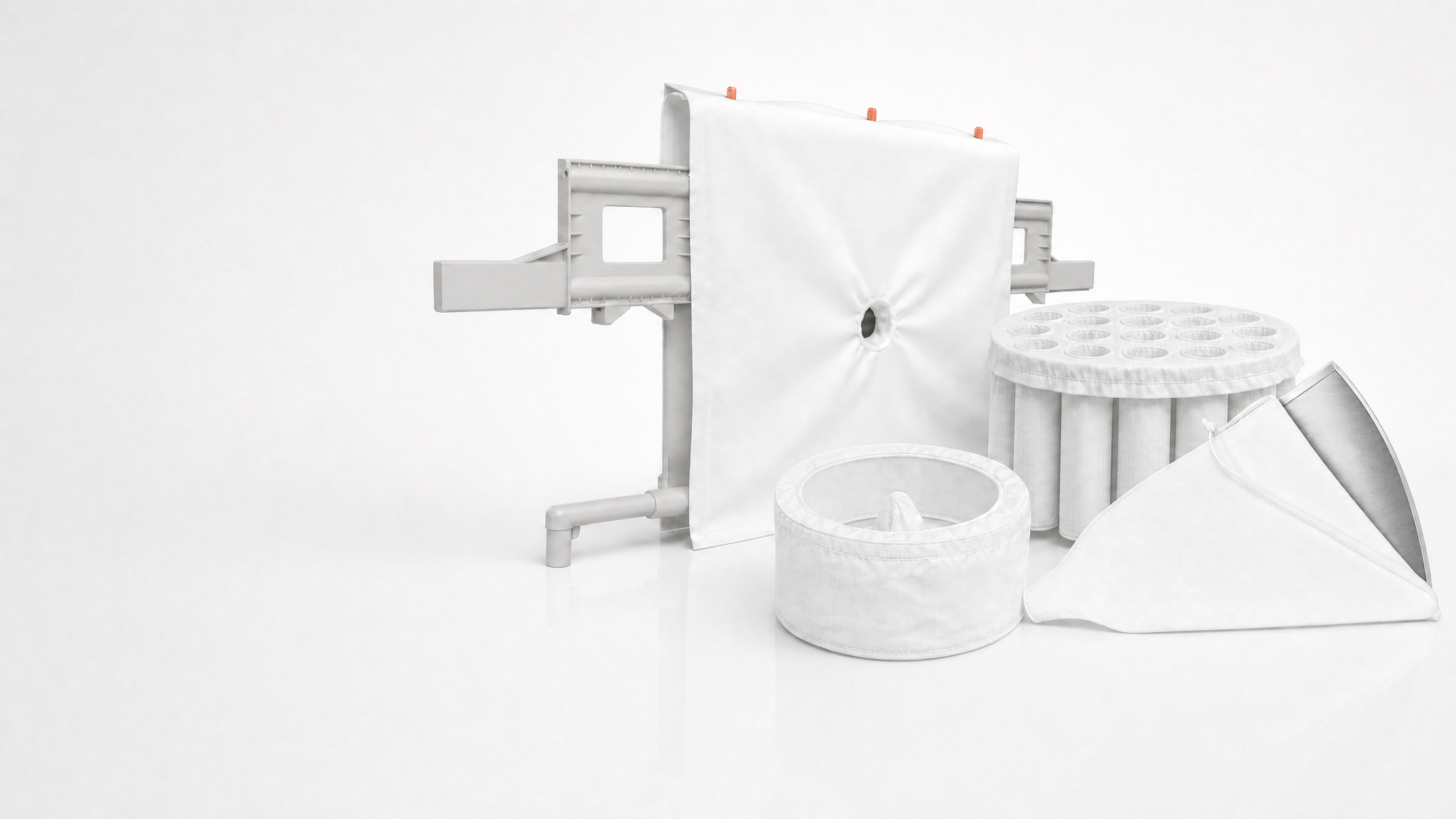
For more demanding solid-liquid separation, operators often move toward engineered fabrics for a specific machine, such as the RF-FF Series filter press fabrics or RF-CF Series centrifuge fabrics. In dryer service, the RF-FBD Series fluid bed dryer fabrics are designed with process stability in mind.
🏭 Choosing the Right Fabric for Variable-Temperature Service
Material selection is not just about surviving heat; it is about keeping the fabric stable enough to do its job throughout the full cycle. In many cases, that means prioritizing dimensional stability, seam integrity, and resistance to repeated thermal stress.
If you run a plant in chemical industry applications or wastewater treatment, temperature swings are often combined with chemicals, pressure pulses, and frequent washing. That combination makes fabric selection even more critical.
💡 Tip: If your process temperature changes often, ask for a fabric recommendation based on the full cycle profile — including start-up, shutdown, and cleaning. This is often more important than the average operating temperature.
When you need to compare options quickly, use our online find and configure the right filter fabric with our Solution Finder. You can select your filtration machine, configure the fabric online, and receive a pre-filled, non-binding inquiry for faster follow-up.
✅ Final Check Before You Replace the Cloth
Before ordering a new fabric, confirm whether the old one failed because of heat alone or because thermal cycling was combined with over-tensioning, aggressive cleaning, or poor drainage. That diagnosis matters, because the next cloth should solve the root cause — not just look similar to the old one.
If you are still unsure, a machine-specific review can help, especially for nutsche filters, sparkler filters, or air slide systems where process temperature and airflow can influence fabric behavior in different ways.
📩 Need Help Choosing the Right Fabric?
Our technical team at R+F FilterElements can help you find the perfect filter fabric for your specific application. Get in touch for a free consultation — we will recommend the right solution based on your machine, process, and operating conditions.
Prefer to start on your own? Use our Solution Finder to find and configure the right filter fabric online and receive a pre-filled, non-binding specification and inquiry.