
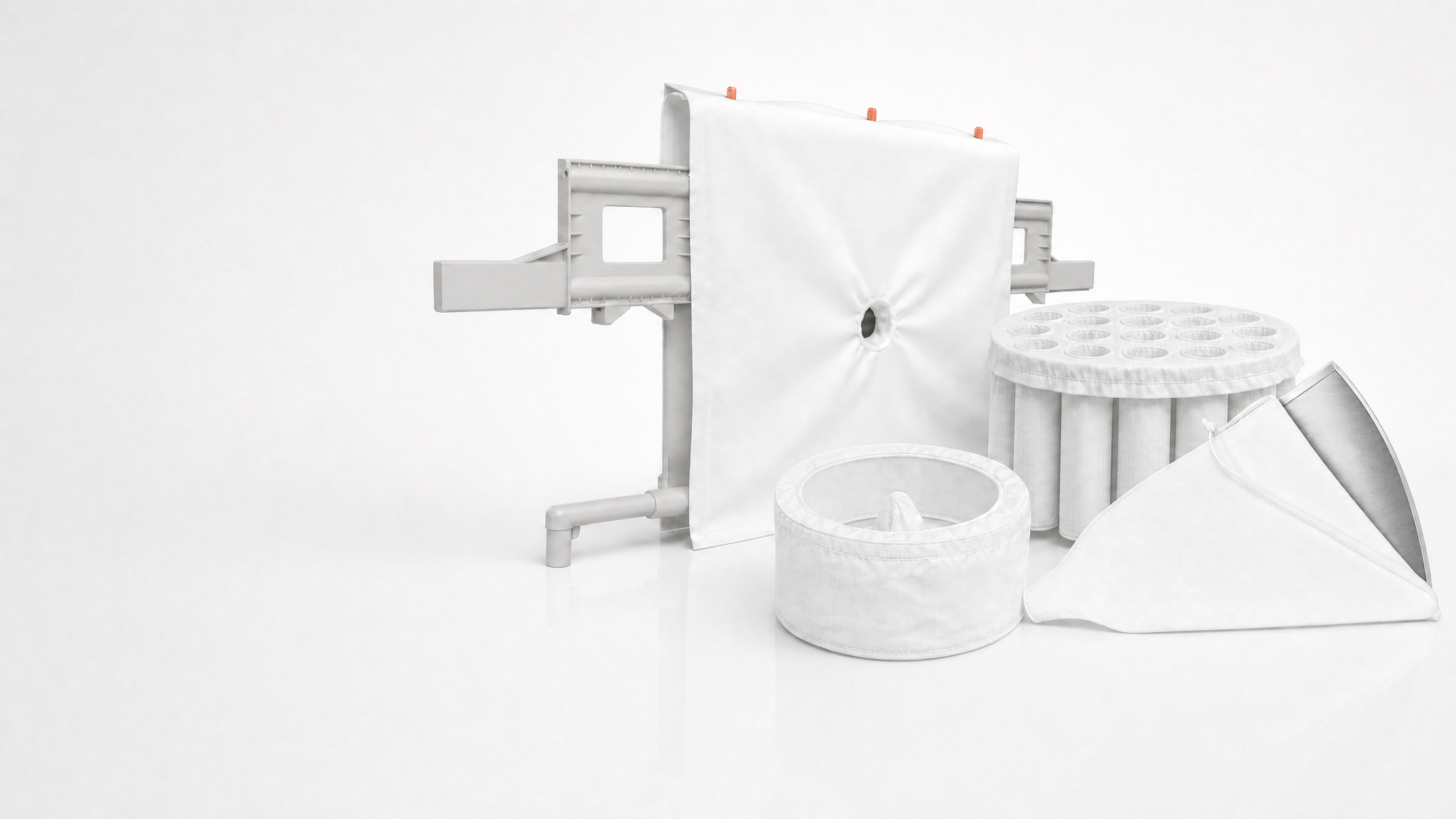
In edible oil and beverage filtration, the fabric in your pressure leaf filter does far more than “hold back solids.” It affects clarity, throughput, cake release, hygiene, and how often you need to stop the line for cleaning or replacement. If you run a pressure leaf filter in a food-grade process, the right PLF fabric is a practical lever for stable quality and lower operating cost.
For operators handling edible oils, wine, beer, juices, syrups, or other sensitive liquids, the choice is usually between a fabric that only works on paper and one that performs reliably in real plant conditions. This guide explains what to look for in RF-PLF Series pressure leaf filter fabrics, how FDA-related food-contact requirements affect selection, and when to compare PLF media with other solutions like sparkler filter fabrics or pressure leaf filter equipment.
🔑 Key Takeaways
- Food-grade PLF fabrics must balance fine retention with fast cake release and easy cleaning.
- FDA-compliant materials and clean construction help reduce contamination risk in edible oil and beverage lines.
- Fabric weave, surface finish, and seam design directly affect clarity, downtime, and lifespan.
- The best choice depends on your machine, solids load, temperature, and sanitation routine.
🏭 Why PLF Fabric Matters in Food-Grade Filtration
In a pressure leaf filter, the fabric is the separation surface that protects product quality and keeps the process moving. In edible oil, you may be removing fine carbon, bleaching earth, or suspended solids. In beverages, you may be dealing with yeast, haze, filter aid, or trace particulate.
For operators, the ideal fabric does three things at once: it retains the target solids, releases cake cleanly during discharge, and withstands repeated cycles without premature blinding. If your fabric clogs too quickly, you lose throughput. If the cake sticks, you lose cycle time. If the construction is inconsistent, you risk product contamination and unnecessary maintenance.
💡 Tip: In food and beverage service, prioritize cleanability and repeatability over maximum retention alone. A fabric that filters “finer” but blinds after a few cycles usually costs more in downtime.
🔬 Selecting the Right Fabric Construction
PLF fabrics are not one-size-fits-all. The right weave, filament type, and surface finish depend on whether you need a clearer filtrate, faster discharge, or better resistance to sticky solids.
What operators usually evaluate
- Retention level: Fine enough to meet product clarity targets, but not so tight that flow collapses.
- Cake release: Especially important in oil clarification and beverage polishing.
- Thermal and chemical resistance: Needed for hot oil, cleaning chemicals, and sanitation cycles.
- Food-contact suitability: Materials and manufacturing practices should align with FDA expectations for food-grade use.
If you operate multiple machines, it can help to compare requirements across platforms. For example, a filter press fabric such as RF-FF Series filter press fabrics is optimized differently from a PLF medium, while a RF-BF Series belt filter fabric is built for continuous drainage rather than batch pressure filtration.
📋 Food-Grade and FDA Compliance Considerations
When you filter edible oil or beverages, compliance is not just a paperwork item. The fabric must be appropriate for food contact, free from unnecessary contamination risks, and constructed in a way that supports hygienic operation.
⚠️ Caution: Always verify the complete fabric specification for your process, including polymer type, finishing, sewing/thread details, and any cleaning-agent compatibility. Food-grade operation depends on the full construction, not just the base material.
📋 Food-Grade PLF Selection Checklist
- Food-contact suitability confirmed for the application
- Construction supports low particle shedding
- Seams, edges, and attachments are clean and robust
- Compatible with your cleaning and sanitation routine
- Stable performance at your operating temperature
- Easy to inspect, remove, and reinstall without damage
If your line also handles more demanding hygiene-sensitive duties, compare the PLF requirements with our RF-ANF Series Nutsche Pharma fabrics for enclosed, high-cleanliness processing. The requirements are different, but the same principle applies: the fabric must support the process, not fight it.
⚙️ Typical Operating Problems and How Fabric Choice Helps
Many filtration problems that look like machine issues are actually fabric selection issues. If the cloth blinds too fast, you may see rising differential pressure and shorter cycles. If cake release is poor, solids hang on the leaf and reduce usable surface area. If stitching or finishing is weak, you can get contamination concerns or early failure.
| Issue | What the operator sees | Fabric selection response |
|---|---|---|
| Filter cloth clogging | Slow flow, rising pressure, frequent cleaning | Use a less blinding surface and suitable pore structure |
| Poor cake release | Wet residue, long discharge times | Choose a fabric with better release characteristics |
| Short filter lifespan | Frequent replacement, damaged seams | Improve chemical and mechanical resistance |
| Contamination risk | Unwanted fibers or weak seam integrity | Specify clean construction and food-grade finishing |
For recurring cloth blinding problems, it is worth reviewing our guidance on filter cloth clogging and short filter lifespan. In many plants, a small adjustment in fabric structure saves far more time than a major machine intervention.
Rule of thumb: If you clean more often than you filter, the fabric is probably too fine, too smooth for the solids, or not matched to your cake release behavior.
🧪 Using the Right PLF Fabric in Oil, Wine, and Beverage Lines
Edible oil is usually about clarity, low residual solids, and stable discharge after cake build-up. Beverage applications often add another layer of sensitivity: appearance, flavor protection, and hygienic handling. In wine and juice filtration, the fabric must perform consistently without contributing unwanted taste, odor, or contamination concerns.
Operators often benefit from configuring the fabric around the actual machine and process, not just the product name. If you work on a pressure leaf filter, the requirements will differ from a sparkler filter or a rotary disc filter. That is why our online find and configure the right filter fabric with our Solution Finder tool is useful: you can select your machine, enter your process conditions, and receive a pre-filled, non-binding specification and inquiry.
Edible oil, wine, beer, juice, syrup, or another beverage stream.
Clarity, solids retention, polish filtration, or precoat support.
Select weave, finish, and seam design for your machine and cleaning regime.
✅ Practical Selection Steps for Operators
Before you order a new PLF fabric, review the process conditions that actually drive performance. The right fabric is usually the one that keeps your line stable over many cycles, not just the one that looks best on a datasheet.
- Check solids type and particle size distribution.
- Confirm whether the process is batch or semi-continuous.
- Review temperature, cleaning chemistry, and sanitation frequency.
- Assess whether cake release or absolute retention is the bigger bottleneck.
- Validate food-contact expectations and documentation needs.
When in doubt, compare the PLF option with other machine-specific fabrics such as RF-CF Series centrifuge fabrics or RF-NF Series needle felt media. The right choice is always the one that matches the separation mechanism and the operator’s maintenance reality.
💡 Tip: Keep one sample of the old fabric and one of the replacement fabric in the maintenance file. Visual comparison often helps operators spot weave changes, fouling patterns, or seam wear during troubleshooting.
📩 Need Help Choosing the Right Fabric?
Our technical team at R+F FilterElements can help you find the perfect filter fabric for your specific application. Get in touch for a free consultation — we will recommend the right solution based on your machine, process, and operating conditions.
Prefer a faster starting point? Use our Solution Finder to choose your filtration machine and configure the right filter fabric online for a pre-filled, non-binding specification and inquiry.