
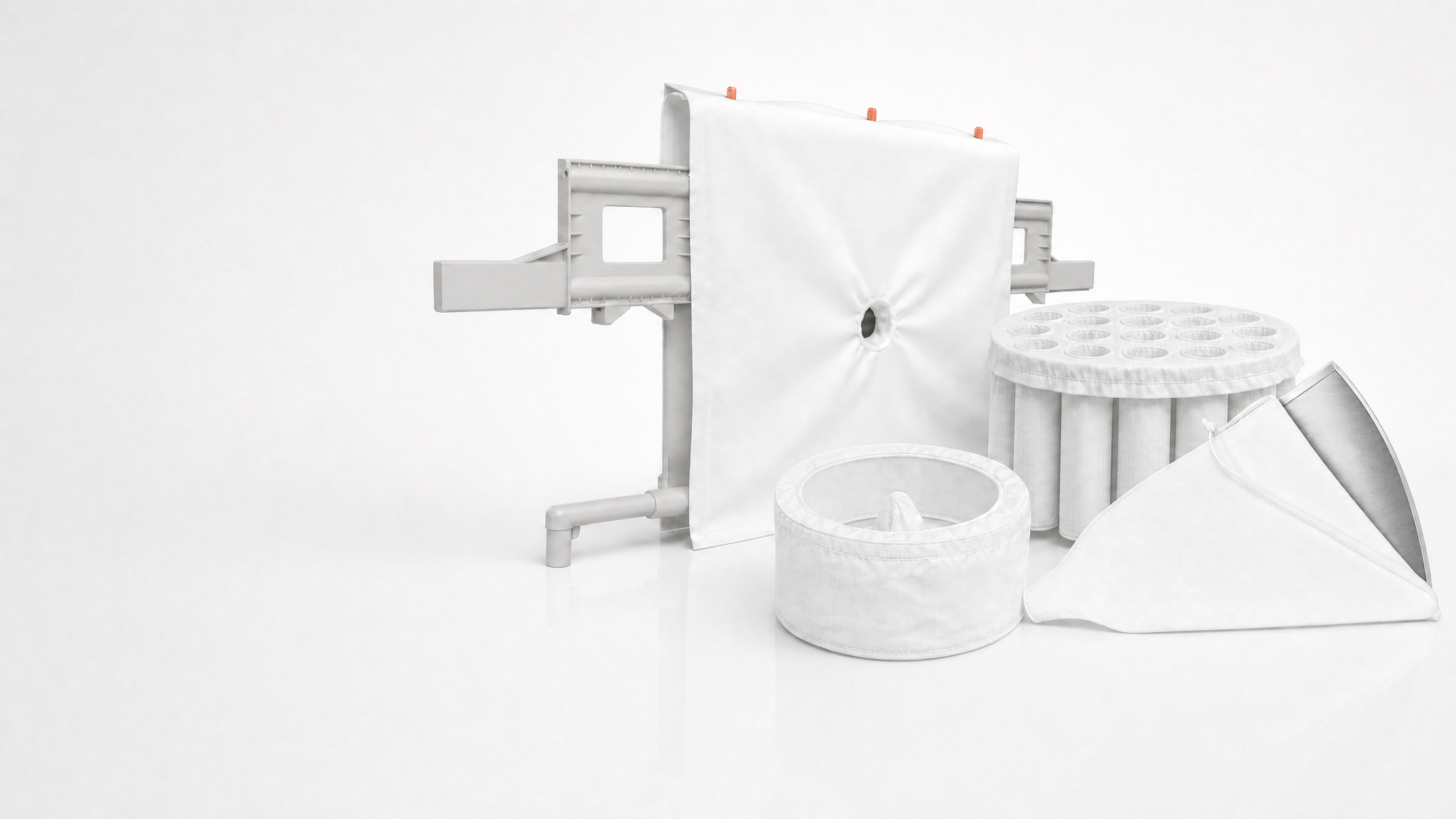
Cement plants put air slide fabrics under some of the toughest operating conditions in bulk solids handling. In hot zones near clinker, kiln exhaust, and heated transfer points, the fabric must keep air permeability stable while resisting heat, abrasion, and long hours of continuous duty.
For operators, the real challenge is not just keeping material moving. It is avoiding false air leakage, build-up, blockages, and premature fabric failure in the cement bulk solids application, where a small loss of performance can quickly affect throughput and energy use.
🔑 Key Takeaways
- Air slide fabrics in cement plants need heat resistance, dimensional stability, and controlled air permeability.
- Aramid and HT-resistant fabrics are preferred in hot zones where standard fabrics can age too quickly.
- Correct fabric selection reduces clogging, leakage, and uneven conveying across the air slide.
- The fastest way to specify the right solution is to use the Solution Finder and configure your machine online.
🏭 Why Air Slide Fabrics Matter in Cement Plants
An air slide works on a simple principle: air is passed through a porous fabric to fluidize fine cement raw meal or finished cement so it can move by gravity. In practice, that fabric becomes a critical process component. If it runs too hot, stretches, blinds, or leaks, the material flow becomes unstable.
That is why operators typically choose engineered fabrics for air slide systems rather than general-purpose textiles. The goal is to maintain a consistent fluidizing effect even when the surrounding environment is harsh and the process runs around the clock.
⚠️ Caution: In hot-zone cement service, a fabric that looks acceptable during cold commissioning may fail early once process temperatures, thermal cycling, and dust loading increase. Always check the real operating temperature, not only the ambient plant temperature.
🔬 Aramid and HT-Resistant Fabrics: What Operators Gain
For hot-zone applications, aramid and other high-temperature resistant constructions are chosen because they better tolerate heat exposure, mechanical stress, and long service periods. In an air slide, this means more stable flow and fewer interruptions for cleanup or replacement.
Practical benefits in daily operation
- Improved thermal stability in zones exposed to hot gas, clinker heat, or elevated bulk solids temperature.
- Better dimensional control, helping maintain even air distribution across the slide.
- Longer service intervals compared with fabrics that soften, shrink, or deform under heat.
- More predictable fluidization, which supports smoother conveying and fewer stoppages.
Rule of thumb: If the air slide is in or near a hot process zone, choose the fabric based on the highest real temperature at the cloth, not the average process temperature.
If you already operate other separation equipment in the plant, it helps to standardize your fabric selection logic across systems. For example, a high-performance RF-FF Series filter press fabric may solve cake release in dewatering, while an air slide needs a very different balance of permeability and heat resistance. The same applies when comparing an RF-BF Series belt filter fabric with an air slide cloth: similar plant environment, but different mechanical demands.
📊 How to Compare Air Slide Fabric Options
When selecting between fabric constructions, operators usually compare temperature resistance, air permeability, mechanical stability, and ease of installation. The best choice depends on whether the line handles hot raw meal, clinker-adjacent transfer, or cooler conveying duties.
| Fabric Type | Best Use | Operator Benefit | Watch Out For |
|---|---|---|---|
| Standard synthetic fabric | Lower-temperature zones | Economical and widely used | Can age quickly in hot areas |
| HT-resistant fabric | Elevated-temperature air slides | Better thermal durability | Still needs correct permeability |
| Aramid-based fabric | Hot-zone cement applications | Strong heat and dimensional stability | Must be matched carefully to airflow |
🛠️ Installation and Commissioning Tips for Stable Flow
Even the best fabric can perform poorly if installation is rushed. On air slides, wrinkles, poor sealing, or uneven tension can create dead zones, air bypass, and material build-up. Careful installation pays back immediately in better flow consistency.
Make sure the air slide base, seams, and sealing points are clean, flat, and free of damage before fitting the fabric.
Verify that air distribution is even across the entire slide so the fabric fluidizes the bulk solids consistently.
After start-up, observe the line under real process temperature and dust load to confirm stable conveying and no hot spots.
📋 Pre-Start Checklist for Air Slide Fabrics
- Correct fabric type selected for the temperature range
- Seams and edges installed without gaps
- Air pressure set to the process requirement
- No visible wrinkles, folds, or tension peaks
- Material flow verified across the full length of the slide
✅ Common Problems and How to Avoid Them
In cement service, the most common air slide issues usually show up as reduced flow, uneven discharge, or rising pressure drop. These symptoms often point back to the fabric rather than the air system itself.
- Clogging or blinding: often linked to the wrong permeability or dust characteristics; see filter cloth clogging for related operating patterns.
- Short service life: usually caused by thermal overload or poor material choice; review short filter lifespan indicators.
- Leakage and bypass air: can reduce fluidization efficiency and create unstable flow.
- Unexpected process variation: may appear when the fabric ages unevenly under heat and abrasion.
💡 Tip: If your air slide problems start after a temperature increase, do not only adjust the air supply. First check whether the fabric is still suitable for the new thermal load.
For operators who want to streamline selection, the easiest route is to find and configure the right filter fabric with our Solution Finder. You can choose your filtration machine, define the operating conditions, and receive a pre-filled, non-binding specification and inquiry.
Air slide fabrics and fluid bed dryer fabrics often share similar thinking around airflow, temperature resistance, and long-duty reliability. If your plant also runs thermal drying equipment, the fluid bed dryer machine page is a useful reference point for understanding how heat and fabric performance interact in continuous operation.
📩 Need Help Choosing the Right Fabric?
Our technical team at R+F FilterElements can help you find the perfect filter fabric for your specific application. Get in touch for a free consultation — we will recommend the right solution based on your machine, process, and operating conditions.
Prefer a fast starting point? Use our Solution Finder to find and configure the right filter fabric online for your air slide application and send us a pre-filled, non-binding inquiry.