
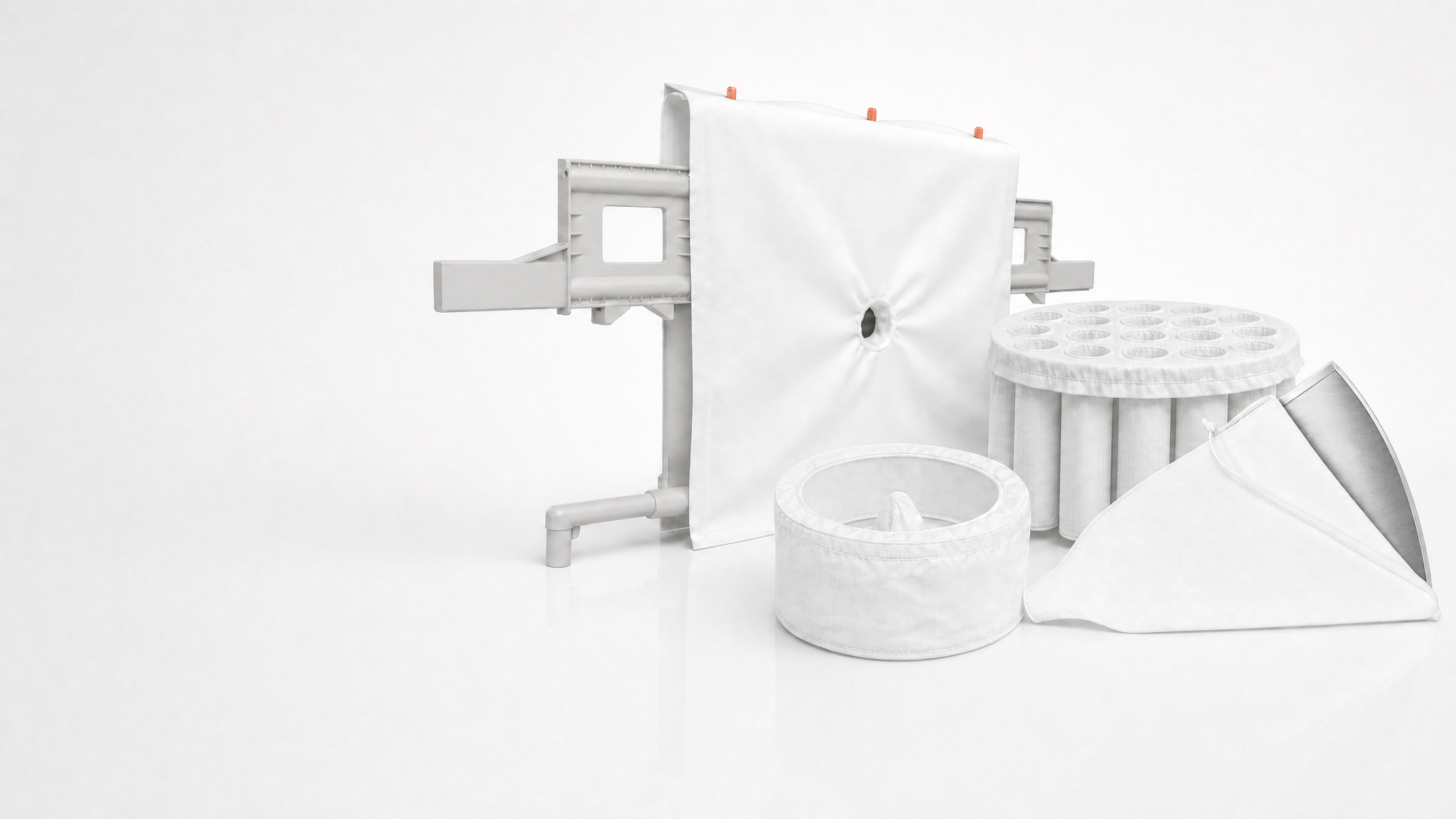
Recovering precious metal catalysts from slurry is a high-value operation, and in a pressure leaf filter, the fabric does most of the critical work. If retention drops, cloth blinding rises, or chemicals attack the media, you lose yield, purity, and uptime fast. For chemical plants, selecting the right PLF fabric is therefore not a detail — it is a process decision.
🔑 Key Takeaways
- Pressure leaf filter fabrics must combine fine particle retention with stable permeability.
- Chemical resistance is essential when catalysts are recovered from aggressive acids, solvents, or mixed-process liquors.
- Fabric structure, seam quality, and cloth finish all affect cake release, clarity, and service life.
- Use machine and process data early, then find and configure the right filter fabric with our Solution Finder for a pre-filled, non-binding inquiry.
🏭 What a Pressure Leaf Filter Demands from the Fabric
In catalyst recovery, a pressure leaf filter usually works under demanding conditions: fine solids, valuable product, and a process stream that may be hot, corrosive, or solvent-based. The fabric has to hold back catalyst fines while still allowing a stable filtrate flow across the full cycle. That is why many operators choose dedicated RF-PLF Series pressure leaf filter fabrics for this duty.
Compared with more open filter media, PLF fabrics need a tighter balance between retention and flow rate. Too open, and catalyst losses increase. Too tight, and the leaf blinds prematurely, pushing cycle times up and throughput down. The best result comes from matching weave, fiber chemistry, and surface finish to the actual slurry, not just the nominal particle size.
🔬 Fabric Properties That Matter Most
1) Fine retention without excessive blinding
Precious metal catalyst particles are often very small and irregular. A fabric with the wrong pore structure will either let fines pass or trap them too deeply. For operators, the goal is a surface capture pattern that forms a predictable cake layer and then releases cleanly.
2) Chemical and thermal stability
PLFs in the chemical industry may see acids, bases, oxidizing agents, solvents, or elevated temperatures. That makes fiber selection critical. Polypropylene may suit some alkaline or moderate-temperature duties, while more demanding solvent or temperature profiles may require alternative engineered fabrics. If your line also uses vacuum filtration elsewhere, it can be helpful to compare the operating envelope with RF-SP Series sparkler filter fabrics or RF-CF Series centrifuge fabrics to understand how each media family is tuned for a specific machine.
3) Seam, edge, and fixing quality
In practice, many PLF issues are not caused by the textile body alone. Stitching, edge finishing, and the way the cloth mounts to the leaf can all influence bypass, drippage, and contamination. If you are troubleshooting visible leakage, review the guidance on drip leakage and contamination from stitching.
⚠️ Caution: Do not select a fabric only by micron rating. In pressure leaf service, chemical compatibility, cake release behavior, and seam integrity can matter just as much as nominal retention.
📊 Compare Common Fabric Selection Priorities
| Selection factor | What the operator sees | Why it matters in catalyst recovery |
|---|---|---|
| Particle retention | Clearer filtrate, lower solids carryover | Protects product value and reduces catalyst loss |
| Chemical resistance | Longer cloth life, fewer failures | Prevents swelling, embrittlement, or premature wear |
| Cake release | Shorter discharge time, fewer manual interventions | Improves cycle consistency and uptime |
| Permeability stability | Steady pressure drop over multiple cycles | Maintains throughput and filtration efficiency |
🛠️ How to Select the Right PLF Fabric
List solvents, pH range, temperature, and any oxidizing or abrasive components that contact the cloth during the full batch cycle.
Identify the catalyst particle size distribution and the acceptable fines carryover limit for your downstream process.
Confirm support geometry, fastening method, and expected differential pressure so the fabric can sit flat and drain evenly.
Choose a fabric finish that supports cake discharge and minimizes blinded zones, especially if cycles are short and frequent.
Rule of thumb: If the cloth looks “too fine” on paper but the cake release is poor in operation, the media is usually not the best fit for a pressure leaf filter duty.
💡 Tip: When you specify a pressure leaf cloth, include the exact slurry chemistry, batch temperature, solids loading, and cleaning method. That information helps us recommend a fabric that performs in the real plant, not only in lab conditions.
✅ Practical Troubleshooting for Operators
When catalyst recovery performance slips, the cloth is often the first place to look. A sudden rise in differential pressure may indicate filter cloth clogging, while shortened service life can point to incompatible chemistry or mechanical stress. If cake discharge becomes sticky, review your wash sequence and consider whether the fabric finish is suited to your slurry.
📋 Pre-start Checklist for PLF Fabric Selection
- Process chemistry confirmed, including pH and solvent exposure
- Operating temperature and pressure documented
- Particle size distribution and desired retention level known
- Leaf geometry and fixing method verified
- Cleaning, drying, and cake discharge method defined
- Risk of ATEX or static buildup checked where applicable
If your line handles flammable solvents or dusts, do not ignore electrostatic risk. For those installations, review antistatic and ATEX-related cloth requirements before approving a final specification.
🧪 Use the Right Data Before You Order
For catalyst recovery in the chemical industry, the best fabric choice is usually the one that is specified with complete process data. If you are working across multiple machines, it also helps to compare how the fabric needs differ between a pressure leaf filter and other equipment such as a pressure leaf filter machine or a Nutsche filter. For broader context on process environments, see our chemical industry applications page.
When you are ready to move from assumptions to a concrete specification, use our Solution Finder to pick your filtration machine, configure the right fabric online, and receive a pre-filled, non-binding inquiry.
📩 Need Help Choosing the Right Fabric?
Our technical team at R+F FilterElements can help you find the perfect filter fabric for your specific application. Get in touch for a free consultation — we will recommend the right solution based on your machine, process, and operating conditions.