
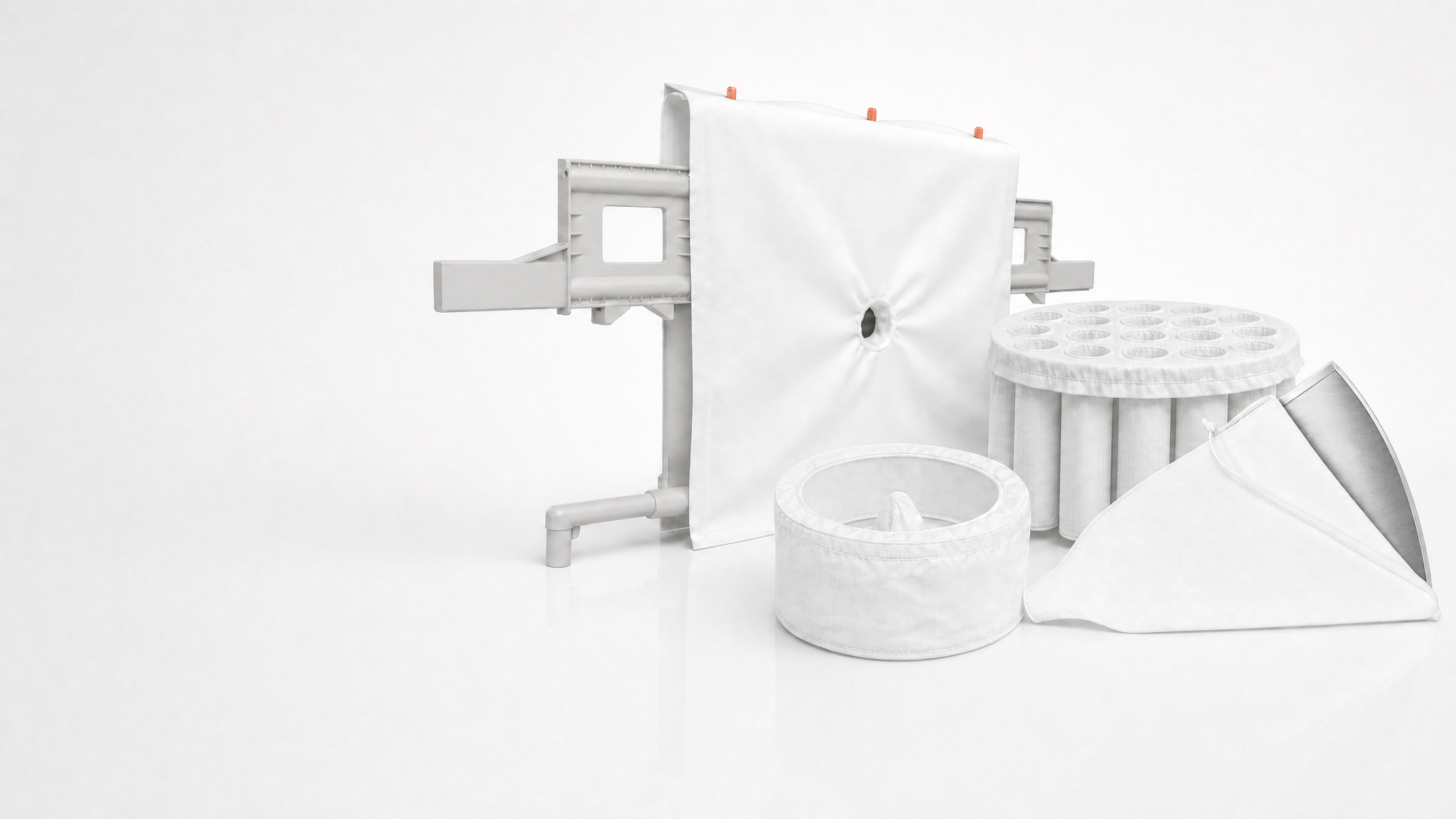
When a Klein belt filter press starts showing higher solids carryover, slower drainage, or premature belt wear, the replacement fabric is often the first place operators look. For industrial and municipal dewatering, the right aftermarket belt can restore performance without locking your plant into a single source for future changeouts.
🔑 Key Takeaways
- Replacement belts for Klein belt presses should match width, length, seam type, weave, material, and permeability.
- Plants often switch to independent aftermarket belts for shorter lead times, tailored specs, and supply flexibility.
- R+F FilterElements can reverse-engineer a compatible belt from a sample, drawing, or old belt specification.
- Both woven belt-press fabrics and spiral belts are available as made-to-measure replacement options.
⚙️ What matters when replacing a Klein dewatering belt
On a belt press, the belt is not just a wear part — it is a process component that determines drainage behavior, cake release, and tracking stability. For Klein belt filter presses, the replacement must match the machine geometry and the operating profile, especially if sludge characteristics or throughput have changed over time.
At minimum, operators should identify these belt details before ordering:
- Belt width and overall length
- Seam type and seam construction
- Mesh opening / air permeability
- Weave structure and surface finish
- Material selection for chemical and temperature resistance
📋 Belt identification checklist
- Measure the installed belt or check the belt drawing
- Record machine model and belt path
- Note the seam style: pin seam, loop seam, endless, or clip-style
- Check whether the belt is a woven belt-press fabric or a spiral belt
- Document process conditions: sludge type, pH, temperature, and cleaning regime
If you are comparing belt families, the general filter belt portfolio is a good starting point, and the belt-press belt family shows the typical options used on dewatering presses. For plants that also run vacuum or drainage equipment, the related drainage belt fabrics and vacuum filter belts can be useful references.
🔬 Woven belt-press fabrics vs. spiral belts
For Klein belt filter presses, two replacement concepts are common: woven belt-press fabrics and spiral belts. The best choice depends on the press design, the sludge behavior, and whether the priority is maximum drainage, robust mechanical strength, or easier cleaning.
| Feature | Woven belt-press fabric | Spiral belt |
|---|---|---|
| Drainage behavior | Very good, especially with tuned mesh and permeability | Good, with open structure and stable drainage paths |
| Cake release | Can be optimized by weave and surface finish | Often strong due to surface geometry |
| Mechanical stability | High, depending on weave and seam design | High, especially in robust belt-filter operation |
| Customization | Very flexible for width, weave, and permeability | Also customizable, especially for compatible replacement dimensions |
| Typical use | Industrial and municipal sludge dewatering | Presses needing durable open structures and stable tracking |
📊 Why plants source independent aftermarket belts
Many operators look for compatible replacement belts not because the original equipment failed, but because the plant needs more flexibility. In dewatering, downtime is costly, and a belt supplier that can respond quickly with the right dimensions and seam construction can make a major operational difference.
Typical reasons to move to an independent supplier include:
- Lead time reduction when a belt must be replaced quickly
- Cost control over recurring consumables
- Specification tuning for better drainage or cake release
- Supply continuity across multiple presses or sites
Plants in wastewater treatment often cross-check belt requirements against the broader process environment, including sludge conditioning and wash water quality. If you operate across dewatering systems, the machine pages for belt presses, belt filters, and wastewater applications can help frame the selection.
🛠️ How R+F reverse-engineers a replacement belt
R+F FilterElements supplies made-to-measure replacement and compatible filter belts based on the data you can provide. In practice, that means we can work from an old belt sample, a drawing, or a field measurement set and derive a production-ready specification for your Klein belt press.
Send us the machine model, installed belt dimensions, seam type, and if available, photos or a worn belt sample.
We assess weave, permeability, material, and edge/seam construction to match the process target.
We check the belt against the press geometry and intended operating conditions before production.
The result is a compatible aftermarket belt manufactured to your required dimensions and performance target.
💡 Tip: If the old belt has shrunk, stretched, or suffered seam damage, send both the installed measurement and the removed belt dimensions. That helps us distinguish wear from the original design specification.
For faster specification handling, you can also configure your belt filter fabric online and receive a pre-filled, non-binding inquiry specification. If you prefer a direct technical review, use our contact page and share your belt sample or drawing with the request.
✅ Quality, seam options, and selection tips
Replacement quality is not only about the fabric body. On belt presses, the seam must run reliably, track cleanly, and withstand repeated loading and washing. That is why seam design should always be selected together with the belt material and process conditions.
- Seam options: pin seams, loop seams, endless constructions, and machine-specific joining concepts
- Fabric options: woven structures and spiral belts for different drainage and release needs
- Material options: selected for wet abrasion, temperature, and chemical exposure
- Process tuning: permeability and weave adapted to sludge type and cake dryness target
⚠️ Caution: A belt that is too open can increase solids passage, while a belt that is too tight can reduce drainage and raise load on the press. Always balance permeability with cake quality and machine throughput.
Rule of thumb: If you are replacing a Klein press belt after a process change, do not copy only the old width — verify the seam, permeability, and weave before ordering.
For operators who also run other separation equipment, R+F supplies compatible fabrics for mining, chemical industry, and additional machines such as vacuum filters and drum filters. Related belt families include spiral filter belts, mining belts, and antistatic dryer belts where the process requires specific handling or safety properties.
📩 Need Help Choosing the Right Fabric?
Our technical team at R+F FilterElements can help you find the perfect filter fabric for your specific application. Get in touch for a free consultation — we will recommend the right solution based on your machine, process, and operating conditions.
If you already have an old belt, drawing, or specification sheet, the fastest next step is to configure your belt filter fabric online and send us the result together with your sample request. We will review the data and prepare a compatible replacement proposal for your Klein belt filter press.