
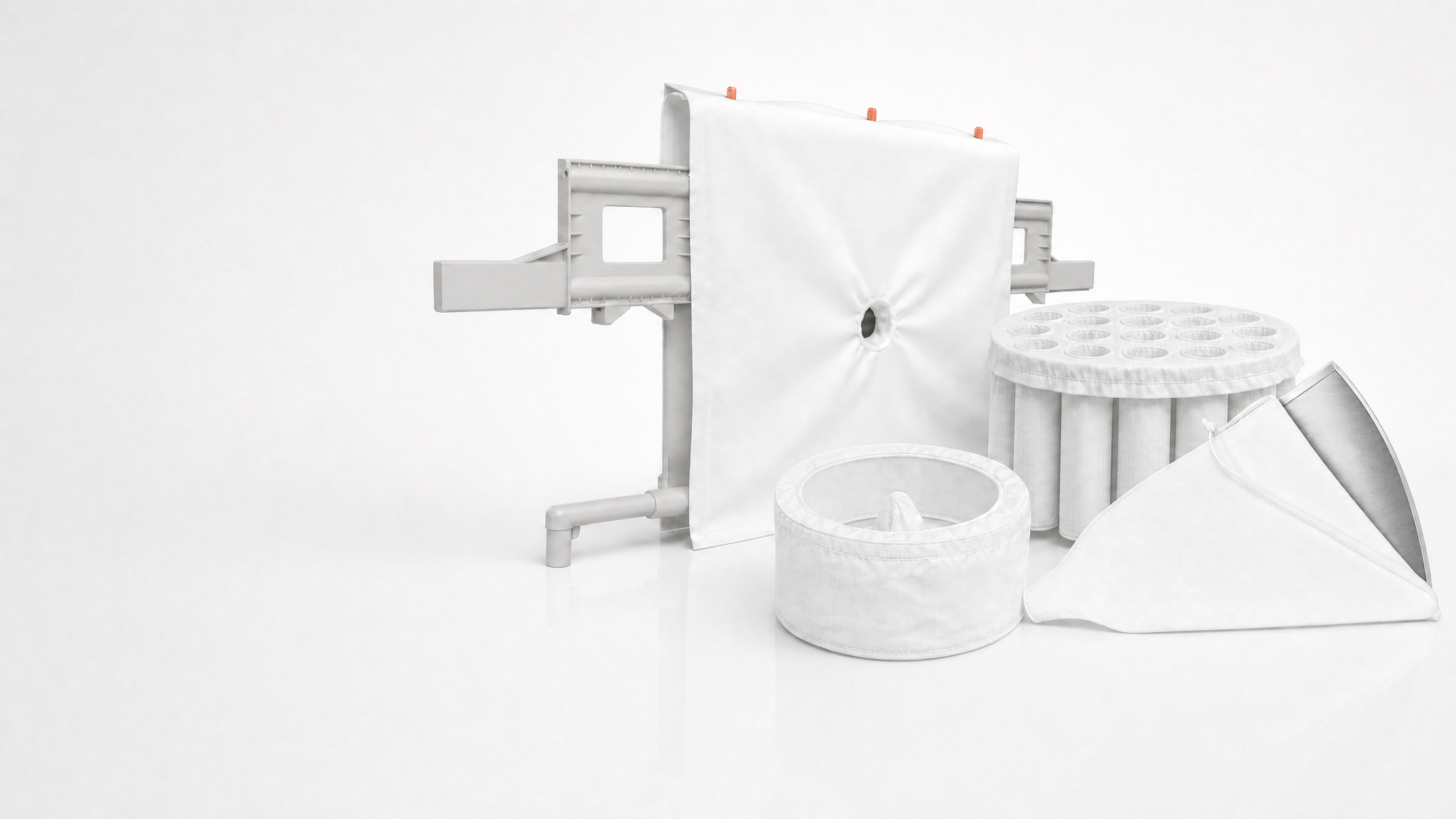
When you run a horizontal vacuum belt filter, the replacement belt has to do more than simply fit the frame. It must track reliably, release cake cleanly, maintain air permeability over time, and match the process conditions your plant sees every day.
This guide explains how to identify a compatible replacement belt, what specification details matter most, and how R+F FilterElements supplies made-to-measure aftermarket belts for common vacuum belt filter brands and machine types.
🔑 Key Takeaways
- Fit starts with data: belt width, length, seam type, edge design, weave, and air permeability must all be matched correctly.
- Performance changes over time: the right monofilament belt should keep its permeability and tracking behavior stable through long service intervals.
- Aftermarket belts can add flexibility: plants often switch for shorter lead times, tailored specs, and reduced single-source dependency.
- R+F supports retrofit projects: we reverse-engineer compatible replacement belts from a sample, drawing, or old specification.
💡 Tip: If you still have the worn belt, keep it intact. Even a damaged belt can help us identify seam type, edge construction, weave, and the original running width.
⚙️ What a Compatible Vacuum Belt Must Match
A successful retrofit begins with the full belt specification, not just the machine type. Horizontal vacuum belt filters depend on a precise balance of mechanical fit and filtration behavior. If one parameter is off, you may see poor tracking, edge wear, cake carryover, or unstable filtrate quality.
Core dimensions and construction details
- Belt width: must match the active filtration area and roller guidance.
- Belt length / endless dimensions: critical for tensioning and seam positioning.
- Seam type: affects installation, maintenance time, and running smoothness.
- Edge reinforcement: important for tracking, wear resistance, and roller contact.
- Weave and yarn type: determine drainage, cake release, and stability.
- Air permeability: must suit the vacuum level and slurry behavior.
- Material selection: chosen according to chemistry, temperature, and abrasion.
For plants evaluating a retrofit, it helps to compare the belt against the full system context. Our filter belt portfolio shows the available families, while the vacuum belt filter fabric range is the most relevant starting point for horizontal belt filters.
📋 Belt Identification Checklist
- Measured belt width and total loop length
- Existing seam style or endless construction
- Weave pattern and visible yarn diameter
- Air permeability target or current process behavior
- Edge finishing and any reinforcement zones
- Product name, machine model, or old drawing
🔬 Why Plants Choose Independent Replacement Belts
Many operators choose aftermarket compatible belts for practical reasons. In day-to-day production, the main drivers are usually lead time, price, and specification flexibility. In some cases, a retrofit also helps reduce dependence on a single supply source.
That is especially relevant in continuous operations such as wastewater treatment, mining, and chemical processing. A reliable replacement belt supports stable production on machines used in wastewater applications, mining, and chemical industry duties.
For operators working on different machine concepts, the same logic applies across the plant: whether you run a belt filter, a vacuum filter, or related solid-liquid separation equipment, the belt must be matched to the process rather than selected by name alone.
📊 Cake Release, Permeability, and Tracking: The Three Behaviors That Matter Most
A belt can look correct on paper and still underperform in service. In practice, three performance areas usually decide whether the retrofit succeeds: cake release, air permeability over lifetime, and edge/tracking stability.
| Performance topic | What the operator sees | What to specify |
|---|---|---|
| Cake release | Residual cake, blinding, or difficult discharge | Weave opening, surface finish, and release behavior |
| Air permeability | Changing filtration rate or vacuum response | Initial permeability and expected service-life retention |
| Tracking and edges | Side drift, fraying, or roller wear | Edge reinforcement, seam geometry, and guiding conditions |
Cake release depends on the interaction between cake structure and belt surface. A smoother or more open fabric may help with discharge, while a tighter weave can improve capture but may increase blinding risk. Air permeability must be correct not only at delivery, but after weeks or months of use, when fines loading and cleaning cycles begin to change the belt. Tracking is often overlooked until edge damage appears; then the real issue is usually seam geometry, edge build, or tension profile.
Rule of thumb: If the old belt tracked well but blinded too quickly, focus first on weave and permeability retention. If cake release was poor, review surface structure before changing width or length.
🛠️ How R+F Reverse-Engineers a Replacement Belt
When the original specification is incomplete, R+F FilterElements can reconstruct the belt from a sample, drawing, or measured data. This is a practical route for retrofit projects where the plant needs a compatible replacement without waiting for a full OEM documentation package.
We review width, length, seam, edges, weave, and visible wear patterns from your sample or drawing.
We confirm slurry solids, vacuum load, temperature, chemical exposure, and desired cake release behavior.
We propose the compatible weave, permeability, material, seam option, and edge reinforcement.
If needed, we refine the design based on your operating feedback before making the final replacement belt.
Compatible belts are available for common machine platforms, including horizontal vacuum belt systems and related filtration equipment. If your project also involves adjacent equipment, R+F can support other belt-fabric families such as belt press fabrics, spiral belts, and drainage fabrics.
✅ Seam Options, Quality Checks, and Fit Guidance
The seam is one of the most important retrofit details on a horizontal vacuum belt filter. It must run smoothly over rollers, tolerate repeated cleaning, and preserve the belt’s alignment under tension. Depending on the installation, R+F can supply compatible seam solutions and edge constructions to suit the machine and maintenance approach.
- Mechanical fit: seam geometry must clear rollers, guides, and vacuum zones.
- Operational durability: seam and edge design should survive cleaning cycles and abrasive cake.
- Installation convenience: some plants prefer faster maintenance with specific seam solutions.
- Process consistency: the final belt should hold permeability and release behavior throughout its service life.
⚠️ Caution: Do not select a replacement belt by machine name alone. Even within the same belt filter family, width, seam type, permeability, and edge construction can vary from one installation to another.
For operators who want a quick pre-check before sending data, the online tool can help structure the request: configure your belt filter filter fabric online and receive a pre-filled, non-binding specification and inquiry.
R+F FilterElements supplies compatible replacement belts for all common vacuum belt filter brands, with made-to-measure production based on your current installation. If you are planning a retrofit, the fastest path is usually to send the old belt data, a drawing, or a physical sample for review.
📩 Need Help Choosing the Right Fabric?
Our technical team at R+F FilterElements can help you find the perfect filter fabric for your specific application. Get in touch for a free consultation — we will recommend the right solution based on your machine, process, and operating conditions.
To speed up the next step, you can also configure your belt filter filter fabric online and send us the resulting specification for a non-binding quote.