
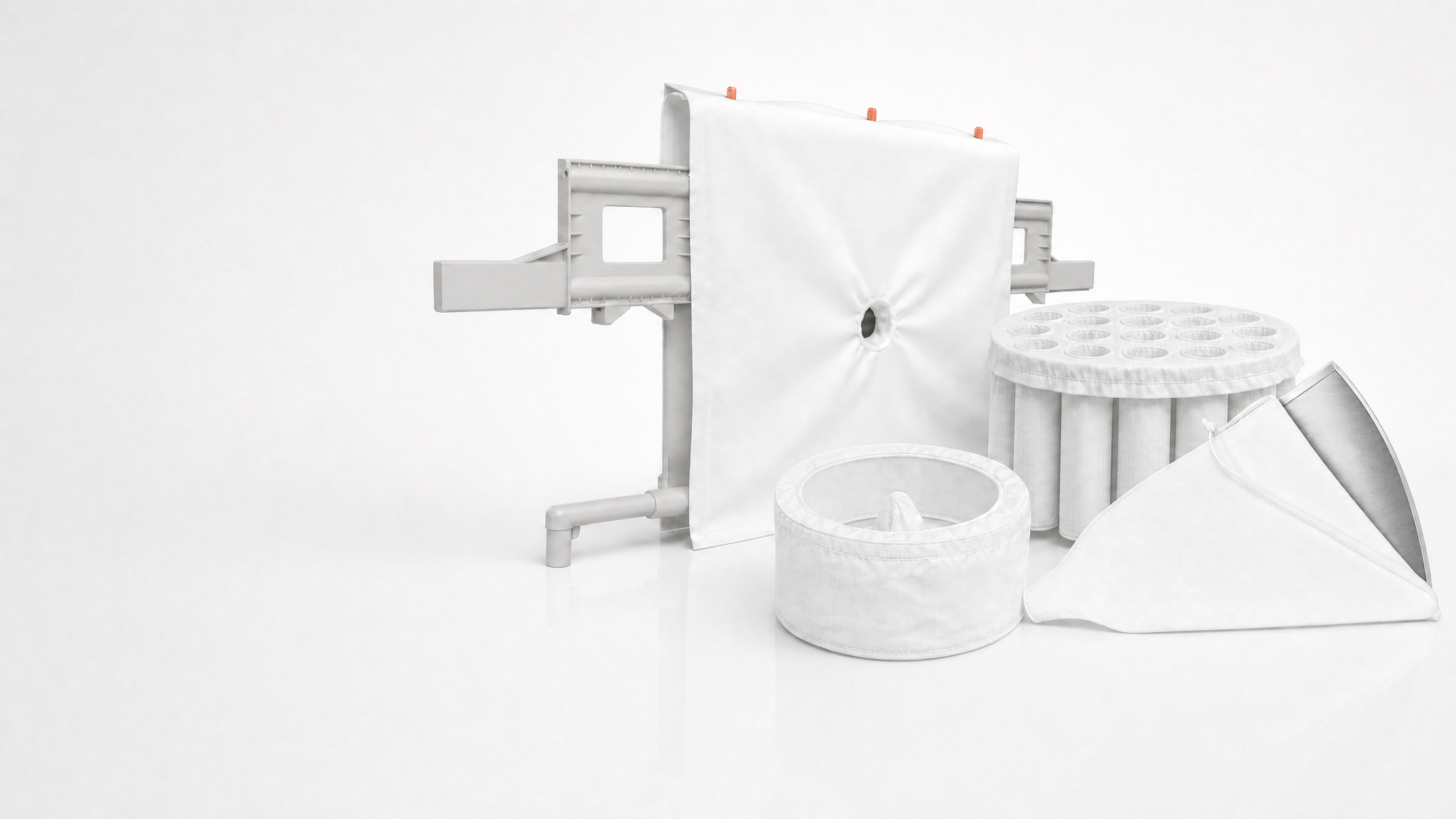
When a fluid bed dryer is down, the impact is immediate: longer batch times, unstable airflow, and quality risk at discharge. If you run a Glatt GPCG or WST system, the right replacement FBD bag has to fit correctly, breathe evenly, and withstand repeated cleaning cycles without losing shape.
🔑 Key Takeaways
- Compatible replacement FBD bags for Glatt GPCG and WST systems should match the original finger layout, dimensions, and sealing points.
- Multi-finger designs improve distribution and help keep airflow uniform across the product bed.
- Antistatic options are essential for dusty powders, solvent-sensitive products, and ATEX-related applications.
- You can configure your fluid bed dryer filter fabric online to receive a pre-filled, non-binding specification and inquiry instantly.
💡 Tip: If your Glatt bag starts to “neck” at the fingers, wrinkles in service, or leaks dust at the top seam, the issue is often fit and fabric behavior—not just age.
⚙️ What Makes a Compatible Glatt FBD Bag Work
A replacement bag is more than a simple sewn textile. In a fluid bed dryer, the bag must support stable airflow, retain product, and tolerate mechanical stress from vibration, pulsing, and cleaning. For Glatt GPCG and WST systems, that usually means matching the original multi-finger geometry closely.
At R+F, our RF-FBD Series fluid bed dryer fabrics are engineered as compatible alternatives for operators who need dependable filtration and repeatable fit. The goal is straightforward: keep the machine running with minimal downtime and consistent process behavior.
Key fit factors operators should check
- Finger count and finger spacing
- Bag length, diameter, and collar geometry
- Seam construction and reinforcement at stress points
- Closure type and mounting interface
- Fabric permeability and surface finish
🔬 Multi-Finger Design: Why It Matters in Production
In a fluid bed dryer, each finger helps distribute air more evenly into the product bed. If the layout is wrong, you may see channeling, dead zones, unstable fluidization, or excessive dusting. A correctly built bag keeps the process balanced and helps protect product quality.
Rule of thumb: When replacement bags are matched to the original finger pattern and airflow class, operators usually see more stable drying and fewer surprises during scale-up or product changeover.
| Bag Design Choice | Typical Operator Benefit | When to Prefer It |
|---|---|---|
| Standard multi-finger bag | Balanced airflow and reliable product retention | General-purpose drying with routine cleaning |
| Antistatic multi-finger bag | Lower electrostatic risk and safer operation | Fine powders, solvent exposure, or ATEX areas |
| Reinforced seam construction | Better durability at high mechanical stress points | Frequent bag handling or aggressive CIP/SIP cycles |
🛠️ Choosing Antistatic Options for Dusty or Sensitive Products
Many plants need antistatic fabric to reduce spark risk and limit charge buildup on the bag surface. This becomes especially important when handling low-conductivity powders or operating in classified zones. If you are troubleshooting static-related issues, see our guidance on antistatic and ATEX requirements.
⚠️ Caution: Never assume a standard replacement bag is safe in a classified area. Confirm the required conductivity level, grounding concept, and site-specific safety rules before installation.
📋 What to Check Before Ordering a Replacement Bag
Before you specify a new bag, measure the current part and verify the machine data plate. Small differences in collar shape, finger geometry, or seam position can affect installation and airflow performance. If needed, our online tool can help you configure your fluid bed dryer filter fabric online and generate a pre-filled, non-binding inquiry.
📋 Pre-order checklist
- Machine model: Glatt GPCG or WST
- Bag dimensions and finger count
- Fabric type and permeability target
- Antistatic requirement, if applicable
- Operating temperature and cleaning method
- Any special seam, collar, or reinforcement details
Check wear at the fingers, top seam, and collar area to identify whether the failure was caused by abrasion, static, or poor fit.
Confirm geometry against the original part so the new bag installs without distortion or leakage.
Choose standard or antistatic construction based on product behavior and plant safety requirements.
🏭 Where Compatible FBD Bags Fit Into Your Plant Strategy
For operators, compatible replacement bags are mainly about uptime, reproducibility, and predictable maintenance planning. If your site already uses engineered fabrics on other solid-liquid or solids-handling equipment, you know how much a stable textile specification can improve the day-to-day run.
R+F also supports other process equipment such as RF-FF Series filter press fabrics and RF-BF Series belt filter fabrics, so plants can standardize quality across multiple machines. For fluid bed systems specifically, the fluid bed dryer machine page and the pharmaceutical applications page are useful starting points when you need to validate process requirements.
📩 Need Help Choosing the Right Fabric?
Our technical team at R+F FilterElements can help you find the perfect filter fabric for your specific application. Get in touch for a free consultation — we will recommend the right solution based on your machine, process, and operating conditions.
Prefer to move faster? You can also configure your fluid bed dryer filter fabric online and receive a pre-filled, non-binding specification and inquiry instantly.