
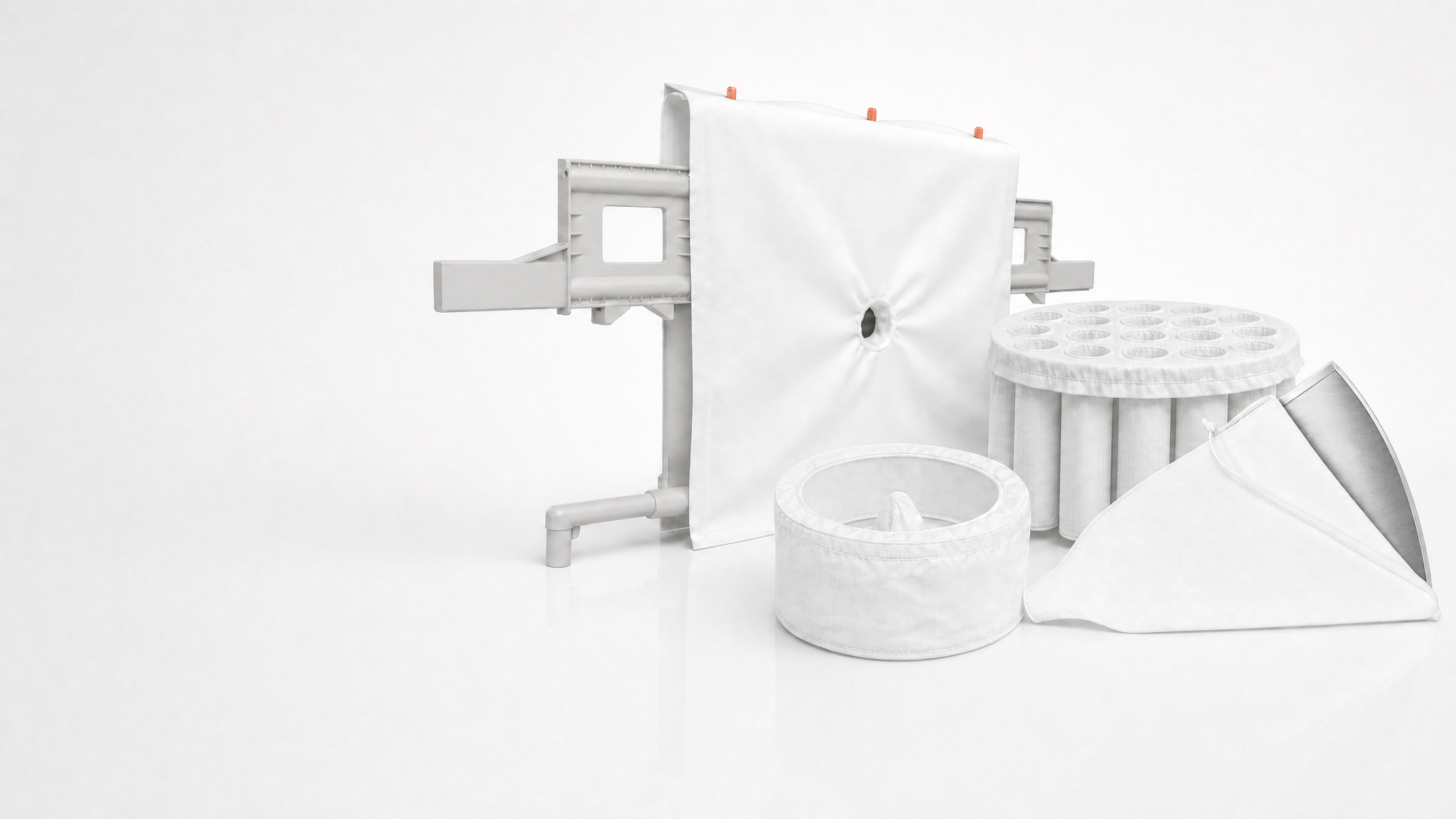
Drip and leakage between filter press plates usually show up first as damp corners, streaks on the frame, or liquid collecting under the press. For an operator, the key is to separate a fabric problem from a seal problem quickly, because the fixes are very different and downtime adds up fast.
In this guide, we’ll look at the most common root causes of seal and gasket failures on filter press cloths, how CGR designs change the picture, and what you can check before you order replacements for your filter press.
🔑 Key Takeaways
- Leakage between plates is often caused by worn gaskets, not just the cloth itself.
- Wrong cloth dimensions or poor seating can create bypass paths even when the fabric is fine.
- Insufficient closing pressure and uneven plate alignment are common operational causes.
- CGR cloths can improve sealing performance when the press and plates are designed for that system.
⚙️ What Seal and Gasket Failures Look Like in the Plant
Leakage rarely starts as a dramatic failure. More often, you’ll see drip leakage at the plate edges, wet spots on the lower beam, or fines escaping during filling and squeezing. If the problem worsens as pressure rises, the issue may be at the cloth edge, the gasket line, or the plate contact surface.
For more background on this symptom pattern, see our dedicated problem page on drip leakage between plates.
Typical operator symptoms
- Liquid drips from one or several plate corners
- Moisture appears only during feed or squeeze phase
- Cake edges are uneven or wash water bypasses at the perimeter
- One side of the press leaks more than the other
⚠️ Caution: Do not keep increasing closing pressure blindly. If the cloth is mis-sized or the gasket is worn, extra force can damage plates, frames, and sealing surfaces.
🔬 Root Causes: Cloth, Gasket, or Operating Conditions?
The first step is to identify whether the leak follows the cloth, the plate seal, or the pressing conditions. In practice, most operators find that more than one factor contributes.
| Likely cause | How it shows up | What to check |
|---|---|---|
| Worn gasket / seal | Leakage at plate perimeter, even with correct cloth | Compression set, cracks, flattening, chemical attack |
| Wrong cloth size | Edge lifting, poor seating, bypass at corners | Cutout dimensions, center hole position, seam placement |
| Insufficient pressure | Leakage during high solids load or squeeze phase | Hydraulic closing force, plate alignment, feed pressure |
| Damaged plate surface | Leak persists after cloth replacement | Cracks, grooves, warped contact faces |
1) Worn gaskets
Gaskets age from heat, chemicals, mechanical compression, and repeated washing. If the gasket has taken a permanent set, it may no longer provide enough contact pressure to stop liquid from escaping. This is especially common in aggressive wastewater and chemical service, such as wastewater filtration and chemical industry applications.
2) Wrong cloth size or poor fit
A cloth can look correct at a glance and still be wrong by a few millimeters at the perimeter. That is enough to create a leak path. Check whether the cloth is seated fully in the plate recess, whether seam or hem placement interferes with sealing, and whether the material is specified for your exact plate type. If your press uses a standard side-seal design, compare it with RF-FF Series filter press cloths to confirm the right configuration.
3) Insufficient closing pressure
If the press does not close with enough force, the gasket and cloth edge cannot compress properly. This can be caused by hydraulic issues, worn plate surfaces, misalignment, or simply running the press beyond its intended duty. A pressure problem often becomes visible only when slurry viscosity rises or the cake builds unevenly.
Rule of thumb: If leakage gets worse as pressure rises, suspect sealing contact. If leakage appears immediately at start-up, suspect cloth fit, gasket condition, or plate alignment first.
🛠️ How to Diagnose the Failure on Shift
Use a repeatable check so you can avoid replacing good cloths unnecessarily. A disciplined inspection often saves one full shutdown cycle.
Mark where the drip appears. Corner-only leakage usually points to fit or alignment, while full-perimeter leakage often indicates gasket wear.
Open the press and verify that the cloth lies flat, is centered, and is not pinched or folded at the sealing edge.
Look for flattening, cuts, chemical swelling, or grooves on the sealing surfaces. Small defects can create repeat leaks.
Confirm closing force, feed pressure, and cycle timing against the machine specification before ordering parts.
📋 Pre-replacement checklist
- Cloth dimensions match the plate type and recess geometry
- Gaskets are elastic and free of cracks or compression set
- Plate surfaces are clean, flat, and undamaged
- Hydraulic closing pressure reaches the target value
- Leakage location has been documented during operation
💡 CGR: When a Better Seal Makes Sense
CGR cloths are worth considering when your press design supports them and you need stronger perimeter sealing. In a CGR arrangement, the cloth is integrated to improve edge sealing against the plate, reducing the risk of bypass and drip leakage. That can be especially useful in fine solids service or processes with frequent washing.
If you are standardizing fabric selection across multiple machines, it can help to compare press cloth options with other filtration systems too, such as our RF-BF Series belt filter fabrics or RF-CF Series centrifuge fabrics for related process conditions.
📊 Fixes That Actually Reduce Drip Leakage
Once you know the root cause, apply the fix that matches the failure mode. That usually means replacing worn gaskets, correcting cloth dimensions, or adjusting the press setup rather than simply ordering a new fabric grade.
- Replace worn gaskets when the seal has permanent compression set or visible damage.
- Correct cloth dimensions if the edge lifts, folds, or misses the sealing land.
- Restore closing pressure and confirm plate alignment if the seal only fails under load.
- Upgrade to CGR when your machine and plates are designed for it and leakage is a recurring issue.
💡 Tip: If you are unsure whether the failure is cloth-related or seal-related, use our find and configure the right filter fabric with our Solution Finder to select the machine, define the operating conditions, and receive a pre-filled, non-binding specification request.
🏭 Choosing the Right Fabric for Your Process
Seal performance is only one part of the picture. Your slurry chemistry, solids load, washing requirements, and cycle pressure all affect how well a cloth will seal over time. For demanding sectors such as mining or pharmaceutical processing, the right material and edge construction can make the difference between stable operation and repeated leakage.
When you need a press cloth designed for your exact machine, start with the machine family and then refine the details. For example, the nutsche filter and pressure leaf filter require different sealing logic than a filter press, even if the filtration duty looks similar.
For a broader comparison, the filter press machine page and the short filter lifespan troubleshooting guide can help you decide whether the issue is mainly mechanical, chemical, or fabric-related.
📩 Need Help Choosing the Right Fabric?
Our technical team at R+F FilterElements can help you find the perfect filter fabric for your specific application. Get in touch for a free consultation — we will recommend the right solution based on your machine, process, and operating conditions.
Prefer a faster starting point? Use our Solution Finder to find and configure the right filter fabric online and receive a pre-filled, non-binding specification and inquiry.