
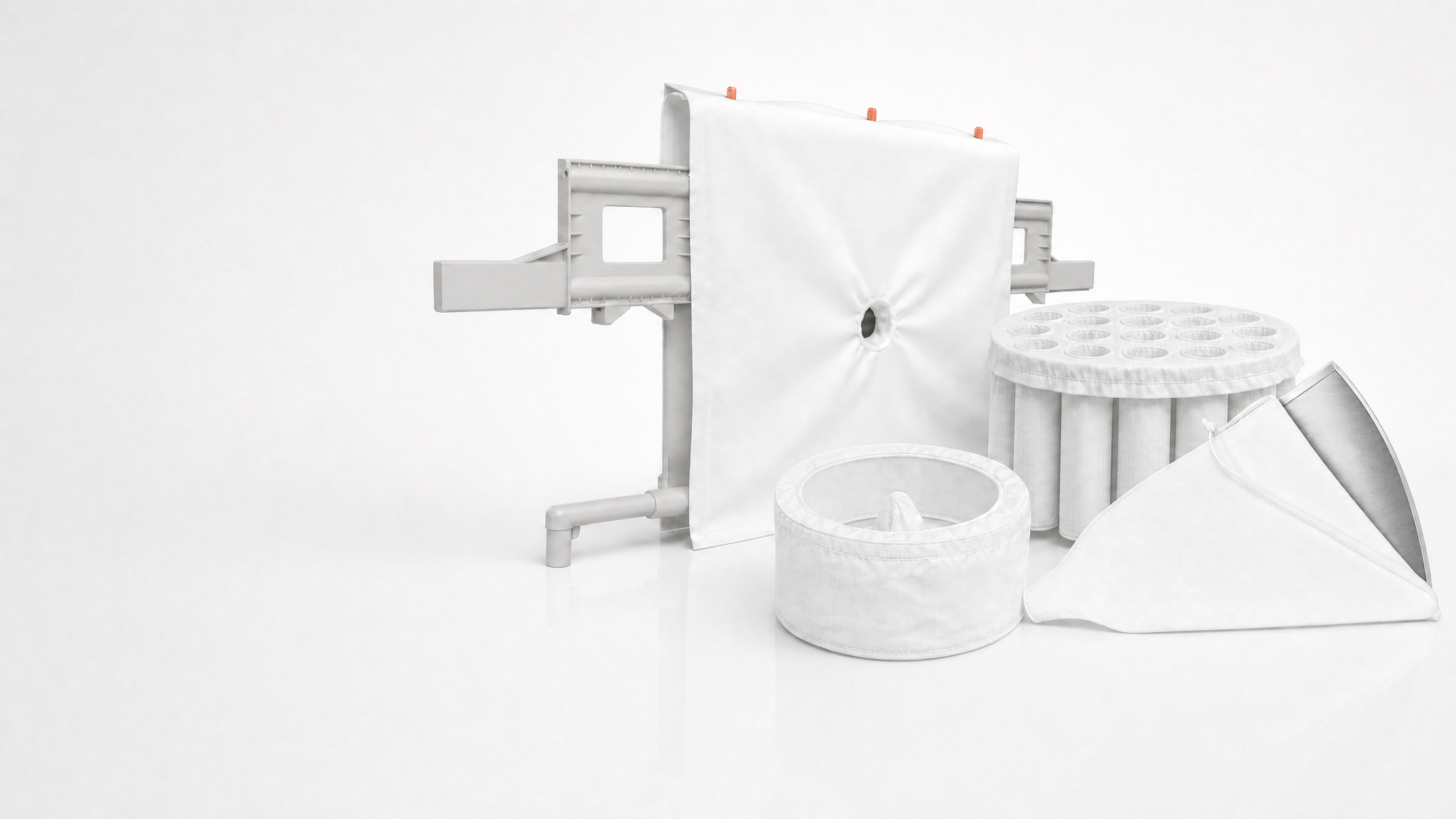
Filter cloth edge damage is one of those issues that starts small and quickly turns into a recurring maintenance problem. If you see fraying, tearing, or premature wear at the borders, the root cause is often not the cloth itself but how it fits, runs, and reacts to the process conditions.
In daily operation, edge failures can reduce sealing quality, increase bypass, and shorten cloth life across filter presses, belt filters, centrifuges, and Nutsche systems. The good news: with the right sizing, better edge design, and a few checks on machine alignment and chemistry, most edge damage can be prevented.
🔑 Key Takeaways
- Edge damage usually starts with misalignment, incorrect sizing, or chemical attack.
- Heat-sealed edges and reinforced borders help reduce fraying and tearing.
- Small installation errors can create constant rubbing at the cloth perimeter.
- The right fabric choice for your machine and slurry can extend service life significantly.
⚙️ Why Filter Cloth Edges Fail First
The edge is the most exposed part of the filter cloth. It is where clamping, tracking, tension, and movement all concentrate stress. On a filter press or belt filter, that often means the cloth edge is the first area to show wear even when the filter surface still looks acceptable.
Common wear pattern
- Fraying from repeated mechanical rubbing
- Tearing from excessive tension or poor fit
- Edge curling from heat, chemicals, or moisture imbalance
- Local abrasion at guide points, rollers, or sealing surfaces
💡 Tip: If the damage appears only on one side, suspect tracking or alignment first. Symmetrical wear usually points more toward sizing or process conditions.
🔬 Root Cause 1: Misalignment and Poor Tracking
When a cloth runs off-center, the edge constantly touches guides, frames, or rollers. Over time, this creates a narrow wear line that develops into fraying or a full tear. This is especially common in continuous systems such as a centrifuge, belt press, or rotary disc filter.
What to look for
- Uneven edge wear on left and right sides
- Shiny abrasion marks near the border
- Repeated damage in the same position after replacement
- Cloth drifting toward one side during operation
Verify rollers, guides, and support surfaces are square and clean before blaming the fabric.
Uneven tension pulls the cloth edge into rubbing contact and accelerates border wear.
Make sure the cloth sits flat without twist, sag, or local pinch points along the perimeter.
🧪 Root Cause 2: Incorrect Cloth Size or Construction
A cloth that is too small is stretched hard at the edge; a cloth that is too large can flap, fold, or wrinkle. Both conditions lead to premature border damage. For operators working with Nutsche filters or pressure leaf filters, even a small sizing mismatch can affect sealing and cloth life.
Choosing the right construction matters too. If your process needs edge stability, consider RF-FF Series filter press fabrics or RF-BF Series belt filter fabrics with edge reinforcement designed for demanding service.
| Condition | Typical Edge Symptom | Likely Cause | Best Action |
|---|---|---|---|
| Cloth too tight | Edge splitting | Overstretching at installation | Recheck dimensions and allowance |
| Cloth too loose | Flapping and fraying | Movement against machine parts | Specify correct fit and tension |
| Poor border design | Border wear near seams | Weak edge construction | Use reinforced or heat-sealed edges |
| Wrong machine match | Repeated premature failure | Fabric not suited to duty | Re-evaluate machine and process type |
💡 Root Cause 3: Aggressive Chemicals and Temperature
Chemical exposure can weaken edge fibers long before the full cloth fails. This is a common issue in the chemical industry and in abrasive or reactive slurries where edges are exposed to splashes, cleaning agents, or hot filtrates. If your process includes frequent cleaning, review compatibility carefully.
⚠️ Caution: Do not assume a general-purpose fabric will survive strong acids, alkalis, oxidizers, or hot cleaning cycles. Chemical attack often starts at the edge because border fibers are more exposed.
For higher-risk processes, discuss chemically resistant constructions and suitable finishing with the supplier. In some applications, a fabric from the RF-NF Series needle felt range or a specialized solution such as RF-ANF Series Nutsche pharma fabrics may be more appropriate, depending on temperature, particle load, and media compatibility.
🛠️ Prevention Strategies That Actually Work
The most effective prevention combines correct installation, better cloth construction, and routine inspection. That approach is far cheaper than repeated emergency changeouts, especially in high-throughput plants.
📋 Pre-Operation Edge Damage Checklist
- Check cloth dimensions against the machine drawing
- Inspect rollers, guides, and sealing surfaces for burrs or sharp points
- Confirm the cloth runs centered and flat
- Verify chemical compatibility with cleaning and process media
- Use reinforced borders or heat-sealed edges where edge loading is expected
Rule of thumb: If a cloth edge wears out before the filtration area, the problem is usually mechanical or chemical exposure at the border, not cake loading.
In abrasive service such as mining or wastewater, it is worth reviewing cloth selection more frequently. The right edge finish and reinforcement can make a noticeable difference in uptime and spare-part consumption.
📊 How to Reduce Edge Wear Over the Long Term
Once the main cause is identified, prevention should become part of your standard maintenance routine. For operators, that means checking the fabric during every shutdown, especially after a process change, a cleaning trial, or a machine adjustment.
- Standardize installation so every cloth is fitted the same way.
- Inspect edge condition before the damage spreads into the active filtration zone.
- Document wear patterns to identify recurring misalignment or contact points.
- Upgrade border construction when the process repeatedly stresses the same area.
If you are still deciding between fabric constructions, use our Solution Finder to find and configure the right filter fabric. You can select your filtration machine, define the operating conditions, and receive a pre-filled, non-binding specification and inquiry.
📩 Need Help Choosing the Right Fabric?
Our technical team at R+F FilterElements can help you find the perfect filter fabric for your specific application. Get in touch for a free consultation — we will recommend the right solution based on your machine, process, and operating conditions.
Before you order your next replacement set, consider using our Solution Finder to find and configure the right filter fabric. It is a practical way to compare options for your machine and avoid repeating the same edge damage problem.