
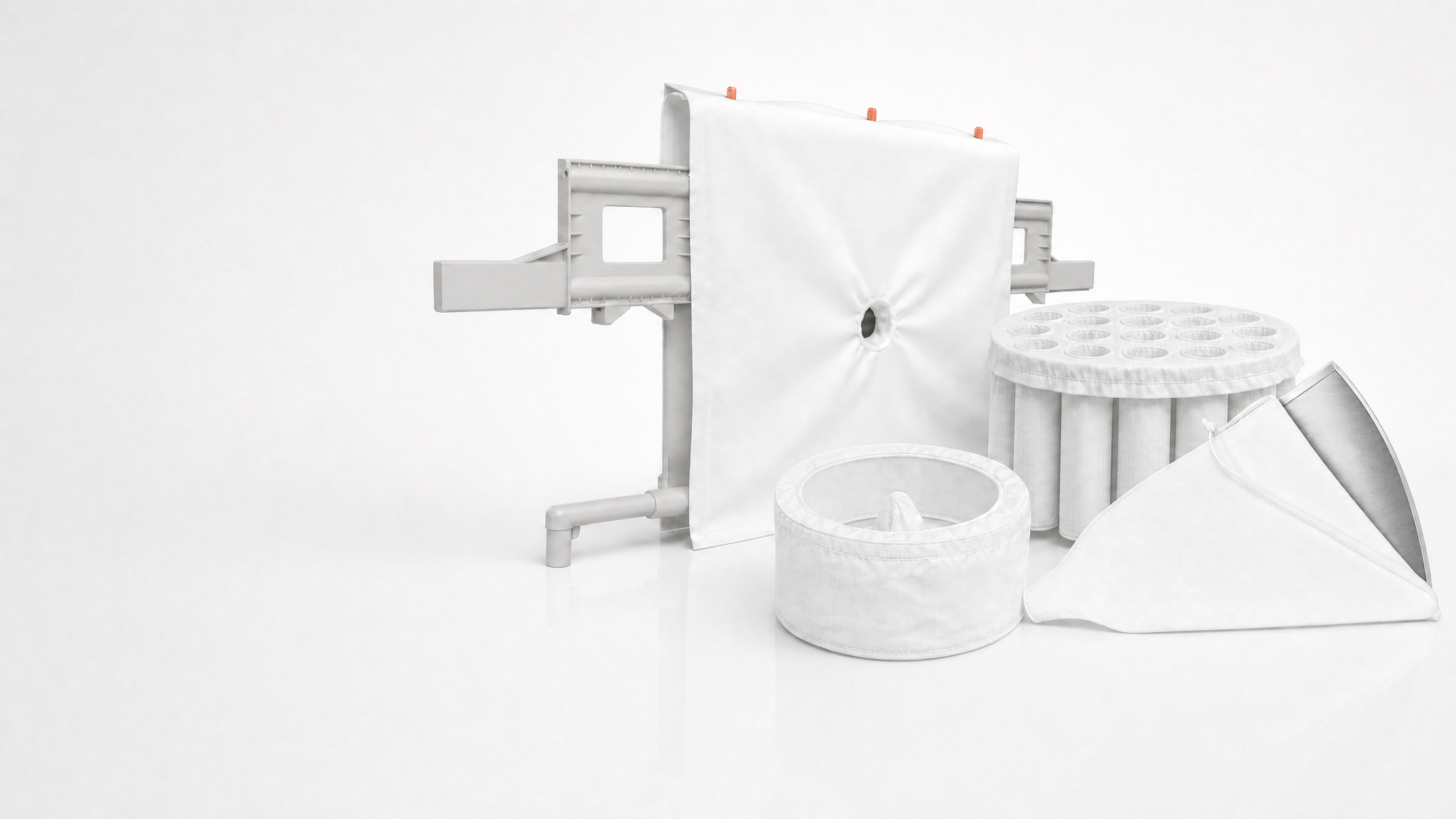
In daily operation, the difference between a filter fabric that runs smoothly and one that causes repeated adjustments often comes down to surface treatment. Heat-setting and singeing are two finishing steps that directly affect dimensional stability, cake release, particle retention, and service life.
For operators, these treatments are not abstract textile terms — they influence how a fabric behaves in a filter press, centrifuge, or belt filter when the plant is under pressure to keep throughput steady and downtime low.
🔑 Key Takeaways
- Heat-setting locks in dimensions and helps the fabric stay stable under load, temperature, and tension.
- Singeing reduces surface hairiness, which can improve cake release and lower initial clogging.
- These treatments are especially valuable when you need consistent filtration results over long operating shifts.
- The right choice depends on your machine, medium, temperature, and cleaning strategy.
⚙️ What Heat-Setting Does for an Operator
Heat-setting is a controlled thermal process that stabilizes the fabric structure after weaving or needling. In practice, it helps the cloth keep its shape instead of stretching, shrinking, or skewing during service. For operators, that means better fit on the machine, more predictable tension, and fewer issues during installation and changeout.
This matters most on equipment where cloth alignment affects sealing and drainage, such as pressure leaf filters, rotary disc filters, and Nutsche filters. If a fabric creeps or changes dimensions, you may see leaks, poor sealing, or uneven cake formation.
💡 Tip: If your cloths repeatedly loosen after startup or during hot operation, heat-setting is often more important than increasing fabric thickness.
Why dimensional stability reduces downtime
- Less re-tensioning after installation
- Better fit in clamps, frames, and sealing zones
- More predictable drainage over the full service cycle
- Lower risk of edge damage from fabric movement
🔬 Why Singeing Improves Surface Smoothness
Singeing removes fine fiber protrusions from the fabric surface. Those tiny hairs can trap solids, hold moisture, and create a rougher interface between cake and cloth. A smoother surface often helps the cake detach more cleanly and can reduce the first-stage buildup that leads to premature blinding.
⚠️ Caution: Singeing should be controlled carefully. Excessive thermal treatment can weaken fibers or alter permeability, which may reduce performance instead of improving it.
For operators dealing with sticky slurries, fine solids, or frequent wash cycles, surface smoothness can have a direct effect on maintenance intervals. Fabrics used in wastewater, mining, and chemical industry processes often benefit from this kind of finishing because the solids load is high and clogging risk is real.
Rule of thumb: If your cake is sticking to the cloth after normal discharge, a smoother, properly singed surface is usually worth investigating before changing the whole filtration setup.
📊 Heat-Setting vs. Singeing: What Each Treatment Solves
Operators often ask whether they need one treatment or both. The answer depends on the problem you are trying to solve. Heat-setting addresses shape and stability, while singeing addresses surface texture and release behavior.
| Treatment | Main benefit | Operator impact | Typical use case |
|---|---|---|---|
| Heat-setting | Dimensional stability | Better fit, less shrinkage, steadier tension | Hot, tensioned, or long-run filtration |
| Singeing | Smoother surface | Improved cake release, less surface clogging | Fine solids, sticky cakes, frequent discharge |
| Both combined | Stable shape + clean surface | Balanced performance and easier operation | High-demand continuous or batch processes |
🛠️ Where Operators Notice the Difference Most
These finishing steps become especially visible in machines with demanding mechanical or product-contact conditions. On a belt filter or belt press, a stable fabric helps maintain tracking and drainage. In a centrifuge, smooth surface behavior can support cleaner solids discharge. In a fluid bed dryer, finish quality matters where air distribution and dust control are sensitive.
📋 Operator checklist before ordering a fabric
- Confirm the machine type and cloth fixation method
- Note operating temperature and chemical exposure
- Identify whether your main issue is shrinkage, clogging, or cake release
- Check if cleaning cycles are aggressive or frequent
- Review whether antistatic or ATEX requirements apply
For example, if you run an ATEX-relevant process, finishing must be considered together with safety needs. In that case, it is worth reviewing the problem page on antistatic and ATEX requirements before selecting a fabric.
Practical signs the finish is helping
- Less cloth distortion after steaming, drying, or hot filtration
- Cleaner cake discharge with fewer residues on the surface
- Reduced early blinding and slower pressure rise
- More repeatable cycle times across shifts
✅ Selecting the Right Fabric Finish for Your Process
If you are choosing between fabrics for a specific machine, start with the process problem rather than the textile name. For a filter press, the RF-FF Series filter press fabrics are often evaluated for stable fit and reliable release. For continuous dewatering, the RF-BF Series belt filter fabrics are a strong reference point when surface behavior and dimensional stability both matter.
Other machines place different demands on the finish. A RF-CF Series centrifuge fabric needs dependable geometry under rotational stress, while a RF-NF Series needle felt may be selected when the balance between depth filtration and surface condition is critical. If you are working in pharma, the RF-ANF Series Nutsche pharma fabrics may require especially controlled finishing for cleanliness and reproducibility.
Decide whether you are fighting shrinkage, poor release, clogging, or all three.
Filter presses, centrifuges, and belt systems each benefit from different surface and stability priorities.
Find and configure the right filter fabric with our Solution Finder to receive a pre-filled, non-binding specification and inquiry.
When you want a faster starting point, use our Solution Finder to choose your machine, define your operating conditions, and generate a tailored request. It is a practical way to narrow down the right fabric finish before you start a trial or replacement order.
📩 Need Help Choosing the Right Fabric?
Our technical team at R+F FilterElements can help you find the perfect filter fabric for your specific application. Get in touch for a free consultation — we will recommend the right solution based on your machine, process, and operating conditions.