
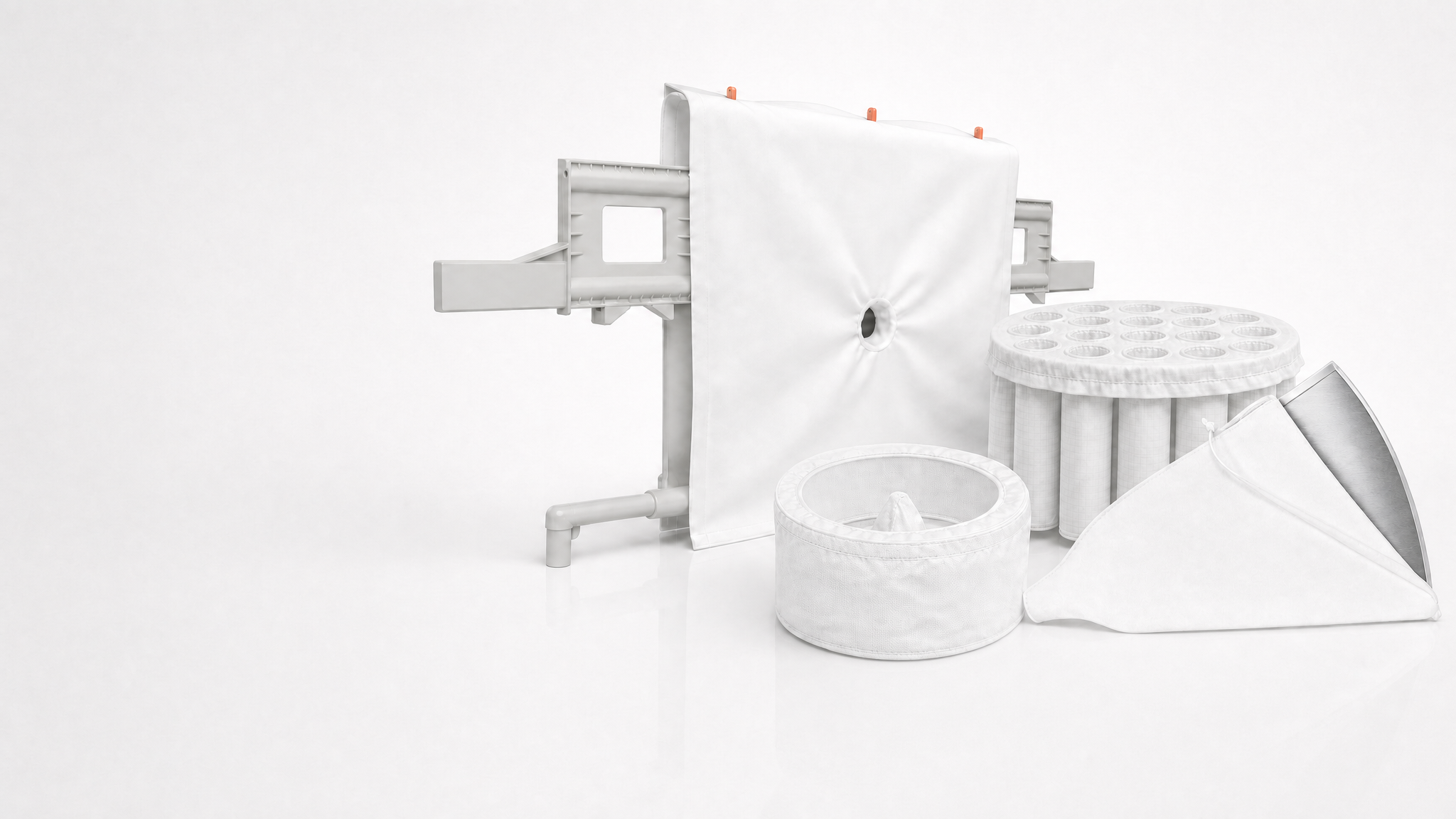
Geothermal plants are no longer just power producers — many operators now see geothermal brine as a feedstream for silica removal, pre-treatment, and even lithium recovery. That means filtration has to survive extreme heat, high salinity, and fast-changing precipitation behavior while keeping uptime high. In this environment, the right filter fabric is not a commodity item; it is a process component.
🔑 Key Takeaways
- Geothermal brines demand high-temperature, chemically resistant filter fabrics.
- Pre-treatment helps reduce silica scaling and protects downstream equipment.
- Lithium recovery creates a dual revenue model: energy plus minerals.
- R+F supports filter press and pressure filter operators with engineered media for harsh brine service.
💡 Tip: If you are evaluating a new geothermal line, map the filtration step first: solids removal, silica control, or mineral recovery. The fabric specification changes with each duty.
⚙️ Why Geothermal Brine Is a Filtration Challenge
From the operator’s side, geothermal brine is one of the toughest liquid streams to handle. It can arrive at 150°C and above, contain dissolved silica, chlorides, calcium, iron, and trace heavy metals, and then start precipitating as soon as pressure, pH, or temperature changes. That combination causes rapid blinding, scaling, and shortened cloth life.
In many plants, the first filtration step sits between the wellhead separator and downstream heat exchangers, crystallizers, or mineral recovery units. The goal is simple: remove the suspended solids before they create filter cloth clogging, poor flux, or unstable cake release. For that duty, operators often look at a robust filter press or pressure leaf filter, depending on throughput and solids loading.
🔬 Pre-Treatment: Protecting the Process Before Silica Scales
Silica scaling is the enemy of stable geothermal operation. Once silica begins depositing in pipes, filters, and heat exchangers, pressure drops rise and maintenance costs follow. Pre-treatment filtration removes the seed solids that accelerate nucleation and keeps the process more predictable.
What operators try to remove early
- Suspended silica and fine mineral fines
- Iron hydroxides and heavy metal precipitates
- Scaling nuclei that trigger downstream deposition
- Unexpected solids after flashing or pH adjustment
⚠️ Caution: Geothermal brines can precipitate solids very quickly after flashing or cooling. If the cloth is not designed for the temperature and chemistry, fouling can become irreversible.
For these services, many plants prefer a pressure-driven solution such as a filter press. The fabric must keep its dimensional stability while handling hot, aggressive brine. R+F recommends engineered media such as RF-FF Series filter press fabrics for solid-liquid separation in demanding high-temperature applications, and where longer service life is critical, RF-PLF Series pressure leaf filter media can be a strong option.
Rule of thumb: If the brine is hot enough to change precipitation behavior during filtration, choose the fabric for the worst-case temperature, not the average one.
📊 Lithium Recovery Creates a Dual Revenue Model
Across Europe, the business case for geothermal projects is changing. Operators are increasingly looking beyond electricity and heat toward lithium from geothermal brine. That creates a dual revenue model: one asset, two value streams. But mineral recovery only works if solids handling is stable and clean enough for downstream concentration and purification steps.
In practice, this means the filtration stage must support consistent cake formation, low contamination, and easy discharge. A stable cake can protect downstream DLE or polishing systems and reduce the risk of contamination in the product stream. For plants that need pre-separation before recovery, a pressure leaf filter or filter press is often chosen for compact footprint and reliable solids capture.
| Filtration goal | Operator priority | Typical machine | Fabric focus |
|---|---|---|---|
| Pre-treatment of brine | Protect equipment, reduce fouling | Filter press | Temperature stability, chemical resistance |
| Silica control | Limit scaling and blinding | Pressure leaf filter | Fine retention, clean release |
| Lithium recovery | Consistent solids removal, purity | Filter press | Low contamination, long life |
🛠️ What the Filter Fabric Must Do at 150°C+
At geothermal duty, the cloth is exposed to heat, salts, pressure cycling, and abrasive mineral particles. That is where material selection matters most. We see strong demand for PEEK and high-temperature PET constructions, especially when the process combines thermal stress with concentrated brines and aggressive chemistry.
For operators working on a filter press line, fabric choice can directly affect cake release, filtrate clarity, and maintenance intervals. If you also face cake release problems or short filter lifespan, the issue is often not only the machine — it is the interaction between temperature, brine chemistry, and media construction.
📋 Pre-Selection Checklist for Geothermal Brine Filtration
- Maximum brine temperature at the cloth face
- Chloride concentration and pH range
- Presence of silica, iron, and heavy metal precipitates
- Required solids capture and filtrate clarity
- Expected cleaning method and cycle frequency
- Desired service life and changeout interval
🏭 Matching the Machine to the Duty
Not every geothermal project needs the same machine. For compact, high-pressure solids capture, a filter press is often the workhorse. For large continuous streams, pressure filtration may be better suited. The best choice depends on the plant layout, solids concentration, and whether the priority is pre-treatment or mineral recovery.
If your upstream process includes wet solids thickening or a side-stream clarification step, it may also make sense to compare your duty with a centrifuge or a vacuum filter. For most geothermal brine clarification projects, however, the focus remains on stable cloth performance in hot, saline, scaling-prone conditions.
To speed up selection, operators can find and configure the right filter fabric with our Solution Finder. You choose the machine, enter the process data, and receive a pre-filled, non-binding specification and inquiry.
✅ R+F Support for High-Temperature Geothermal Applications
R+F FilterElements develops engineered filter fabrics for severe industrial separation tasks, including geothermal brine treatment. We work with operators who need reliable performance in high-temperature environments, chemical resistance against concentrated brines, and stable solids capture for long campaign times.
Whether your plant is focused on chemical industry-style process conditions, mineral recovery, or wastewater-like polishing steps, the same basic requirement applies: the fabric has to survive the process and keep the unit running. That is why we place special emphasis on media selection for filter presses and pressure leaf filters.
💡 Tip: If silica scaling is your main pain point, test cloths under real brine conditions, not just water. Hot brine can behave very differently from lab liquids.
For operators comparing equipment and media, our article on drip leakage is also useful when evaluating sealing, edge behavior, and clean discharge in hot filtration duties.
📩 Need Help Choosing the Right Fabric?
Our technical team at R+F FilterElements can help you find the perfect filter fabric for your specific application. Get in touch for a free consultation — we will recommend the right solution based on your machine, process, and operating conditions.
Prefer a faster start? Use our Solution Finder to find and configure the right filter fabric online for your geothermal brine process and receive a pre-filled, non-binding specification request.