
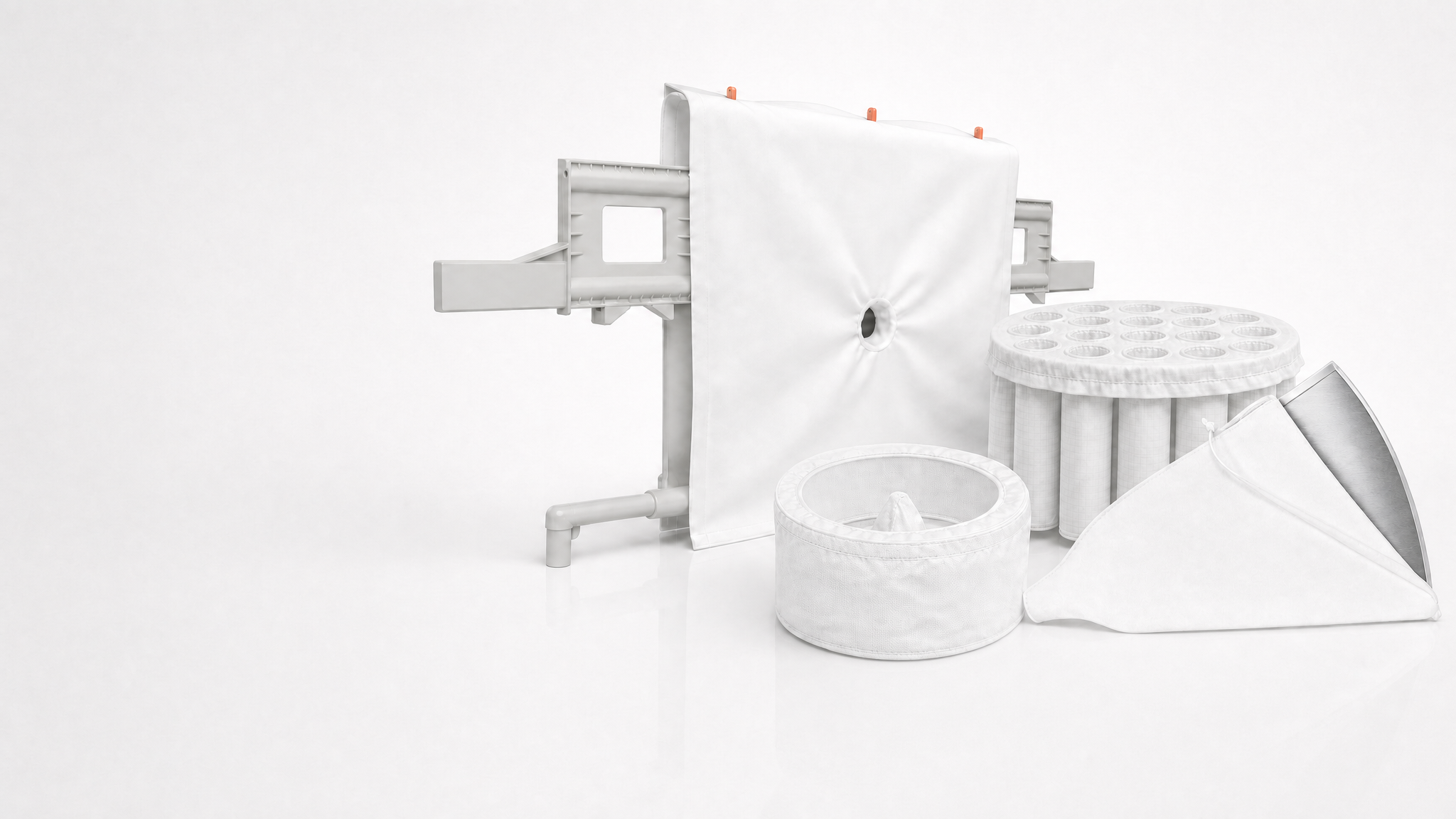
Nickel and cobalt hydrometallurgy puts filter fabrics under some of the toughest conditions in mining: hot acid, abrasive laterite residues, and very fine precipitates that love to blind a cloth. If you run an HPAL circuit, a precipitation train, or cobalt purification step, the right filter media can make the difference between stable throughput and constant downtime.
🔑 Key Takeaways
- HPAL, precipitation, and purification circuits need filter cloths built for pH 1–2, elevated temperature, and abrasion.
- RF-FF Series fabrics are well suited for large filter presses handling laterite residue and mixed hydroxide precipitates.
- RF-BF Series fabrics support continuous dewatering on belt filters in high-throughput mining hydrometallurgy.
- For EV battery supply chains, stable nickel and cobalt filtration helps protect recovery, cake dryness, and downstream product quality.
🏭 Why Nickel and Cobalt Filtration Is So Demanding
Nickel and cobalt production from laterite and sulphide ores often starts with aggressive leaching and ends with solids separation that must stay stable for long campaigns. In HPAL (High Pressure Acid Leach) plants, the slurry is hot, acidic, and loaded with fine, abrasive residue that attacks filter media and reduces cloth life. In sulphide processing and downstream purification, the challenge shifts to fine precipitates, fast cycle times, and consistent moisture control.
These metals are central to the battery materials supply chain. As EV demand grows, plants need dependable filtration to support nickel and cobalt recovery, reduce losses, and keep product quality consistent for further refining. That is why operators in mining hydrometallurgy increasingly look for fabrics designed for mining applications and corrosive process conditions.
⚠️ Caution: Acidic nickel and cobalt slurries can degrade poorly matched fabrics quickly. Always verify chemical resistance, seam construction, and temperature rating before extended operation.
⚙️ HPAL Residue Filtration on Large Filter Presses
In HPAL circuits, residue filtration is often one of the hardest jobs in the whole plant. Large filter presses must handle dense, abrasive solids while keeping cycle times short and cake release predictable. A cloth that performs well in neutral service may fail quickly in hot acid if it is not engineered for chemical resistance and mechanical strength.
For this duty, RF-FF Series filter press fabrics are a strong fit because they are designed for industrial solid-liquid separation where high throughput and harsh chemistry meet. On a filter press, operators usually want:
- Low cloth blinding from ultrafine residue
- Stable seam and edge performance under pressure
- Good cake release to reduce wash and discharge issues
- Resistance to acid, heat, and repeated mechanical stress
Rule of thumb: If residue is both acidic and abrasive, choose a fabric for durability first, then optimize open area and cake release.
Comparison: Filter Press vs Belt Filter in Ni/Co Service
| Aspect | Filter Press | Belt Filter |
|---|---|---|
| Typical duty | Batch dewatering, residue filtration, fine solids | Continuous dewatering, high-volume slurry handling |
| Best advantage | Higher cake dryness and strong solids capture | Steady throughput and simpler continuous operation |
| Fabric focus | Pressure resistance, seam strength, release behavior | Drainage, wear resistance, stable tracking |
| Common challenge | Blinding and difficult discharge | Fouling, edge wear, and wash performance |
🔬 Belt Filters for Continuous Hydrometallurgy
Where plants favor continuous operation, belt filters are often used for slurry dewatering and intermediate solids handling. This is especially relevant in nickel and cobalt circuits where throughput is high and operators need a stable, low-interruption process. In these cases, RF-BF Series belt filter fabrics are designed to support drainage, abrasion resistance, and reliable service in corrosive environments.
On a belt filter, the fabric has to do more than simply retain solids. It must drain quickly, keep the belt running true, and survive repeated cleaning cycles. If your circuit includes sticky precipitates or fine hydroxides, cloth selection becomes a direct lever on uptime.
📋 Belt Filter Selection Checklist
- Does the slurry contain fine nickel/cobalt hydroxides or sulphate residues?
- Are wash water and process liquor both acidic?
- Is belt tracking stable under wet, heavy cake loads?
- Do you see edge wear, seam stress, or premature clogging?
💡 Tip: If your belt filter is losing drainage capacity before the belt is worn out, the issue is often pore blocking from fines rather than simple mechanical damage.
🛠️ Cobalt Purification and Fine Precipitate Control
Cobalt purification stages often involve very fine precipitates that are difficult to capture cleanly. These solids can pass through a loosely matched fabric or blind a tight one. The operator’s goal is to balance clarity, throughput, and moisture content without turning cloth cleaning into a constant interruption.
In purification and polishing steps, the best cloth is often the one that stays consistent over time. If you are evaluating a new installation or replacing an older cloth design, start with your machine type and slurry profile, then find and configure the right filter fabric with our Solution Finder to receive a pre-filled, non-binding specification and inquiry.
📊 What Operators Should Watch in Daily Running
Whether you run laterite residue filtration or sulphide concentrate dewatering, the same troubleshooting themes show up again and again: blinding, short cloth life, poor cake release, and drip leakage. Early detection saves time and avoids downstream losses in product recovery.
Look for uneven solids build-up, blocked pores, or wet streaks that indicate poor drainage.
If cake remains attached, review permeability, surface finish, and discharge conditions.
Edge fraying, seam fatigue, and localized abrasion often point to alignment or slurry distribution issues.
- Watch for filter cloth clogging after changes in particle size distribution
- Review short filter lifespan if acid and abrasion are both increasing wear
- Investigate cake release problems when discharge becomes slower or incomplete
- Check drip leakage if filtrate quality or housekeeping deteriorates
For plants that need a robust, process-specific solution, R+F supports hydrometallurgy users with engineered fabrics for belt filters, filter presses, and other separation equipment used across the wider chemical industry.
✅ Choosing the Right Fabric for Ni/Co Hydrometallurgy
The right cloth is not just about the base polymer. It is about how the fabric behaves in the real plant: acid resistance, thermal stability, abrasion tolerance, and release performance under repeated cycles. For laterite and sulphide ore processing, the best results usually come from matching fabric structure to the machine duty and slurry behavior.
📋 Pre-Selection Checklist
- Machine type: filter press or belt filter?
- Slurry chemistry: pH, oxidizing conditions, temperature
- Solids profile: fine precipitates, abrasive residue, crystal shape
- Performance target: dryness, clarity, throughput, or cloth life
In many operations, the most practical path is to compare a press-grade cloth such as RF-FF Series filter press fabrics with a continuous-duty option like RF-BF Series belt filter fabrics. From there, you can align the media to your operating reality instead of forcing the process to fit the cloth.
📩 Need Help Choosing the Right Fabric?
Our technical team at R+F FilterElements can help you find the perfect filter fabric for your specific application. Get in touch for a free consultation — we will recommend the right solution based on your machine, process, and operating conditions.
If you want a fast starting point, use our Solution Finder to configure the right filter fabric online and receive a pre-filled, non-binding specification and inquiry.