
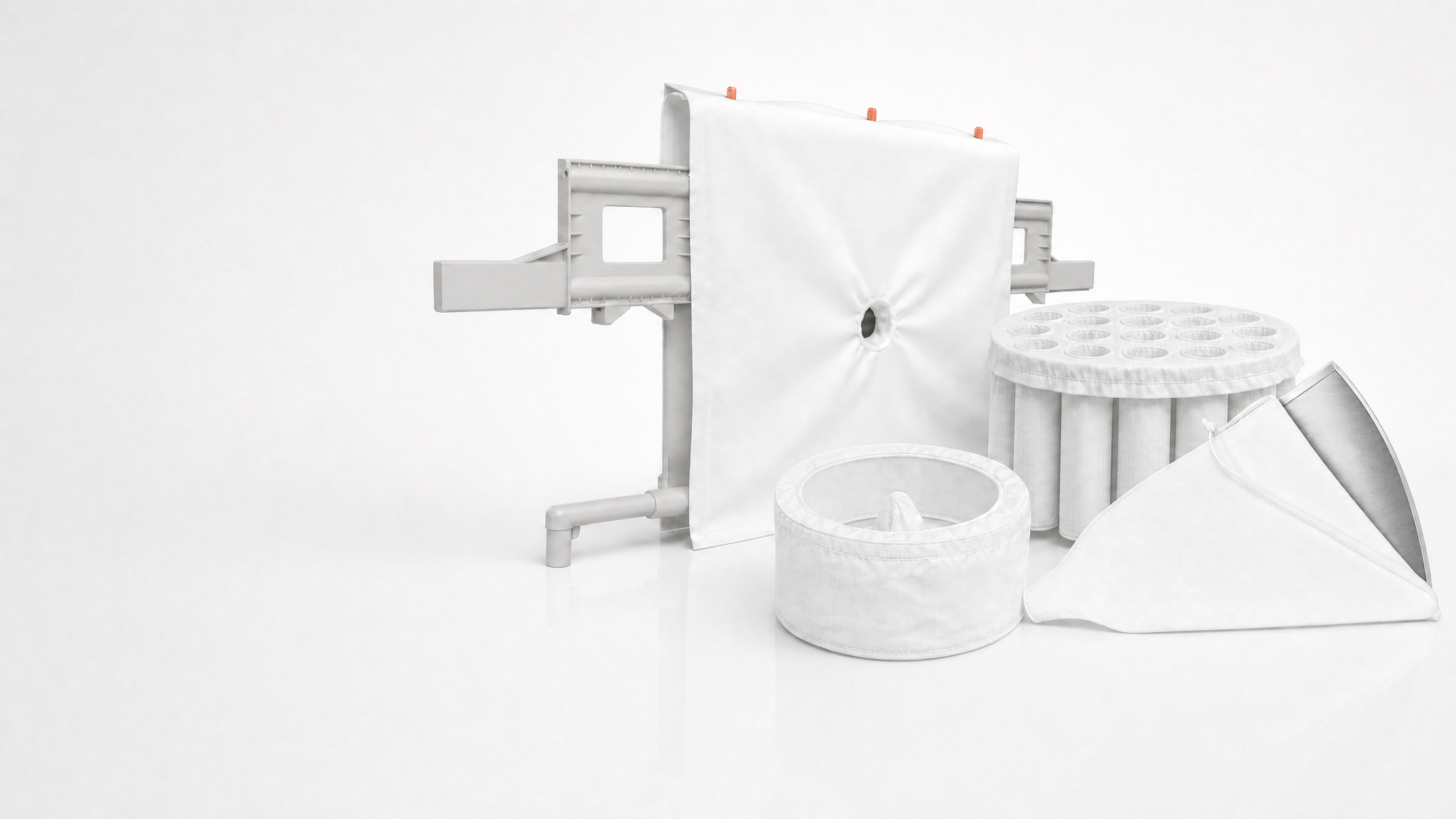
In chemical filtration, the fabric is often the first line of defense between aggressive media and stable production. If your process handles solvents, acids, alkalis, oxidizers, or hot slurries, the wrong filter cloth can mean rapid wear, leakage, contamination, and unplanned downtime.
The good news: with the right material selection, sewing concept, and machine fit, you can keep filtration reliable even under extreme pH, high temperature, and corrosive chemistry. This guide shows what matters most on the plant floor and where to start when choosing fabrics for the chemical industry.
🔑 Key Takeaways
- Chemical resistance starts with matching polymer, weave, and seam design to the process medium.
- Temperature and pH limits must be checked together; a fabric that survives one may fail under the other.
- For filter presses, centrifuges, and pressure filters, small fabric details can have a big impact on cake release and lifetime.
- The fastest way to narrow options is to use find and configure the right filter fabric with our Solution Finder.
⚗️ Why Aggressive Media Are So Hard on Filter Fabrics
In chemical plants, filter fabrics are exposed to more than just solids. They face solvents, acids, caustics, oxidizing agents, hot wash liquids, and frequent cleaning cycles. Over time, these conditions can attack fibers, weaken seams, or harden the fabric so it no longer seals properly.
From the operator’s perspective, failure usually shows up as one of four symptoms: shorter cloth life, poorer filtrate quality, harder cake release, or visible damage around seams and edge zones. If these issues sound familiar, it is worth checking related problem pages such as short filter lifespan and cake release problems.
⚠️ Caution: Do not judge chemical resistance by fiber name alone. Temperature, concentration, exposure time, and cleaning chemistry all influence real service life.
🧪 Material Selection Guide for Chemical Filtration
The right fabric starts with the medium. A solid-liquid separation step in a reactor discharge, vacuum filter, or filter press may need a completely different fabric than a wet cake discharge in a centrifuge or a polishing stage on a pressure leaf filter.
| Process condition | What to prioritize | Typical operator concern |
|---|---|---|
| Strong acids / alkalis | Polymer compatibility, seam durability | Premature embrittlement or seam failure |
| High temperature | Thermal stability, shrink resistance | Loss of fit, sealing issues |
| Oxidizing media | Oxidation resistance, shorter inspection intervals | Surface degradation and brittle cloth |
| Abrasive slurry + chemistry | Wear resistance plus chemical resistance | Rapid thinning at wear zones |
For many chemical duties, the most practical starting points are engineered fabrics such as the RF-FF Series filter press fabrics and RF-CF Series centrifuge fabrics. If your process needs needle felt construction for specific retention or dewatering behavior, the RF-NF Series needle felt is often worth evaluating.
🏭 Matching the Fabric to the Machine
Machine geometry matters as much as chemistry. A fabric that performs well on a flat filter press may behave very differently on a rotating basket or moving belt. That is why the fabric has to fit the machine, discharge behavior, and cleaning method together.
Common operator pairings
- Filter press: prioritize sealing, cake release, and seam strength.
- Belt filter: prioritize drainage behavior, belt stability, and chemical wash resistance.
- Centrifuge: prioritize mechanical strength, dimensional stability, and clean discharge.
- Nutsche filter: prioritize purity, tight sealing, and compatibility with CIP/SIP or solvent service.
If your plant runs solvent-based or pharmaceutical-style chemical work, also review the RF-ANF Series Nutsche Pharma fabrics and the relevant nutsche filter configuration. For drying after filtration, the RF-FBD Series fluid bed dryer fabrics can be a useful reference when temperature and air distribution matter.
📋 Pre-selection checklist for chemical service
- Identify the exact medium, including concentration and temperature.
- Clarify whether the fabric sees continuous or batch exposure.
- Check cleaning chemicals, wash temperature, and cycle frequency.
- Confirm mechanical load, differential pressure, and abrasion level.
- Note any purity or contamination risk at seams and edges.
🛠️ Practical Rules for Long Fabric Life
Most early failures are not caused by one dramatic event. They come from daily exposure, imperfect cleaning, or a fabric that was just outside its comfort zone. A few simple operating rules can make a noticeable difference.
Rule of thumb: If the fabric is attacked chemically, stressed mechanically, and cleaned aggressively all at once, expect shorter life unless the material was specifically selected for that combined duty.
Use actual peak values for temperature, pH, concentration, and cleaning media — not just nominal setpoints.
In chemical service, seams, edge finishing, and stitching are often the first failure points.
Check inlet areas, discharge points, and seal lines before damage spreads across the full cloth.
Any change in raw material, cleaning chemistry, or temperature can justify a new fabric selection.
💡 How to Avoid Common Chemical Filtration Problems
When a process starts drifting, the fabric is often blamed first. But the root cause may be mismatch between media, temperature, and cloth construction. If you see contamination issues, review contamination from stitching. If leaking starts around the edges, the page on drip leakage is a useful next step.
💡 Tip: When in doubt, ask for a fabric recommendation based on the real process medium and not just the machine type. The same filter press can need a different fabric in an acid wash duty than in a neutral slurry duty.
For plant teams looking for a faster selection path, the best next step is to find and configure the right filter fabric with our Solution Finder. You can select your filtration machine, define the operating conditions, and receive a pre-filled, non-binding specification request.
Explore more application context on our chemical industry application page, or compare adjacent duties such as pharmaceutical filtration and wastewater treatment when your chemistry becomes more complex.
📩 Need Help Choosing the Right Fabric?
Our technical team at R+F FilterElements can help you find the perfect filter fabric for your specific application. Get in touch for a free consultation — we will recommend the right solution based on your machine, process, and operating conditions.
Prefer a quick self-service start? Use our Solution Finder to find and configure the right filter fabric online and send us a pre-filled, non-binding inquiry.