
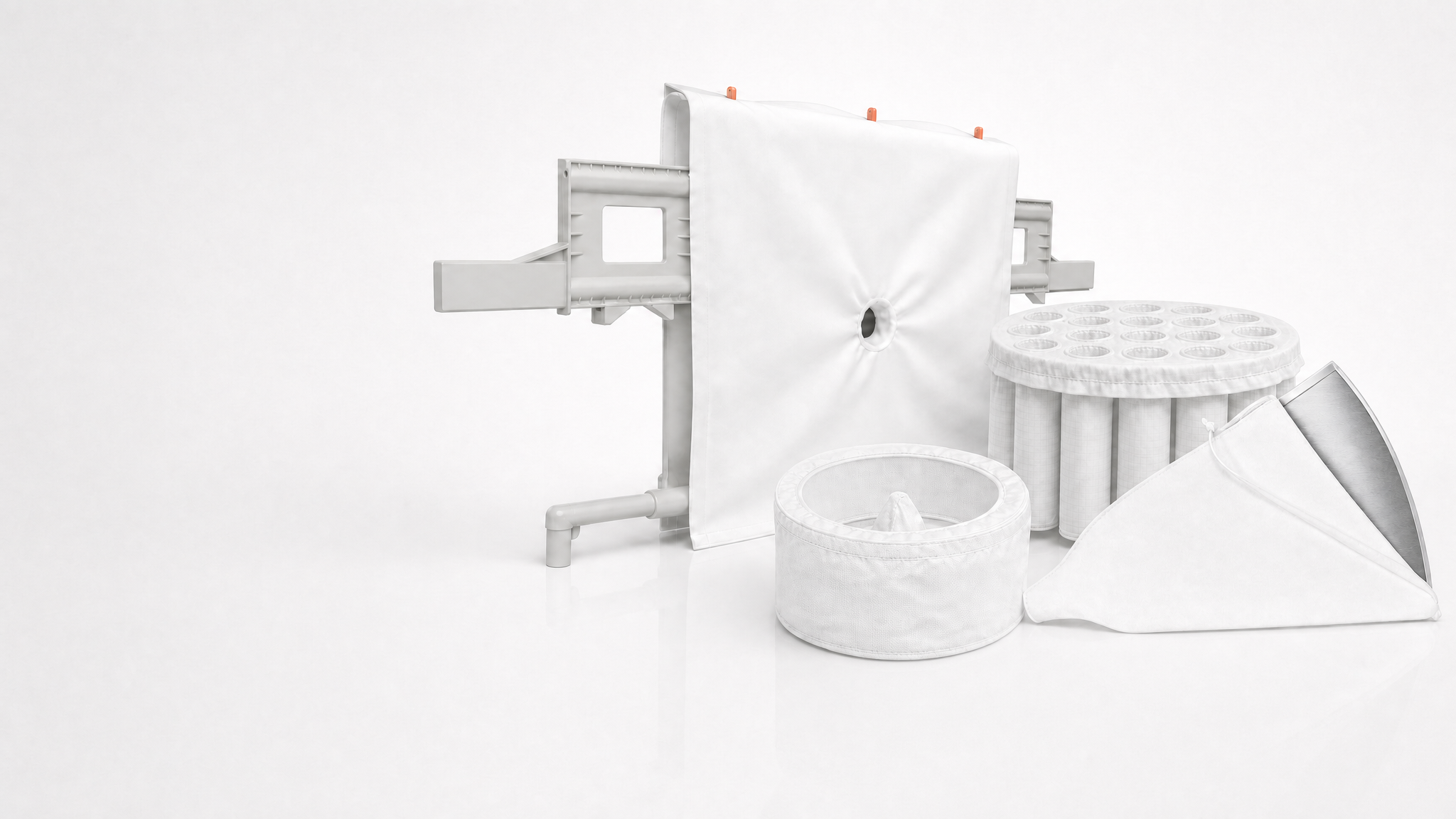
Rare earth element (REE) processing puts real pressure on filtration: aggressive leaching chemistry, ultra-fine precipitates, and repeated wash cycles can quickly expose weak fabrics. On the operator side, the goal is simple but demanding—keep throughput stable, protect purity, and make cake discharge reliable in every batch.
🔑 Key Takeaways
- REE filtration usually starts with acid leaching and ends with selective precipitation and solid-liquid separation.
- Polypropylene (PP) is often the safest all-round choice because it resists many acids and alkalis used in REE circuits.
- Tight monofilament weaves help retain fine oxalate and carbonate precipitates while maintaining acceptable flow.
- For filter presses, fabric selection has a direct impact on cake release, wash efficiency, and cloth life.
⚙️ Where REE Filtration Starts: Leaching and Precipitation
In a typical REE line, the material first enters mining and mineral processing applications, where acid leaching liberates rare earth values from the ore or concentrate. Downstream, operators often move into selective precipitation using oxalic acid or carbonates, then separate the resulting solids from the mother liquor.
This is where the filter press usually becomes the workhorse. It has to handle slurry variations, slurry acidity, and a lot of wash water without losing retention or slowing down the cycle. For many plants, a robust press fabric from the RF-FF Series filter press fabrics is the most practical starting point.
🔬 Fabric Requirements for Fine REE Precipitates
REE oxalates and carbonates can be extremely fine, slippery, and slow to dewater. If the weave is too open, you risk solids loss and cloudy filtrate. If it is too tight, filtration time rises and the press can blind early. The operator’s job is to balance retention with throughput.
Why PP Often Wins
- Broad chemical resistance to many leaching and washing chemistries.
- Good practical durability in repeated acid/alkali cycling.
- Suitable for many REE precipitation duties where process chemistry can shift between stages.
Why Tight Monofilament Weaves Matter
For fine precipitation steps, tight monofilament constructions help reduce particle migration into the fabric structure. That means better cake release, less blinding, and more consistent filtration performance over time. If your press is already struggling with filter cloth clogging or short filter lifespan, weave selection deserves a closer look.
| Fabric / Construction | Best Use Case | Operator Benefit | Watch-Out |
|---|---|---|---|
| PP monofilament | Acid/alkali cycling, REE precipitation | Strong chemical resistance, stable performance | May need tighter weave to retain ultra-fines |
| Tight monofilament weave | Fine oxalates and carbonates | Better solids capture and cleaner filtrate | Can increase cycle time if over-selected |
| Open weave / coarse structure | Fast-draining, less critical solids | Lower pressure drop, easier dewatering | Higher solids carryover risk |
🛠️ Operating Challenges in REE Solid-Liquid Separation
REE precipitation is rarely a one-chemical process. Many plants cycle between HCl, NaOH, and oxalic acid, with rinses between each stage. That combination can stress the fabric, the seams, and the discharge behavior of the cake. If the final cake sticks, the next batch starts already behind.
⚠️ Caution: Repeated exposure to strong acids and alkalis can shorten fabric life quickly if the weave, yarn type, or seam design is not matched to the actual process. Always verify the full chemical sequence, not just the main precipitation step.
Rule of thumb: In REE service, choose the fabric for the harshest cleaning and washing step, not only for the main filtration stage.
When cake discharge is inconsistent, the process can drift into longer cycles, poor washing efficiency, and higher moisture. For operators, that often shows up as more downtime and more manual intervention. If that sounds familiar, review the issue against cake release problems and drip leakage in the press.
📊 Filter Press First, But Not Always Only Filter Press
The filter press is the primary machine in many REE plants, but centrifuges, belt filters, and Nutsche systems can also play a role depending on the product and process stage. If your operation includes a polishing or intermediate solid-liquid step, the machine choice should match the slurry behavior—not just the nominal capacity.
📋 REE Fabric Selection Checklist
- Confirm the full chemistry profile: leach, precipitate, wash, and cleaning agents.
- Check particle size and whether fines dominate the cake.
- Define the target moisture and filtrate clarity.
- Review cake release behavior after each batch.
- Match the fabric to the machine type and cloth support design.
💡 Tip: If your REE process uses multiple wash stages, ask for a fabric recommendation based on the worst-case chemical exposure and the finest particle fraction in the slurry.
💡 Why REE Supply Chains Make Fabric Selection More Strategic
Rare earth elements are becoming more strategic across magnets, batteries, electronics, and clean-energy systems. That means filtration reliability is no longer just a maintenance concern—it is part of supply security. Stable dewatering, reproducible purity, and predictable cloth life all support a more resilient production line.
For operators, that translates into fewer surprises and better process control. For plants scaling up or debottlenecking, the right fabric can support the transition from trial batches to stable production. If you are configuring a new line or revisiting an existing one, use our find and configure the right filter fabric with our Solution Finder to select your machine and receive a pre-filled, non-binding inquiry.
For REE circuits with demanding wash chemistry and fine precipitates, the R+F RF-FF Series is a strong choice for filter presses because it combines practical chemical resistance with fabric constructions designed for industrial solid-liquid separation. If your plant also uses related equipment, you can compare options for filter presses, centrifuges, and Nutsche filters.
📩 Need Help Choosing the Right Fabric?
Our technical team at R+F FilterElements can help you find the perfect filter fabric for your specific application. Get in touch for a free consultation — we will recommend the right solution based on your machine, process, and operating conditions.
If you want a fast starting point, use our Solution Finder to find and configure the right filter fabric online and receive a pre-filled, non-binding specification and inquiry.