
Common Problem
Contamination through Stitching
In pharmaceutical and fine chemical filtration, conventional sewn seams release thread fibres, needle fragments, and particulate matter into the product. Ultrasonic welding eliminates this contamination source entirely.
The Problem
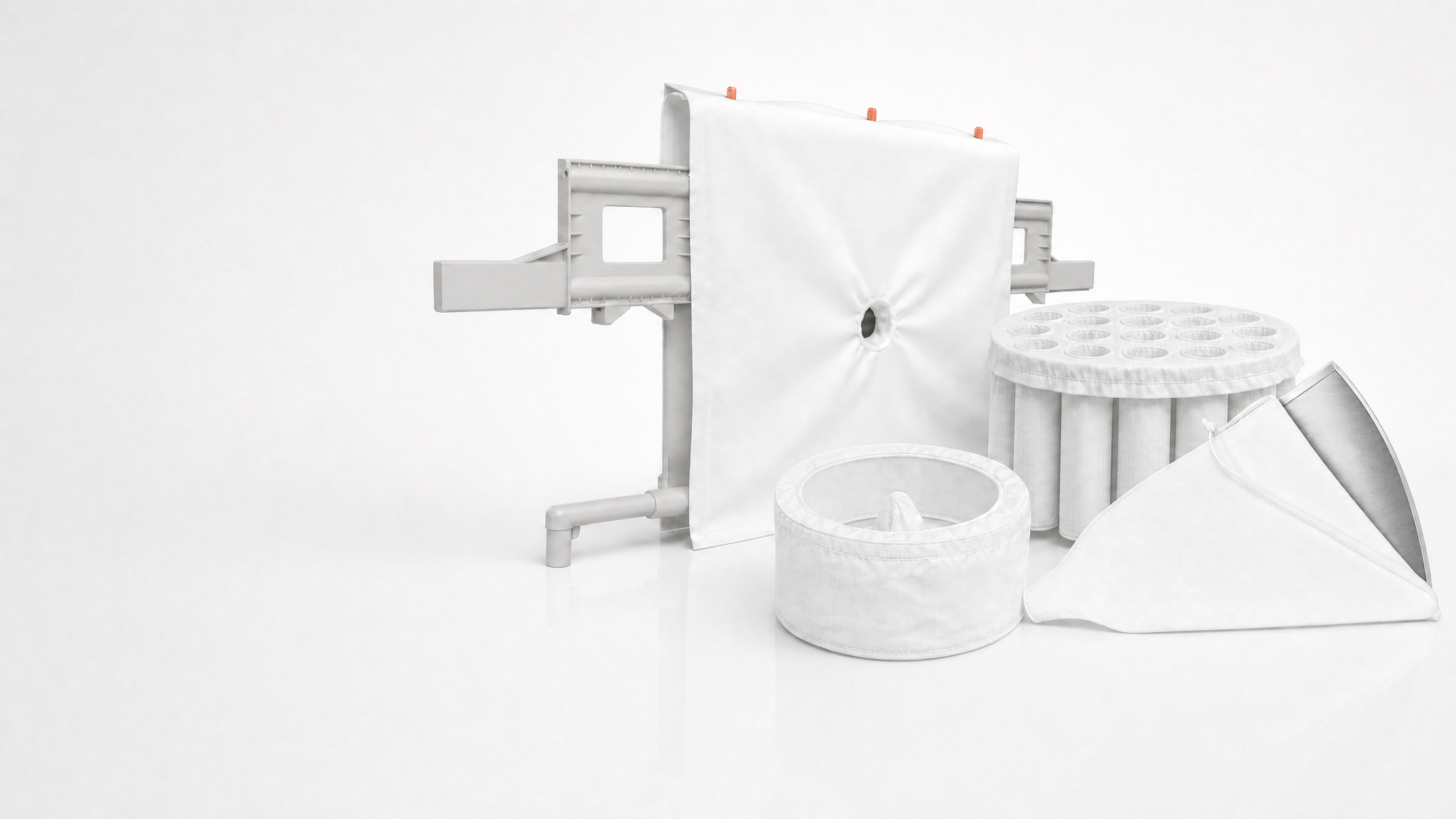
Every filter cloth used in Nutsche filters, centrifuges, and filter dryers must be shaped — cut to size, folded, and joined at seams. Traditionally, this is done by sewing: industrial sewing machines punch hundreds of needle holes through the fabric and pull thread through each one.
This process creates multiple contamination vectors: needle fragments can break off inside the fabric, thread fibres shed during filtration, and the needle holes themselves create uncontrolled leak paths that bypass the filtration surface. In pharmaceutical GMP production, any of these constitutes a batch contamination event.
Regulatory inspectors increasingly flag sewn filter cloths as a contamination risk in API manufacturing. The industry is moving toward joining technologies that eliminate thread and needle contact entirely.
Contamination Sources in Sewn Cloths
- Thread fibre shedding — continuous release of micro-particles into the filtrate
- Needle fragments — broken needle tips embedded in fabric during manufacturing
- Needle holes — uncontrolled bypass of the filtration surface at each stitch
- Thread degradation — chemical attack on sewing thread releases dissolved contaminants
- Seam overlap — double-layer areas create dead zones where product accumulates
- Cleaning difficulty — sewn seams trap residues that resist CIP cleaning
The Ultrasonic Welding Solution
Ultrasonic welding joins thermoplastic filter fabrics using high-frequency vibration — no thread, no needles, no adhesive.
Zero Thread Contamination
No sewing thread is used. The fabric layers are fused directly by ultrasonic energy, eliminating fibre shedding entirely.
No Needle Fragments
No needles penetrate the fabric. The risk of metal contamination from broken needle tips is removed completely.
Sealed Seam Surface
The weld creates a continuous, sealed bond. No needle holes, no bypass channels — the entire cloth surface is an active filtration area.
GMP & FDA Compatible
Ultrasonic welded cloths meet GMP requirements for pharmaceutical production. Materials compliant with FDA 21 CFR and EU (EC) 1935/2004.
Seamless Options
For the highest purity demands, we offer fully seamless constructions — a single continuous fabric with no joints at all.
Full Traceability
Batch documentation, material certificates, and extractable test data for every welded cloth. Full audit trail for pharmaceutical validation.
Products with Ultrasonic Welding
Welded construction is available for all our pharmaceutical-grade fabrics.
RF-ANF Series
Agitated Nutsche Filter Fabrics
Ultrasonic-welded and seamless cloths for ANF/D units. The primary product for contamination-free pharma filtration.
Learn MoreRF-CF Series
Centrifuge Fabrics
Welded centrifuge bags for peeler and inverting centrifuges in API production.
Learn MoreRF-NF Series
Nutsche Filter Fabrics
Standard and welded options for flat-bottom Nutsche filters in pharma and fine chemical applications.
Learn MoreRelated Topics
Pharmaceutical Filtration
Our complete guide to GMP-compatible filter fabrics for the pharmaceutical industry.
Read MoreNutsche Filter / ANF
Learn about agitated Nutsche filter/dryers and how welded cloths integrate.
Read MorePoor Cake Release
Welded cloths can combine seamless construction with anti-stick surfaces for clean API discharge.
Read MoreNeed contamination-free filter cloths for your pharmaceutical process?
Tell us your machine type, process, and regulatory requirements — we will supply ultrasonic-welded fabrics with full documentation.
Send Inquiry