
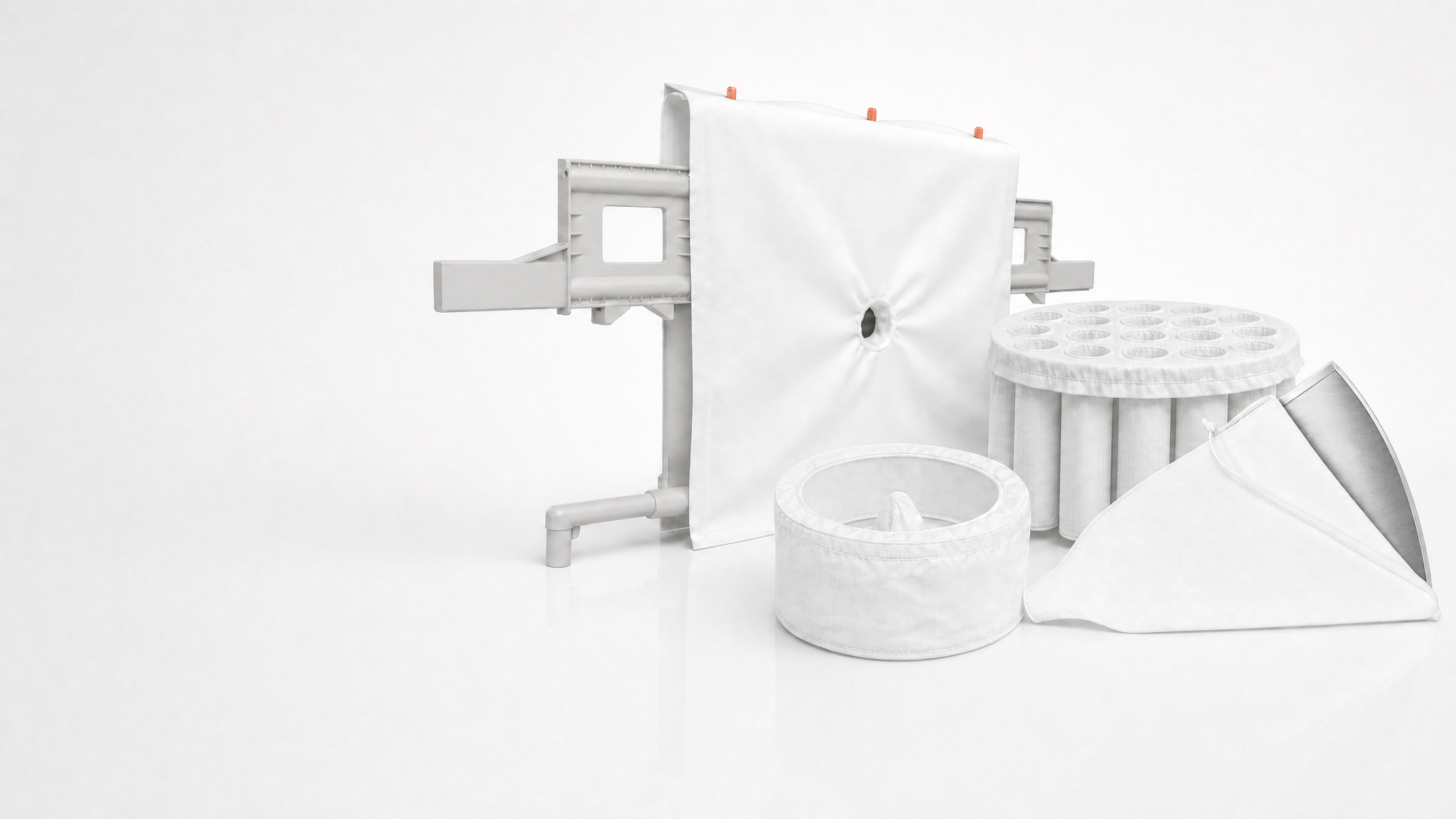
In wastewater treatment, sludge dewatering is one of the easiest places to lose time, throughput, and drying performance if the filter media is not matched to the process. Whether you run a municipal belt press or an industrial filter press, the right fabric can improve cake dryness, reduce wash water, and stabilize your daily operating results.
If you are working in wastewater applications, the real challenge is not just removing water — it is keeping the fabric open, durable, and easy to clean under changing sludge conditions. The choice between a belt filter and a filter press often comes down to how the sludge behaves, how fine the solids are, and how much operator attention the machine can realistically get.
🔑 Key Takeaways
- Match filter media to sludge type, solids load, and washing strategy.
- Filter press fabrics usually deliver drier cakes; belt press fabrics favor continuous operation.
- Open structure, seam quality, and chemical resistance strongly affect fabric lifespan.
- Use the Solution Finder to configure the right fabric for your machine online.
🏭 What Matters Most in Sludge Dewatering
From an operator’s point of view, sludge dewatering fabrics must do five jobs at once: let water pass quickly, retain fine solids, release cake cleanly, survive cleaning cycles, and keep running without constant intervention. In municipal plants, sludge composition can shift with rainfall, season, and upstream treatment chemistry. In industrial plants, the sludge may be more abrasive, more oily, or more chemically aggressive.
For most WWT lines, the key indicators are:
- Permeability for stable drainage
- Particle retention for clear filtrate or centrate
- Cake release to reduce manual cleaning
- Dimensional stability under tension and wash pressure
- Chemical resistance to polymers, caustics, and cleaning agents
💡 Tip: When sludge starts to blind the fabric faster than usual, the problem is often not only the cake — it can also be the pore structure, surface finish, or seam design of the media.
⚙️ Belt Press vs. Filter Press: Different Demands, Different Fabrics
A belt press is built for continuous operation. It needs fabrics that drain steadily, shed cake reliably, and keep cleaning performance consistent over long running periods. A filter press, by contrast, works in cycles and usually aims for the highest possible cake dryness. That means the cloth must retain fine solids tightly while still releasing the cake at the end of each cycle.
| Parameter | Belt Press | Filter Press |
|---|---|---|
| Operation mode | Continuous | Batch |
| Main goal | Stable drainage and throughput | Higher cake dryness |
| Fabric behavior | Open, cleanable, wear-resistant | Fine retention, low leakage, good release |
| Typical operator priority | Less downtime | Better solids capture |
For belt systems, the RF-BF Series belt filter fabrics are a strong starting point when you need dependable drainage and stable running behavior. For press applications, the RF-FF Series filter press cloths are designed for efficient solids retention and clean cake discharge in demanding dewatering cycles.
🔬 How to Choose the Right Filter Media
The best fabric is rarely the one with the highest nominal permeability or the finest weave. In sludge dewatering, the right choice balances drainage, retention, and release under your actual process conditions. That is especially true when sludge density changes or polymer dosing is inconsistent.
Check whether the sludge is municipal, industrial, oily, fibrous, or highly mineralized.
Continuous belt press duty needs different fabric behavior than cyclic filter press operation.
Consider backwash intensity, scrapers, tension, and how often the cloth must be cleaned.
Good release reduces carryover, shortens downtime, and improves the consistency of the next cycle.
📋 Operator Checklist for Fabric Selection
- Sludge type and solids distribution
- Required cake dryness and filtrate clarity
- Cleaning method and wash water pressure
- Temperature, pH, and chemical exposure
- Seam construction and installation format
⚠️ Caution: A fabric that is too fine can blind quickly, increase differential pressure, and reduce throughput. In dewatering, “finer” is not automatically “better.”
If your line struggles with plug-up or rising wash demand, it is worth checking whether the issue is linked to filter cloth clogging or to short filter lifespan. In many cases, a fabric change solves the problem faster than repeated process adjustments.
🛠️ Practical Product Recommendations by Machine Type
For wastewater sludge dewatering, the fabric choice should follow the machine first, then the sludge characteristics. That is why R+F offers dedicated solutions for different filtration platforms. If your plant runs a filter press, start with the RF-FF Series. If you operate a belt press or belt filter, the RF-BF Series is the natural fit.
Rule of thumb: Start with the fabric family designed for your machine, then refine by sludge type, wash strategy, and desired cake dryness.
For plants with rotating or decanter-style separation stages, RF-CF Series centrifuge fabrics can be relevant upstream or in hybrid systems. If your dewatering line uses specialist filtration media in other process steps, you may also want to review the filter press, belt filter, and centrifuge machine pages for more process context.
Recommended starting points
- Municipal sludge: RF-BF Series for continuous belt press operation; RF-FF Series for higher dryness in batch press systems
- Industrial sludge: RF-FF Series when fines retention and clean release are critical
- Hybrid plants: RF-CF Series where centrifuge stages are part of the dewatering train
✅ Troubleshooting Common Dewatering Problems
When sludge dewatering performance drops, the symptoms usually show up first in the operating data: wetter cake, slower drainage, more wash water, or filtrate carryover. Before changing the whole process, check whether the cloth or belt surface has lost permeability or whether the cake no longer releases cleanly.
- Poor cake release can point to surface finish or fiber selection issues.
- Drip leakage often indicates sealing, seam, or fit-up problems.
- Contamination from stitching matters when product purity or downstream handling is sensitive.
- Antistatic and ATEX concerns apply in special sludge and drying environments.
If you need a fast way to narrow down options, use our Solution Finder to find and configure the right filter fabric. You can select your filtration machine, define operating conditions, and receive a pre-filled, non-binding specification request.
📩 Need Help Choosing the Right Fabric?
Our technical team at R+F FilterElements can help you find the perfect filter fabric for your specific application. Get in touch for a free consultation — we will recommend the right solution based on your machine, process, and operating conditions.
Prefer to start online? Find and configure the right filter fabric with our Solution Finder and send us a pre-filled inquiry in just a few steps.