
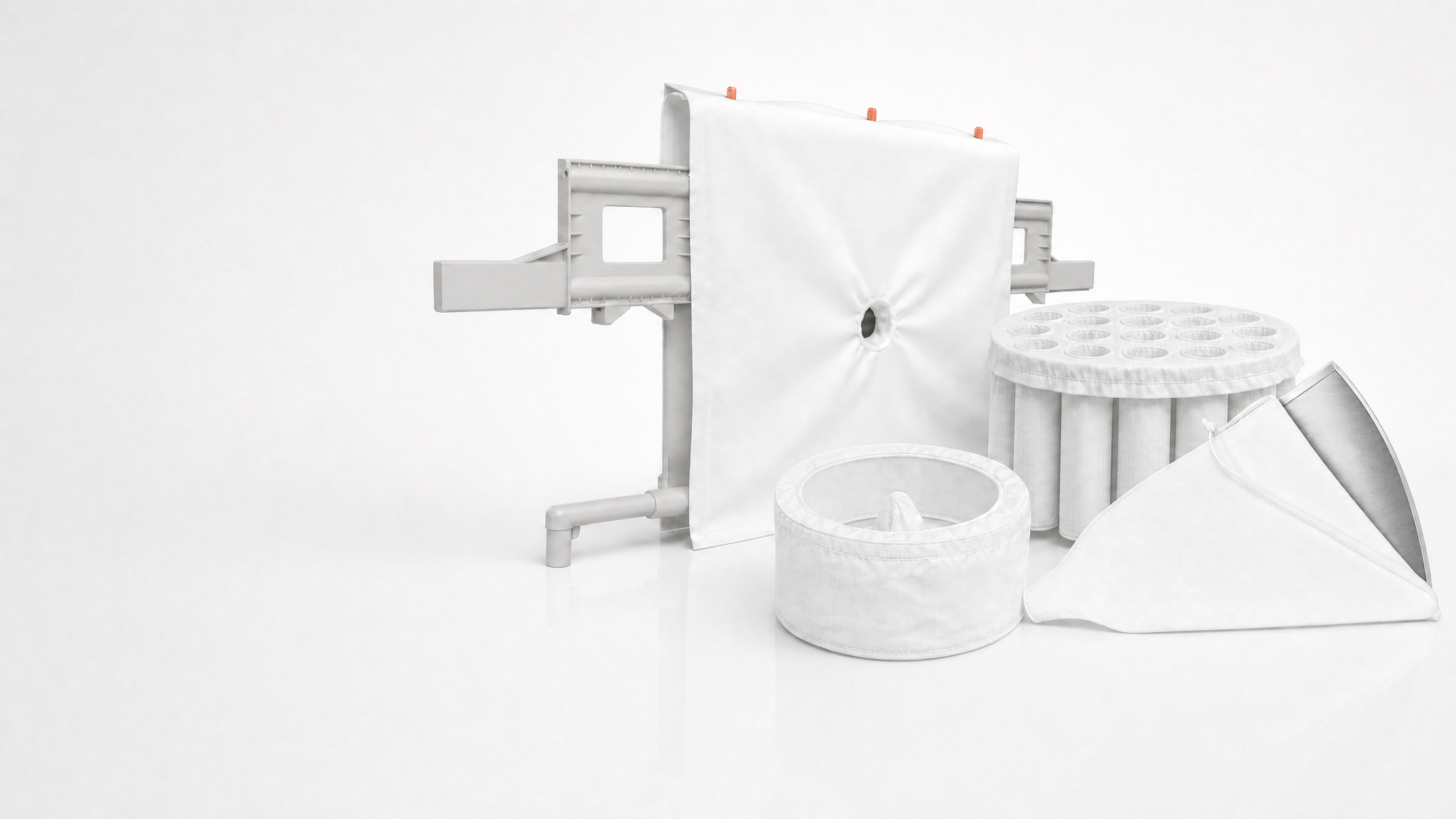
When a Phoenix or Sernagiotto belt filter press is running hard, the belt is not just a wear part — it is a process component that directly affects cake dryness, filtrate clarity, and uptime. For mineral dewatering and industrial sludge handling, a made-to-measure replacement belt must match the machine geometry and the process profile, not just the nominal width.
R+F FilterElements supplies compatible replacement belts for belt filter presses, including woven belt-press fabrics and spiral belt constructions, sized and specified to fit your operating conditions.
🔑 Key Takeaways
- Replacement belts for Phoenix and Sernagiotto presses must match width, length, seam design, mesh, and permeability.
- Plants often switch to independent aftermarket belts to reduce lead times, improve specification flexibility, and avoid single-source dependency.
- R+F can reverse-engineer a belt from a sample, drawing, or worn belt specification.
- Both woven belt-press fabrics and spiral belts are available as compatible replacement solutions.
💡 Tip: If you still have the removed belt, send it with photos of the seam, edge finish, and running direction. That is often enough to start a reliable replacement specification.
⚙️ What matters when replacing a belt on Phoenix or Sernagiotto presses
On a belt filter press, the belt must track cleanly, release cake consistently, and withstand continuous tension, wash water, and abrasive solids. A “close enough” belt can create edge wear, poor drainage, or unstable seam behavior. For that reason, the replacement specification should be checked carefully against the machine and the process.
- Belt width: Must match the press section and any guide or edge-tracking system.
- Belt length: Must suit the installation path and tension range.
- Seam type: Endless, spiral seam, pin seam, loop seam, or other machine-specific design.
- Mesh / air permeability: Influences drainage rate, cake dryness, and solids capture.
- Weave structure: Affects support, cake release, and resistance to blinding.
- Material: Selected for chemical exposure, temperature, wear, and cleaning regime.
🏭 Why plants choose aftermarket replacement belts
Operators in wastewater, mining, and mineral processing often look for an independent supply route when a press is central to production. The goal is usually practical: keep the machine running, reduce procurement risk, and fine-tune the belt for the actual sludge or slurry behavior.
| Selection factor | What operators gain | Typical impact in service |
|---|---|---|
| Shorter lead time | Faster replacement planning | Less downtime during belt changeouts |
| Tailored specification | Permeability and weave matched to the process | Better drainage and more stable cake release |
| Independent supply | No single-source dependency | More flexibility in maintenance and sourcing |
| Technical adaptation | Option to refine seam or edge details | Improved belt tracking and service life |
For plants working in wastewater treatment, mining, or the chemical industry, the replacement belt should be chosen as a process tool, not just a spare part. If your dewatering line uses a belt press, you can also review the broader filter belt portfolio and the dedicated belt press fabric range.
🔬 Woven belt-press fabrics vs. spiral belts
R+F supplies both woven constructions and spiral belts as compatible replacement options. The better choice depends on how the press is loaded, how the cake behaves, and how often the belt is cleaned.
For machine-specific guidance, it helps to compare the press design with the available belt families, including spiral filter belts and the relevant machine pages such as belt press systems and belt filter machines.
Rule of thumb: If the old belt ran well but wore out too fast, keep the drainage concept and improve the seam, edge finish, or material grade before changing the whole construction.
🛠️ How R+F reverse-engineers a replacement specification
When a drawing is missing or incomplete, R+F can build the replacement specification from a used belt, partial data, or a dimensional sketch. This is especially useful when the original documentation is no longer available after years of plant operation.
Measure belt width and length, identify seam style, and note machine type, operating speed, and cleaning method.
Review weave pattern, permeability, edge condition, and wear pattern to understand the original operating behavior.
Match material, seam, and open area to the process so the new belt performs consistently in service.
📋 What to send for a fast quotation
- Machine make and model, if available
- Measured belt width and total length
- Seam type and any joining hardware
- Photos of the worn belt and edge condition
- Required permeability, mesh, or drainage target
- Process details: sludge type, solids load, wash conditions
If you are configuring a replacement for a specific press, the online belt filter configurator is a practical way to enter the key dimensions and receive a pre-filled, non-binding specification and inquiry.
✅ Quality and seam options for demanding dewatering duty
For belt press operation, the seam is often as important as the fabric itself. A belt may have the right permeability but still underperform if the seam does not track cleanly or tolerate the load cycle. R+F offers compatible belt solutions with construction choices suited to industrial and mineral dewatering service.
- Seam designs: machine-matched options for reliable tracking and installation.
- Edge finishing: selected to support belt guidance and reduce fraying.
- Fabric structure: tuned for drainage, cake release, and anti-blinding behavior.
- Material selection: based on abrasion, chemistry, temperature, and wash regime.
⚠️ Caution: A belt that is too open can increase solids carryover, while a belt that is too tight can slow drainage and reduce cake dryness. Match permeability to the real process, not just the previous part number.
📊 Compatibility focus for Phoenix and Sernagiotto presses
For Phoenix Process Equipment and Sernagiotto belt filter presses, the best replacement belt is the one that matches the installed machine geometry and the dewatering target. R+F supports this through made-to-measure replacement belts for the press side of the line, including compatible fabrics for related filtration duties in drainage applications, vacuum filtration, mining processes, FGD service, and antistatic dryer duty.
For operators who want to move quickly, sending an old belt, a drawing, or even a clear photo with measurements is often the fastest route to a valid replacement proposal. If you are ready to start, please contact our technical team with the machine data and your operating target.
📩 Need Help Choosing the Right Fabric?
Our technical team at R+F FilterElements can help you find the perfect filter fabric for your specific application. Get in touch for a free consultation — we will recommend the right solution based on your machine, process, and operating conditions.
To speed up the process, you can also configure your belt filter filter fabric online and send us a pre-filled, non-binding inquiry for a Phoenix or Sernagiotto replacement belt.