
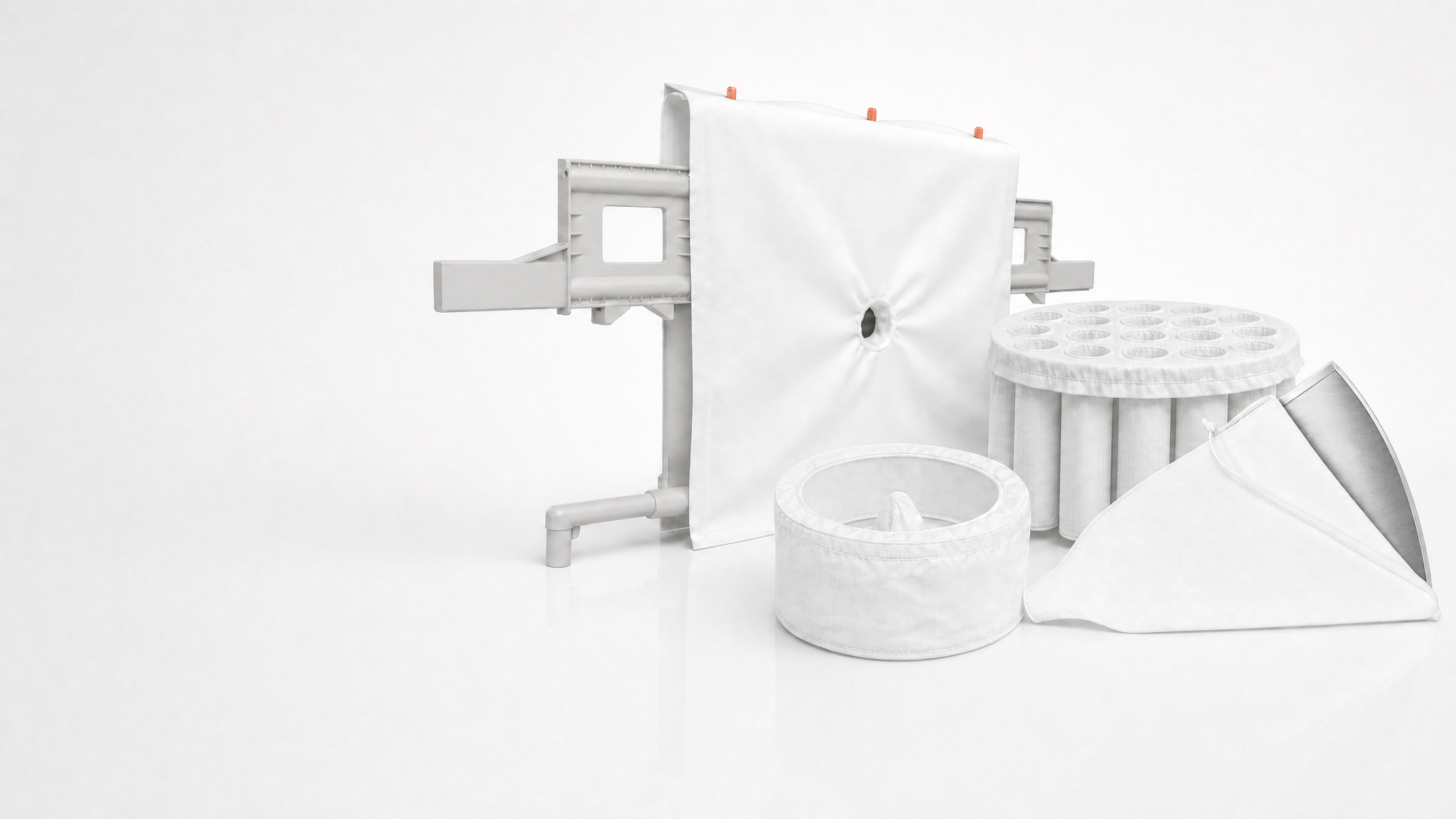
Polypropylene (PP) is one of the most widely used filter fabric materials in industrial solid-liquid separation because it combines solid chemical resistance, low weight, and good cake release at an economical cost. In day-to-day operation, PP fabrics are especially attractive when you need dependable performance in wet, corrosive, or abrasive processes without moving to a more expensive specialty polymer.
For operators, the real question is not whether PP “works,” but where it works best — and where its temperature and chemical limits begin to matter. This guide covers PP properties, operating boundaries, common applications, and how to choose the right fabric for your machine.
🔑 Key Takeaways
- PP filter fabrics offer strong resistance to many acids, alkalis, and salts.
- The practical temperature limit is typically 90–95°C, depending on load and exposure time.
- PP is a good general-purpose choice for filter presses, belt filters, and centrifuges.
- For fast selection, you can find and configure the right filter fabric with our Solution Finder.
⚙️ What Makes Polypropylene a Popular Filter Fabric?
PP is a thermoplastic fiber used in woven and nonwoven filter media because it balances process compatibility with cost efficiency. In the plant, that usually means less corrosion risk, predictable dewatering behavior, and good release of filter cakes from the cloth surface.
Typical operator advantages
- Good chemical resistance to many acids, alkalis, and salt solutions.
- Low moisture uptake, which helps maintain stable behavior in wet service.
- Easy handling thanks to low material density.
- Economical choice for large filtration areas.
💡 Tip: If your process runs near the upper temperature limit for long periods, always check not only the bulk liquid temperature but also local hot spots, cake temperature, and cleaning-cycle exposure.
🔬 Chemical Resistance and Temperature Limits
PP is often selected because it performs well in a broad range of aqueous industrial media. It is generally a strong option in mineral acids, many organic acids, and alkaline solutions, but strong oxidizing agents and prolonged high-temperature service can shorten fabric life.
| Chemical Group | PP Performance | Operator Note |
|---|---|---|
| Mild acids | Good | Commonly suitable in wastewater and chemical filtration |
| Alkalis | Good | Often used in caustic duty if temperature remains controlled |
| Salts / brines | Very good | Stable for many inorganic salt applications |
| Oxidizing media | Limited | Evaluate carefully for bleach, nitric mixes, or similar duties |
| Hydrocarbons / solvents | Variable | Check solvent compatibility before installation |
⚠️ Caution: PP is typically limited to 90–95°C. Above this range, fabric strength, dimensional stability, and service life can drop quickly — especially under continuous load or repeated hot cleaning.
As a rule, PP is ideal when the process is chemically demanding but not thermally extreme. If your duty involves sustained higher temperatures, you may need a different fabric concept for your filter press, centrifuge, or belt filter.
Rule of thumb: Use PP when the chemistry is challenging, but the process temperature stays comfortably below boiling and below the 90–95°C practical ceiling.
📊 Where PP Works Best in the Plant
PP fabrics are used across many separation systems, but the best fit depends on the operating mode, solids behavior, and cake discharge requirements. In many plants, PP is the everyday workhorse material for dewatering and clarification duties.
Common application areas
- Wastewater treatment with mixed inorganic solids.
- Chemical industry filtration of salts, intermediates, and process slurries.
- Mining and mineral processing with abrasive slurries.
- Cement and bulk solids where dust control and dewatering matter.
- Pharmaceutical and fine chemical duties where clean handling is important.
Best-fit machines
On a filter press, PP is often chosen for cakes that need a clean release and solid chemical resistance. In a centrifuge, it can handle many aqueous slurries efficiently. For continuous dewatering on a belt filter, PP’s balance of drainage and durability makes it a practical choice.
🛠️ Selection Checklist for Operators
Before you standardize on PP, verify the process conditions that most affect lifetime and cake release. A good fabric choice should fit not only the slurry, but also your wash cycles, discharge method, and maintenance practice.
📋 PP Fabric Pre-Selection Checklist
- Operating temperature stays within 90–95°C
- Chemical exposure is compatible with PP
- Cake release is acceptable for the machine type
- Abrasion level is moderate to high but manageable
- Cleaning cycle does not include incompatible oxidizing chemicals
- Fabric construction matches the required filtration accuracy
Review slurry chemistry, solids loading, pH, and any additives that may attack the fabric.
Match the fabric to the filtration equipment, discharge method, and cycle time.
Make sure operating and wash temperatures stay within the PP limit over the full cycle.
✅ Practical Limits, Failure Modes, and When to Upgrade
Even when the chemistry looks suitable, PP can fail early if the process is too hot, too abrasive, or exposed to frequent aggressive cleaning. Common symptoms include embrittlement, shrinking, loss of tension, and faster clogging.
- If you see shortened service life, review short filter lifespan causes.
- If the cloth holds solids too tightly, evaluate cake release issues.
- If solids plug the surface quickly, investigate filter cloth clogging.
- If leakage appears at seams or edges, check drip leakage.
For demanding duties, PP is often the economical default — but not always the final answer. When temperature, oxidation, or mechanical stress rises, the right move may be a different media selection rather than forcing PP beyond its comfort zone. In regulated environments, such as a nutsche filter or fluid bed dryer, fabric selection should also consider process cleanliness and contamination risk.
📩 Need Help Choosing the Right Fabric?
Our technical team at R+F FilterElements can help you find the perfect filter fabric for your specific application. Get in touch for a free consultation — we will recommend the right solution based on your machine, process, and operating conditions.
If you want a faster starting point, you can find and configure the right filter fabric with our Solution Finder and send us a pre-filled, non-binding specification inquiry online.