
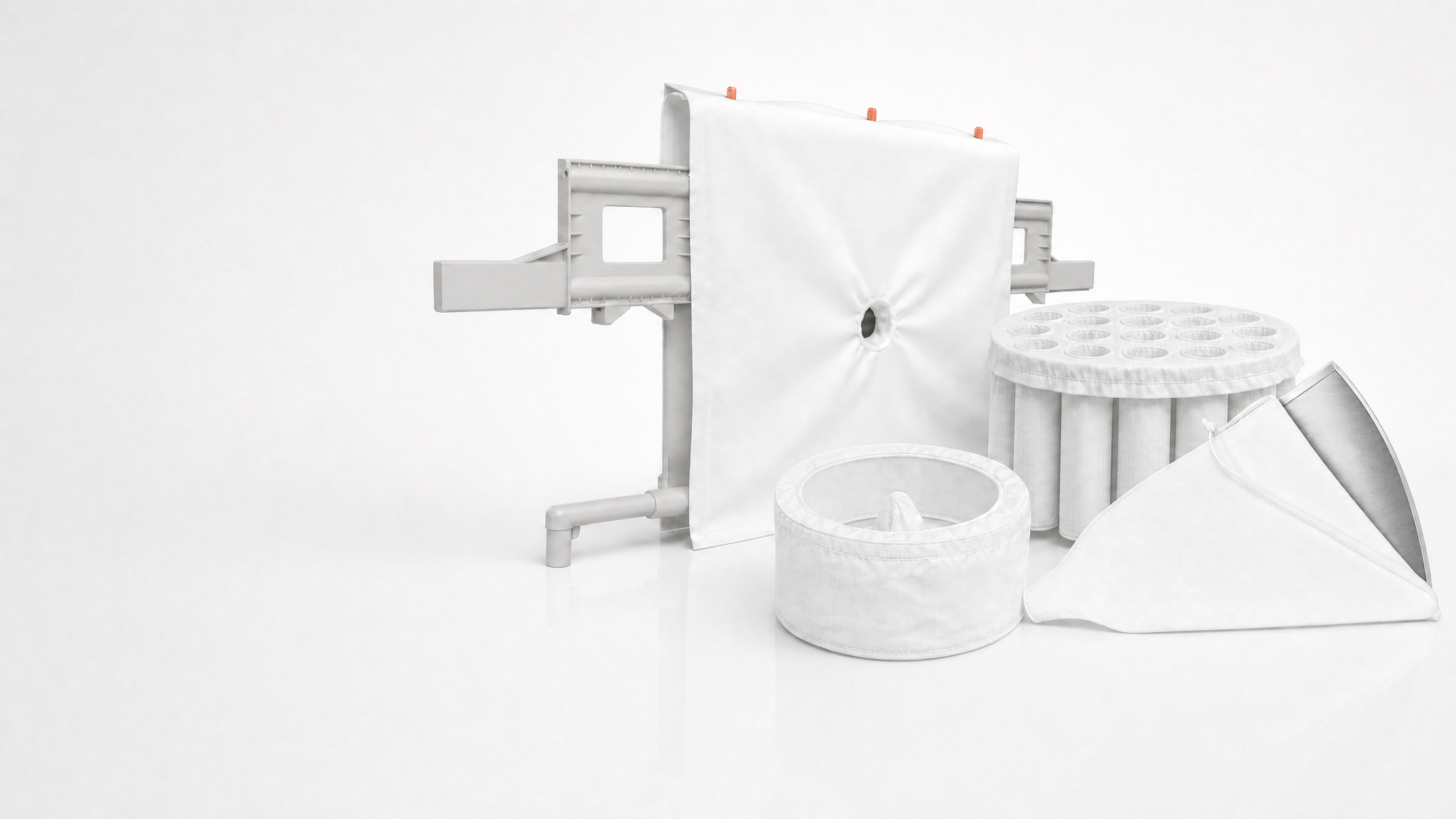
Polyester filter fabrics are often the practical middle ground when you need good temperature resistance, strong mechanical stability, and reliable dewatering performance. For many operators, PET is the first choice when process temperatures are higher than polypropylene can comfortably handle, but the chemistry is still within polyester’s safe window.
🔑 Key Takeaways
- PET handles higher operating temperatures than many standard filter fabrics, up to around 150°C depending on process conditions.
- It offers excellent tensile strength and dimensional stability, which helps in presses, centrifuges, and thermal drying steps.
- PET is a strong option when you need durability and consistent filtration, but it has limits in strong acids and strong alkaline media.
- Choosing the right weave, finish, and machine-specific construction matters as much as the raw material itself.
⚙️ What Makes PET Different in Daily Operation?
As an operator, you usually notice polyester first in how the cloth behaves on the machine: it stays stable, tracks well, and tolerates more heat than many alternatives. In real plant conditions, that means less deformation, better cake handling, and more predictable cycle performance.
PET is especially useful when the filtration step is only part of the process. For example, a hot slurry might be filtered in a filter press, then the cake is discharged warm and transferred to drying. In that kind of line, cloth stability can be more important than absolute chemical universality.
🧪 When PET Is the Right Choice
Polyester filter fabrics are a strong fit in applications where heat, wear, and throughput matter. You will often see them in wastewater treatment, mining, chemical processing, and some bulk solids systems where conditions are demanding but not aggressively corrosive.
For operators running continuous systems, PET can also be a smart choice in belt filters and centrifuges, where the fabric sees constant flexing, drainage, and abrasion. If you are comparing fabric types for a new line, it helps to use a configuration tool like our find and configure the right filter fabric with our Solution Finder to generate a pre-filled, non-binding inquiry based on your machine and process data.
📊 PET vs. Other Common Filter Fabric Materials
Material selection is usually a trade-off between temperature, chemistry, and mechanical stress. PET is not the most chemically resistant option, but it is often one of the most robust choices when the process is mechanically demanding.
| Property | PET (Polyester) | Typical operator takeaway |
|---|---|---|
| Temperature resistance | Up to approx. 150°C | Suitable for warmer processes and drying zones |
| Mechanical strength | High | Good for presses, centrifuges, and high-cycle operation |
| Acid resistance | Limited depending on concentration and temperature | Check process chemistry carefully |
| Alkali resistance | Limited in stronger caustic conditions | Avoid prolonged exposure to aggressive alkaline media |
| Cake release | Generally good with the right finish | Choose weave and surface treatment carefully |
💡 Tip: If your cloth fails from stretching, bagging, or edge wear before it fails chemically, PET may extend service life even if the process looks “mild” on paper.
🛠️ How to Select the Right PET Fabric for Your Machine
The right PET fabric depends on the machine, the solids behavior, and how the cake needs to release. A PET weave for a pressure leaf filter will not behave the same as one built for a fluid bed dryer or a rotary disc filter.
Confirm peak temperature, cleaning media, pH range, and whether the cloth is exposed continuously or only in short cycles.
Pressing, centrifugal force, belt tension, and vibration all affect fabric life differently.
Choose whether you want longer life, faster drainage, better cake release, or finer retention.
📋 PET Selection Checklist
- Maximum operating temperature known
- Acid and alkali exposure evaluated
- Machine type and cycle load defined
- Required retention level confirmed
- Cake discharge method understood
- Cleaning method checked for compatibility
If you are sourcing for a filter press or belt system, the machine-specific fabrics on RF-FF Series filter press fabrics and RF-BF Series belt filter fabrics are good starting points for PET-based constructions. For thermal solids handling, RF-FBD Series fluid bed dryer fabrics can be relevant when heat and airflow behavior matter.
⚠️ Where PET Is Not the Best Option
PET is strong, but it is not universal. The biggest mistake is assuming that “polyester” automatically means chemical resistance for every plant chemistry. In strong alkalis, aggressive acids, or harsh cleaning regimes, cloth life may drop quickly.
⚠️ Caution: Do not select PET for aggressive chemical duty without checking the actual concentration, temperature, and contact duration. Short exposure can be acceptable, but repeated exposure may shorten service life dramatically.
Rule of thumb: If the process attacks the fabric chemically, choose for chemistry first; if the process mainly attacks it mechanically, PET is often a very strong candidate.
For operator troubleshooting, a PET upgrade may help when you are dealing with short filter lifespan or premature wear, but it will not solve issues like filter cloth clogging if the root cause is solids, flocculation, or wash protocol. And if cake discharge is the real bottleneck, review cake release problems before changing material alone.
✅ Practical Takeaway for Plant Operators
Choose polyester filter fabrics when you need a blend of heat resistance, strength, and stable running behavior. PET is often the best “workhorse” material for demanding industrial filtration, especially where the cloth must survive repeated mechanical stress and moderate thermal load.
For the right result, always match the fabric to the machine and process, not just the slurry name. If you want a fast way to narrow down your options, use the Solution Finder to find and configure the right filter fabric online and receive a pre-filled, non-binding specification request.
📩 Need Help Choosing the Right Fabric?
Our technical team at R+F FilterElements can help you find the perfect filter fabric for your specific application. Get in touch for a free consultation — we will recommend the right solution based on your machine, process, and operating conditions.