
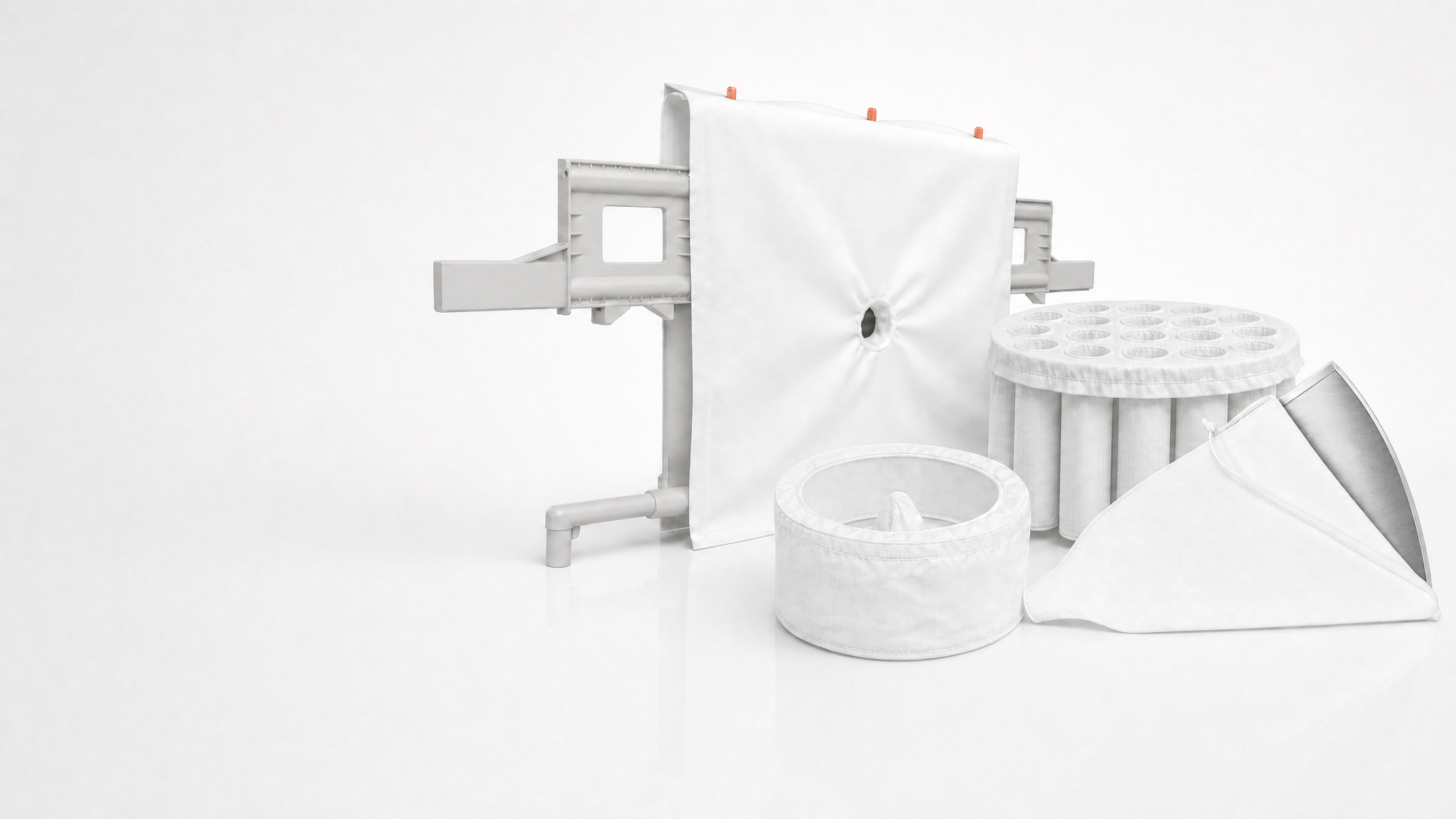
When your filtration process pushes temperature, chemistry, and uptime to the limit, standard fabrics can become the weak link. PEEK filter fabrics are designed for exactly these harsh operating windows: up to 250°C, aggressive media, and long service intervals where lower-cost materials simply cannot keep up.
🔑 Key Takeaways
- PEEK is a premium choice for extreme temperature and chemical exposure.
- It is most justified when process downtime, contamination, or fabric failure is very expensive.
- For many standard duties, polyester, PP, or PPS may still be more economical.
- The right fabric depends on your machine, solids, cake release behavior, and cleaning regime.
⚙️ What Makes PEEK Different in Real Plant Operation?
From an operator’s point of view, PEEK matters because it keeps its shape and performance where other polymers start to soften, creep, or degrade. That makes it attractive in chemical industry filtration, pharmaceutical processing, and selected high-temperature solid-liquid separation duties.
In practice, that means better stability during hot washing, solvent exposure, alkaline cleaning, or corrosive process steps. On machines like a filter press or centrifuge, this can reduce fabric replacement frequency and help maintain consistent throughput.
⚠️ Caution: PEEK is not a “universal upgrade.” If your process does not truly require extreme heat or aggressive chemicals, the cost may outweigh the benefit.
🔬 Where PEEK Pays Off — and Where It Does Not
The key question is not whether PEEK is good, but whether your process is expensive enough to justify it. In severe service, a premium fabric can be cheaper over the full lifecycle if it prevents shutdowns, product loss, or contamination incidents.
For a Nutsche filter or fluid bed dryer, where heat and process purity can both be critical, PEEK can be especially attractive. For a routine water-based duty in wastewater treatment, it is often over-specified.
Rule of thumb: If a fabric replacement costs less than one hour of lost production, standard materials usually win. If a failure stops a high-value batch, premium materials start to make sense.
📊 PEEK vs. Common Filter Fabric Materials
Operators often compare PEEK against polyester, polypropylene, PPS, or aramid-based solutions. The right choice depends on temperature, chemistry, cake release, and cleaning method. The table below gives a practical overview.
| Material | Temperature Resistance | Chemical Resistance | Typical Cost | Best Use Case |
|---|---|---|---|---|
| Polyester | Moderate | Good in many neutral duties | Low | General-purpose filtration |
| Polypropylene | Moderate | Very good in many acids/alkalis | Low | Cost-sensitive wet filtration |
| PPS | High | Very good | Medium | Hot chemical service |
| PEEK | Very high | Excellent | Premium | Extreme heat + aggressive media |
For operators of a pressure leaf filter or sparkler filter, the benefit of PEEK becomes clearer when cake release, seal integrity, and chemical compatibility are all under pressure at the same time.
🛠️ How to Decide If the Premium Is Justified
In the plant, the decision usually comes down to total cost of ownership, not purchase price. A fabric that lasts longer, resists clogging, and survives aggressive cleaning can reduce labor and downtime even if the initial investment is higher.
Look at process, CIP, steam, and drying temperatures — not just normal operating temperature.
Identify acids, alkalis, solvents, oxidizers, and cleaning agents that contact the fabric.
Estimate the cost of cloth changes, batch losses, contamination, and emergency shutdowns.
Consider sealing, support, tensioning, and discharge behavior on your specific equipment.
💡 Tip: If you are unsure whether PEEK is overkill, use our find and configure the right filter fabric with our Solution Finder. You can select your filtration machine and receive a pre-filled, non-binding specification and inquiry.
What to watch during trials
- Cake release: Does the cake detach cleanly, or does it stick and require extra washing?
- Clogging tendency: Is the fabric blinding faster than expected?
- Dimensional stability: Does heat cause distortion, shrinkage, or fit problems?
- Cleaning durability: Can the fabric survive repeated aggressive cleaning cycles?
📋 Pre-Selection Checklist for PEEK
- Maximum operating and cleaning temperature confirmed
- Chemical list reviewed with concentration and exposure time
- Machine type and installation space verified
- Downtime cost and replacement interval estimated
- Risk of contamination or product loss assessed
✅ Typical Applications and Machine Matches
PEEK is most often justified in demanding sectors where process conditions are severe and the consequence of failure is high. That includes mining, chemical processing, and select pharmaceutical or specialty production lines.
For operator-focused product selection, start with the machine, then narrow the fabric construction. Examples include RF-FF Series filter press fabrics for hot filter press duties and RF-CF Series centrifuge fabrics for high-speed separation under demanding thermal and chemical conditions.
Other relevant combinations may include:
- RF-ANF Series Nutsche pharma fabrics for high-purity, high-temperature batch filtration
- RF-FBD Series fluid bed dryer fabrics for hot gas and thermal stability requirements
- RF-BF Series belt filter fabrics where continuous operation and chemical exposure overlap
If your plant also struggles with short filter lifespan or filter cloth clogging, PEEK may improve uptime — but only if the rest of the system is properly set up for it.
💡 Tip: Premium fabric performance is not just about the polymer. Sealing, cloth tension, discharge conditions, and cleaning strategy all affect real-world results.
📩 Need Help Choosing the Right Fabric?
Our technical team at R+F FilterElements can help you find the perfect filter fabric for your specific application. Get in touch for a free consultation — we will recommend the right solution based on your machine, process, and operating conditions.
Prefer to start online? Use our Solution Finder to find and configure the right filter fabric for your machine and receive a pre-filled, non-binding specification and inquiry.