
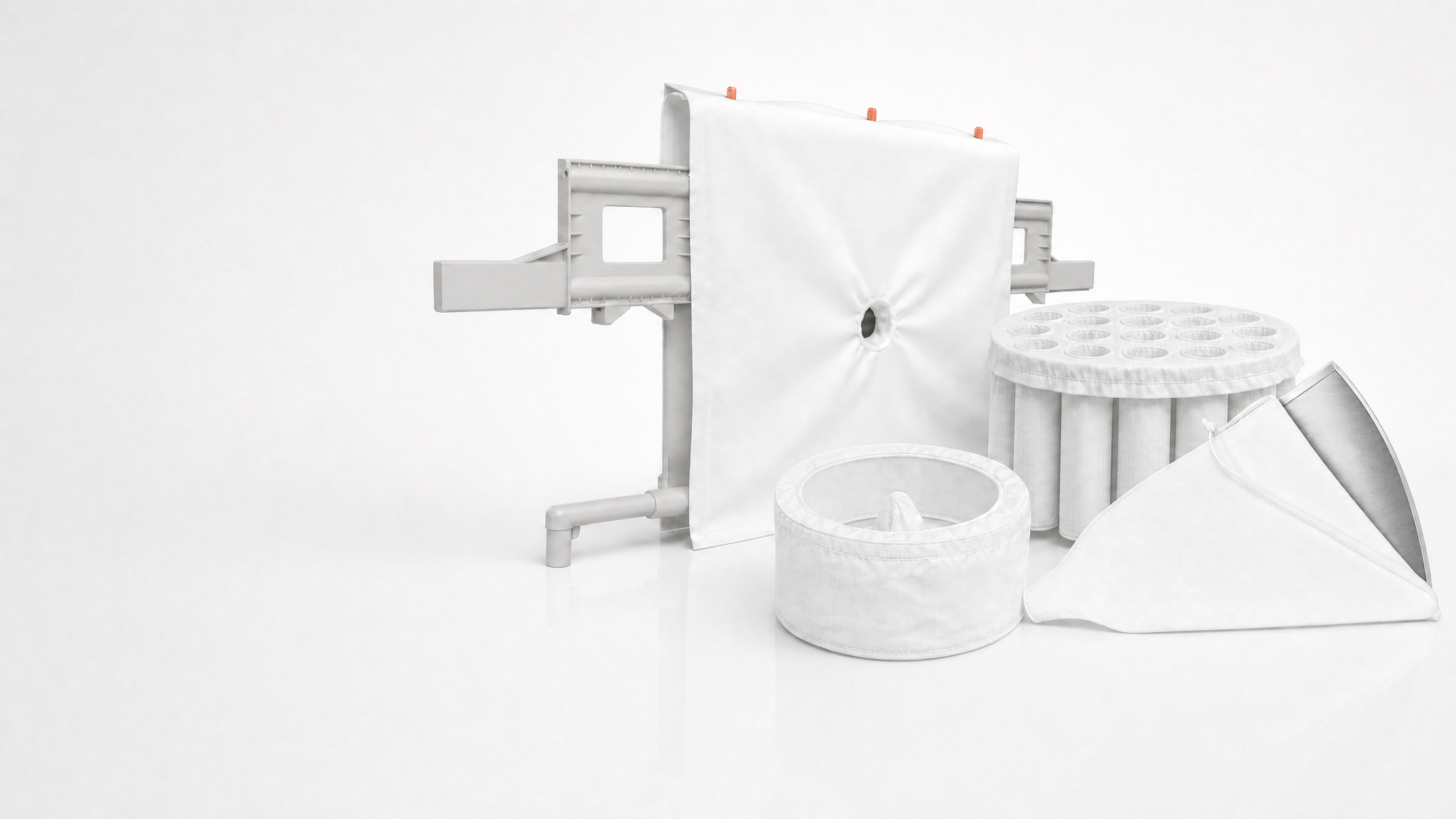
Polyamide, often called PA or nylon, is one of the most practical filter-fabric materials for plants that deal with abrasive slurries, recurring cleaning cycles, and demanding mechanical wear. If you run a filter press, centrifuge, belt filter, or similar machine, PA fabrics can be a smart choice when you need durability without giving up filtration performance.
In this guide, we look at the properties that matter on the shop floor: abrasion resistance, alkali resistance, and temperature limits. You’ll also see where PA/Nylon works best, where it is not the first choice, and how to narrow down the right fabric for your machine using our Solution Finder to find and configure the right filter fabric online.
🔑 Key Takeaways
- PA/Nylon excels in abrasion-heavy duties and is often chosen where cloth wear is the main problem.
- It offers good alkali resistance, making it suitable for many industrial process streams.
- Temperature limits matter; PA is not the best option for high-heat continuous service.
- Machine type and cake behavior determine whether PA is the right fit for your filter press, belt filter, or centrifuge.
⚙️ Why Operators Choose Polyamide (PA/Nylon)
From an operator’s perspective, PA/Nylon is attractive because it stands up well to mechanical stress. If your slurry contains sharp crystals, hard particles, or recycled solids that chew through softer fabrics, PA can extend cloth life and reduce unplanned changeouts. That often means fewer stoppages and more stable filtration over a shift.
Another reason PA is popular is its balance of strength and flexibility. In real plant conditions, that means the fabric can handle repeated cycling, cloth movement, and mechanical cleaning better than many less robust alternatives.
💡 Tip: If your current fabric fails by wear-through rather than by chemical attack, PA/Nylon is often worth evaluating first.
🔬 Key Properties That Matter on the Plant Floor
Abrasion resistance
PA/Nylon is known for strong abrasion resistance. That makes it valuable in applications with erosive feed, hard crystals, or frequent cloth-to-cake friction. If your operators see thinning at the same wear points every cycle, PA can help you stretch service intervals.
Alkali resistance
Compared with some other textile fibers, PA performs well in many alkaline environments. That is especially useful in mineral processing, wastewater treatment, and certain chemical duties where pH can drift upward during washing or process changes. For many plants, that resilience makes PA more forgiving in day-to-day operation.
Temperature limits
PA is not a high-temperature specialist. It can handle normal industrial duties, but continuous exposure to elevated heat will shorten its life. For hot gas or dryer service, fabrics from other product families may be more appropriate, such as RF-FBD Series fluid bed dryer fabrics or machine-specific solutions for thermal duty.
⚠️ Caution: Do not assume nylon is suitable for every hot process. If the feed, wash liquor, or surrounding equipment runs near the upper temperature limit for extended periods, verify the fabric choice before installation.
📊 PA/Nylon vs. Other Common Choices
When you compare fabrics, the best material is rarely the one with the longest technical data sheet. It is the one that matches the failure mode in your plant. Use the comparison below as a quick operator-level guide.
| Material | Wear Resistance | Alkali Resistance | Heat Resistance | Typical Strength |
|---|---|---|---|---|
| PA / Nylon | Very good | Good | Moderate | Abrasion-heavy duties |
| Polyester | Good | Moderate | Good | General-purpose filtration |
| Polypropylene | Moderate | Very good | Moderate | Chemical resistance and cake release |
| Aramid | Excellent | Fair | Excellent | High-temperature and harsh mechanical service |
🏭 Best Applications for PA/Nylon Filter Fabrics
PA/Nylon is best used where the fabric is exposed to repeated mechanical stress and abrasive solids. That makes it a good fit for several industrial machines and sectors.
- Filter press duties with abrasive mineral slurries or hard crystalline solids. See filter press machines and RF-FF Series filter press fabrics.
- Centrifuges where cloth wear and rotational stress are major concerns. Learn more about centrifuge applications and RF-CF Series centrifuge fabrics.
- Belt filters in mining, wastewater, and bulk solids handling. Explore belt filter machines and RF-BF Series belt filter fabrics.
- Vacuum filtration systems in abrasive process streams, including selected mining applications and wastewater applications.
For the chemical industry, PA can also be a useful option when the process chemistry is compatible and the main problem is wear, not aggressive acid attack. In those cases, review the full process chain, including wash cycles and discharge conditions, before specifying the fabric. If you operate in chemical processing or cement and bulk solids, PA may be the durability upgrade you need.
🛠️ How to Select the Right PA Fabric
Selection is not just about the fiber name. The weave, surface finish, air permeability, and seam execution all affect how the cloth behaves in the machine. A PA fabric that works well in one plant may underperform in another if discharge, washing, or cake formation differ.
Check whether failure comes from abrasion, blinding, seam damage, or chemical attack.
PA can behave differently in a filter press, centrifuge, or belt filter, so start with the equipment in use.
Confirm that pH, wash media, and operating temperature fit within the material limits.
To speed up selection, find and configure the right filter fabric with our Solution Finder and receive a pre-filled, non-binding inquiry.
📋 PA/Nylon Selection Checklist
- Is abrasion the dominant wear mechanism?
- Are operating temperatures within the PA range?
- Is the process chemistry mainly neutral to alkaline?
- Does the machine demand frequent cycling or mechanical cleaning?
- Have you checked seam, edge, and discharge requirements?
✅ Practical Operator Guidance
In day-to-day operation, the biggest gains from PA/Nylon usually come from better wear life and fewer cloth changes. That is especially valuable when your line is already constrained by shutdown windows and maintenance crew availability. If you are fighting cloth damage more than filtration efficiency, PA is often a good place to start.
Rule of thumb: If the fabric looks worn out before it looks chemically damaged, PA/Nylon is usually worth testing.
Still, always compare the total cost of ownership. A fabric that lasts longer but creates poor cake release or slower cycle times may not be the best overall choice. For that reason, it helps to assess the complete process, including discharge behavior and cleaning frequency. If drip problems or early cloth fouling are part of the issue, also review drip leakage, filter cloth clogging, and short filter lifespan.
For the right machine-specific solution, you can also compare related product families such as RF-PLF Series pressure leaf filter fabrics or RF-SP Series sparkler filter fabrics when your process uses those systems.
📩 Need Help Choosing the Right Fabric?
Our technical team at R+F FilterElements can help you find the perfect filter fabric for your specific application. Get in touch for a free consultation — we will recommend the right solution based on your machine, process, and operating conditions.
Prefer to start online? Use our Solution Finder to find and configure the right filter fabric with our Solution Finder and send a pre-filled, non-binding request in just a few steps.