
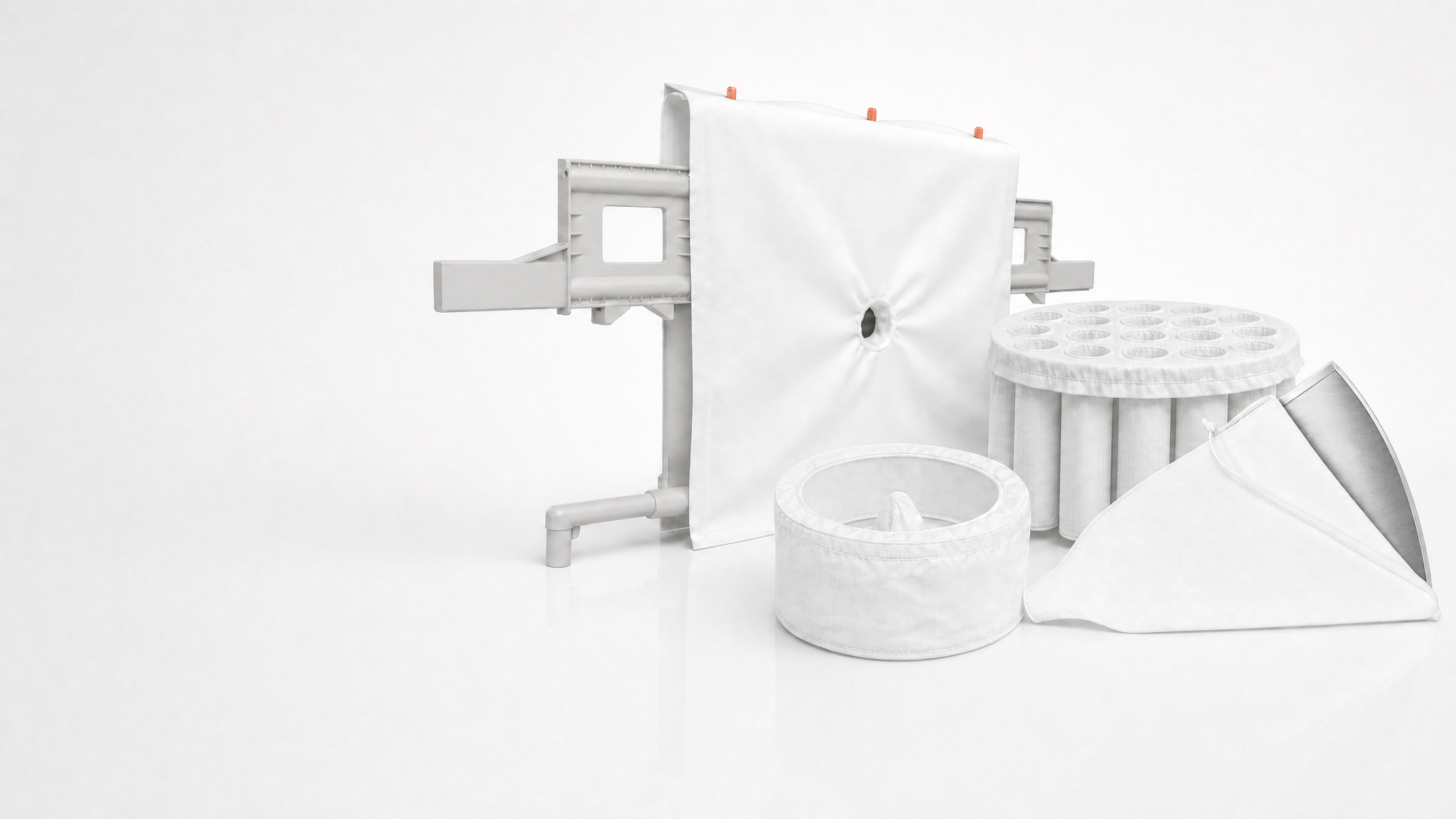
Lithium hydroxide, lithium carbonate, and cathode active materials are pushing filtration systems harder than many traditional chemical processes. For operators, the challenge is to protect purity, control moisture, and keep cake release predictable while handling corrosive slurries and fine particles.
As battery material production scales up, the requirements for filter fabrics are changing fast. If you run a filter press, centrifuge, or pressure filter in this environment, small cloth issues can quickly become quality issues, downtime, or contamination risks.
🔑 Key Takeaways
- Battery-material filtration demands high purity and low contamination risk.
- Lithium salts and cathode slurries can be abrasive, fine, and chemically aggressive.
- Correct fabric selection improves cake release, throughput, and cloth life.
- The right machine-fabric match is essential for stable operation and consistent product quality.
🏭 Why Lithium and Battery Materials Are Different
In lithium carbonate and lithium hydroxide production, you are often separating very fine solids from liquors that may be alkaline, salt-rich, or chemically demanding. In cathode material processing, the slurry can be even more sensitive: particle size distribution is tight, product purity is critical, and any textile contamination is a serious concern.
That is why battery applications usually require fabrics designed for clean separation, chemical resistance, and reproducible drainage. The filtration step is not just about solids capture; it directly affects downstream washing, drying, and final material quality.
For broader context on process environments, see our chemical industry filtration applications.
⚠️ Caution: In battery-material production, even small cloth damage, stitching contamination, or fiber shedding can trigger quality rejects. Treat fabric integrity as a product-safety issue, not just a maintenance issue.
🔬 Main Filtration Challenges in Lithium Slurries
Operators typically see a mix of slow drainage, blinding, and difficult cake discharge. Because lithium carbonate and hydroxide particles can be very fine, the cloth must retain solids without sealing too quickly. In cathode precursor and active material processes, the solids can be sticky or compressible, making cloth release even more important.
Common pain points
- Filter cloth clogging from very fine particles and salts
- Short cloth life due to chemical exposure and abrasion
- Poor cake release in press or vacuum applications
- Drip leakage that causes product loss and wet floors
- Contamination risk from seams, stitching, or shedding
If clogging is becoming a recurring issue, review our guidance on filter cloth clogging and short filter lifespan.
Rule of thumb: The finer the battery material, the more important it is to balance retention against drainage. Overspecifying tight filtration can reduce throughput and increase blinding.
⚙️ Best-Suited Machines and Fabric Formats
The right fabric depends on your machine and separation goal. For dewatering lithium solids in pressure-driven systems, RF-FF Series filter press fabrics are often a strong fit. For continuous or semi-continuous discharge, RF-BF Series belt filter fabrics help support stable drainage and cake transport.
For centrifugal separation, RF-CF Series centrifuge fabrics can be matched to the bowl type, solids loading, and wash cycle. If your process uses vacuum or pressure filtration, the fabric construction should support both retention and fast liquid passage.
| Process Need | Typical Machine | Fabric Priority |
|---|---|---|
| Lithium hydroxide or carbonate dewatering | Filter press | Fine retention, clean release |
| Continuous slurry handling | Belt filter | Drainage, abrasion resistance |
| High-speed solid-liquid separation | Centrifuge | Mechanical stability, balance, low shedding |
| Polishing and batch clarification | Pressure leaf / sparkler filter | Purity, chemical compatibility |
🛠️ Selection Criteria for High-Purity Battery Production
When you specify a fabric for battery materials, look beyond filtration fineness. The fabric must also survive cleaning cycles, resist the process chemistry, and avoid introducing unwanted particles into the product stream.
📋 Pre-selection checklist
- What is the particle size distribution of the slurry?
- Is the chemistry alkaline, acidic, or salt-loaded?
- Do you need fast cake release or maximum retention?
- Are washing and drying steps part of the cycle?
- What purity level does the downstream customer require?
- Is antistatic performance important in your area?
For operators who want a faster route from machine type to fabric specification, you can find and configure the right filter fabric with our Solution Finder. It helps you select your filtration machine, define the process, and generate a pre-filled, non-binding inquiry.
💡 Operating Tips to Improve Stability
In emerging battery-material plants, process stability often matters more than peak lab performance. Small operating adjustments can extend cloth life and improve consistency across batches.
Flush the system thoroughly before first use to remove machining residues, dust, and installation debris.
Watch filtrate clarity, cycle time, and cake moisture to detect early blinding or leakage.
Check for contamination stitching, wear points, and signs of mechanical stress after cleaning cycles.
💡 Tip: If cake release deteriorates after a few cycles, the issue may be chemical fouling or surface interaction rather than cloth porosity alone. Review the whole process before changing fabric type.
In some plants, static control also becomes relevant during drying or powder handling. If your area has ATEX-sensitive risks, review our guidance on antistatic and ATEX-related filtration issues.
✅ Moving from Pilot to Full-Scale Production
Lithium and battery-material filtration is still an evolving market, which means specs can change quickly as product grades, process chemistry, and throughput targets shift. The best strategy is to build in flexibility: choose a fabric family that can be adapted to your machine, your slurry, and your purity requirements.
If you operate a filter press, belt filter, centrifuge, or pressure leaf filter, a machine-specific fabric review can save time and reduce startup risk. For drying steps that follow filtration, see our fluid bed dryer solutions as well.
R+F FilterElements supports industrial operators in the chemical industry with engineered fabrics designed for demanding solid-liquid separation tasks. Whether you need sharper retention, better release, or improved chemical resistance, the right fabric choice can make the whole process more stable.
📩 Need Help Choosing the Right Fabric?
Our technical team at R+F FilterElements can help you find the perfect filter fabric for your specific application. Get in touch for a free consultation — we will recommend the right solution based on your machine, process, and operating conditions.
Prefer a guided start? Use our Solution Finder to configure the right filter fabric online and receive a pre-filled, non-binding specification and inquiry.