
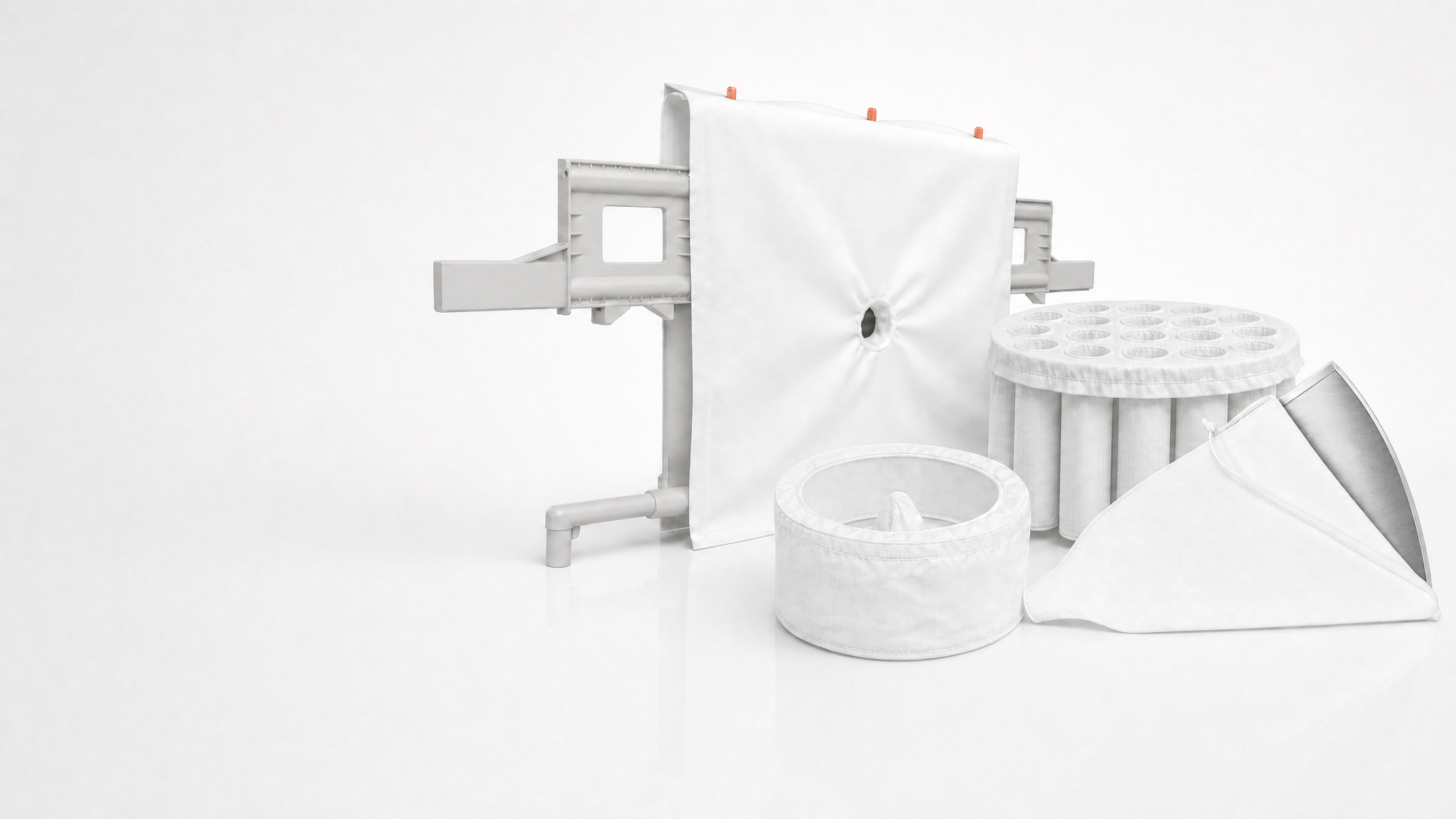
Cake release problems can slow down every solid-liquid separation line, from filter presses to centrifuges. If the cake sticks, smears, or tears during discharge, the cause is usually a combination of fabric selection, surface condition, and process settings rather than one single fault.
🔑 Key Takeaways
- Start by identifying where the cake sticks: at discharge, during peeling, or across the full surface.
- Fabric structure and finish strongly influence release performance, especially on a filter press or centrifuge.
- Clogging, blinding, and excessive moisture are often the hidden causes behind poor cake release.
- Small process changes — wash cycle, air blow, tension, or discharge timing — can improve release without changing the whole setup.
🧪 Step 1: Identify the Type of Cake Release Problem
Before changing fabric, I always narrow down the symptom. Sticky cake on a belt filter behaves differently from a smear layer on a pressure leaf filter. The right fix depends on whether the cake is too wet, too adhesive, or mechanically held to the media.
📋 Quick Diagnosis Checklist
- Cake stays on the fabric after discharge
- Cake breaks unevenly or tears into layers
- Residual solids remain after the cleaning cycle
- Discharge improves only after manual intervention
- Release gets worse as runtime increases
If the issue appears only after long operation, also check for filter cloth clogging or a shortened service life that changes surface behavior over time.
💡 Tip: Poor release is often a process symptom, not just a fabric problem. Always check moisture, differential pressure, and discharge timing before replacing media.
⚙️ Step 2: Check the Fabric Construction and Surface Finish
For operators, fabric choice is usually the fastest lever. On a RF-FF Series filter press fabric, a smoother release surface can help cakes drop more cleanly, while on a RF-CF Series centrifuge fabric, the weave or felt structure must balance retention with discharge behavior.
For sticky slurries, I would compare a more open drainage design against a surface-treated option. If your plant runs a nutsche filter or vacuum filter, fabric release behavior can be just as important as retention efficiency.
| Fabric / Surface Type | Typical Strength | Best For | Watch Out For |
|---|---|---|---|
| Smoother woven surface | Good cake release | Sticky but coarse solids | May reduce capture of very fine particles |
| Needle felt structure | High retention | Fine solids, high throughput | Can hold moisture and increase adhesion if blinded |
| Surface-treated media | Improved release | Adhesive cakes, difficult discharge | Treatment must match chemical and thermal conditions |
🔧 Step 3: Review Surface Treatment and Cake Conditioning
If the fabric is correct but the cake still sticks, the problem may be in the way the cake is conditioned before discharge. Washing, air blow, vibration, and drying all influence release. On a fluid bed dryer, for example, product behavior changes when residual moisture is uneven across the layer.
If the cake is too wet, release will usually fail no matter how good the fabric is.
Residual salts, binders, or oils can create tackiness and film formation.
More uniform dewatering often improves discharge more than stronger mechanical force.
⚠️ Caution: Do not overuse mechanical scraping or aggressive discharge aids. If the fabric is damaged, you may solve the sticking today but create contamination, stitching damage, or premature failure later.
📊 Step 4: Compare Process Adjustments Before Replacing the Fabric
In many plants, the best fix is a small process change. I recommend checking pressure, cycle time, and discharge sequence before ordering new media. If you are unsure which fabric format suits your machine, you can find and configure the right filter fabric with our Solution Finder and receive a pre-filled, non-binding inquiry.
Practical operator rules
Rule of thumb: If a clean cycle no longer restores release performance, the issue is usually no longer process-only — the fabric surface has likely changed.
For highly demanding separation duty in the chemical industry or mining, switching to an application-specific fabric can make a major difference. See also chemical industry filtration and mining applications.
🛠️ Step 5: Use a Structured Troubleshooting Routine
When I troubleshoot cake release on site, I follow the same sequence every time. This avoids unnecessary downtime and helps the operator isolate the real cause quickly.
Note whether the cake sticks at the edges, center, or entire surface.
Look for blinding, glazing, wear, seam issues, or uneven tension.
Test cycle time, wash intensity, blowback, vibration, or discharge delay.
Compare release quality over several cycles, not just one good discharge.
📋 Final Verification Checklist
- Release is consistent across the full surface
- Residual cake thickness is within target
- Cleaning cycle restores performance
- Fabric matches chemistry, temperature, and solids load
- Discharge does not create contamination or fabric damage
For belt-based systems, it is worth comparing RF-BF Series belt filter fabrics with your current setup. For fine solids or special pharmaceutical duties, RF-ANF Series Nutsche Pharma fabrics may be a better fit, especially where clean release and controlled handling are essential.
📩 Need Help Choosing the Right Fabric?
Our technical team at R+F FilterElements can help you find the perfect filter fabric for your specific application. Get in touch for a free consultation — we will recommend the right solution based on your machine, process, and operating conditions.
If you want a fast starting point, use our Solution Finder to select your machine and configure the right filter fabric online. You will receive a pre-filled, non-binding specification and inquiry that makes the next step much easier.