
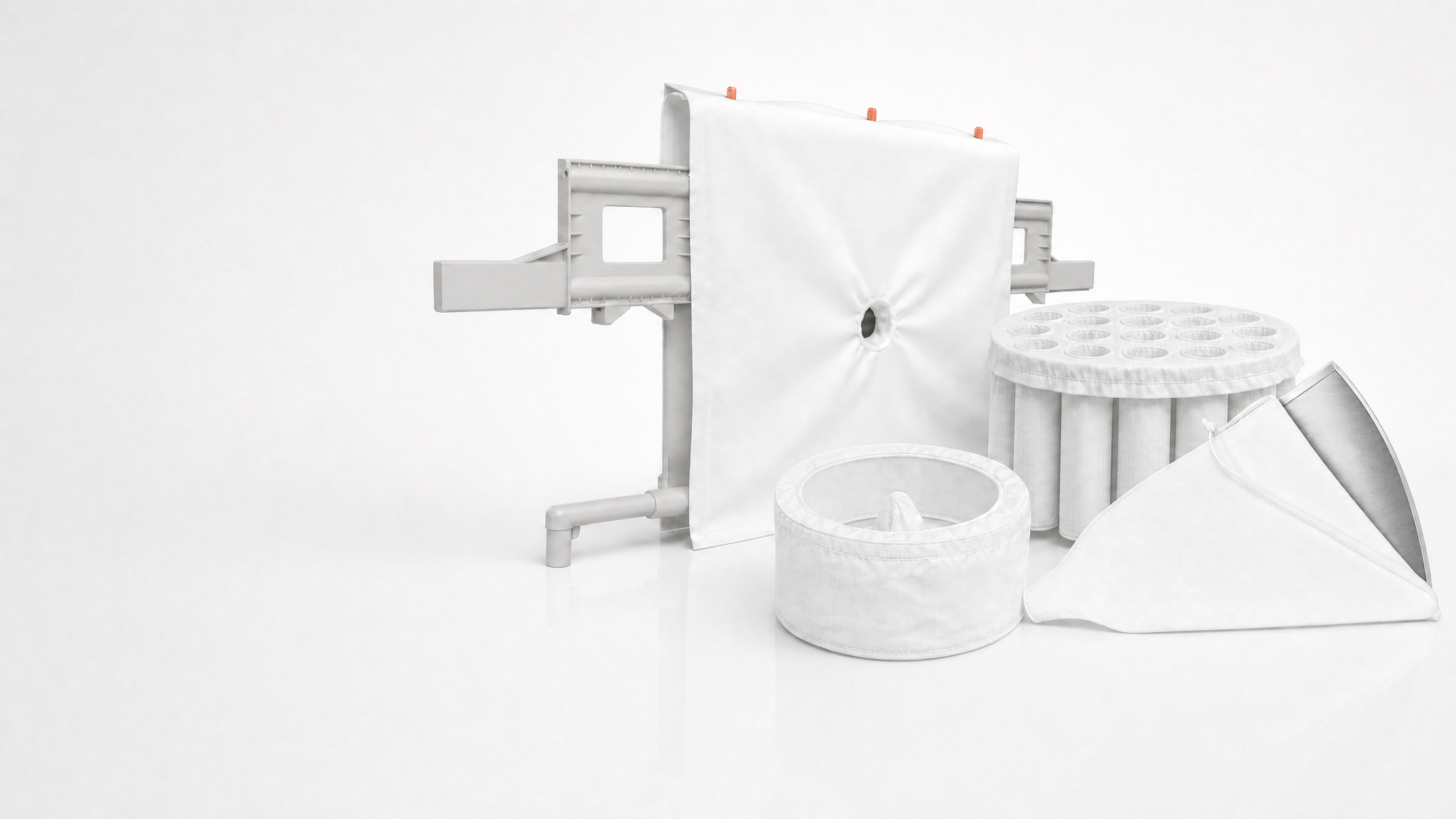
In mining and minerals dewatering, a horizontal vacuum belt filter depends on the belt cloth just as much as on the machine itself. If the cloth wears early, blinds too fast, or does not match the seam and permeability requirements, you will see unstable filtrate quality, poor cake discharge, and more unplanned stops.
🔑 Key Takeaways
- Metso / Outotec horizontal vacuum belt filters often run best with made-to-measure replacement cloths matched to width, length, seam, weave, and permeability.
- Plants switch to aftermarket belts for shorter lead times, better cost control, and specs tailored to real operating conditions.
- R+F FilterElements can reverse-engineer compatible belts from a sample, drawing, or old belt specification.
- Abrasive mining duties typically call for robust monofilament or abrasion-resistant constructions with the right seam design for the installation.
💡 Tip: Before requesting a quote, note the belt width, length, seam type, mesh or air permeability, weave, and material. Those details usually define whether a replacement belt will run properly from day one.
🏭 What a Replacement Belt Must Do on a Horizontal Vacuum Belt Filter
On a Metso / Outotec horizontal vacuum belt filter, the cloth is not just a filter medium. It also has to track reliably, seal correctly in the vacuum zone, drain freely, and survive abrasive slurries for long operating cycles. In mining service, that often means handling coarse solids, sharp crystals, high solids loading, and repeated wash cycles.
R+F FilterElements supplies made-to-measure compatible replacement filter belts for horizontal vacuum belt filters used in mining and minerals dewatering. We focus on belts that are built to fit the process, not just the machine name. For operators, that means a cloth specification that supports stable filtration, predictable cake release, and practical belt life.
🔬 How to Identify the Right Vacuum Belt Cloth
When you request a replacement, the fastest way to avoid mistakes is to define the belt as completely as possible. If the old belt is still available, it can usually be measured and reverse-engineered into a compatible specification.
| Specification | Why it matters | What operators should check |
|---|---|---|
| Belt width | Must match the filter deck and tracking system | Net width, usable width, edge finish |
| Belt length | Controls fit, tensioning, and seam position | Overall length, installed loop length, take-up range |
| Seam type | Determines installation method and tracking behavior | Woven seam, spiral seam, pin seam, other joint style |
| Mesh / air permeability | Influences drainage rate and cake dryness | Target airflow, filtrate clarity, cake release behavior |
| Weave | Affects retention, strength, and blinding resistance | Monofilament, multifilament, plain weave, specialty construction |
| Material | Defines chemical resistance and wear performance | Polyester, polyamide, or process-specific material choice |
📋 What to send with your inquiry
- Machine type and model designation
- Current belt dimensions or drawing
- Photos of the seam and edge construction
- Process data: solids type, slurry temperature, pH, abrasion level
- Any target goals: longer life, better drainage, faster cake release
If you already know the process family, it helps to compare your machine to the right product path. For example, our filter belt portfolio and the dedicated vacuum belt filter fabrics page are useful starting points, and the relevant machine pages such as belt filter and vacuum filter help connect the fabric to the application.
⚙️ Why Plants Switch to Independent Aftermarket Belts
Operators usually move to compatible replacement belts for practical reasons. The goal is not to change the process concept; it is to secure supply and improve the economics of maintenance.
- Shorter lead times: A replacement belt can be produced without waiting on a single source channel.
- Price control: Competitive aftermarket supply can reduce the cost of routine belt replacement.
- Tailored specs: The belt can be adapted to the slurry, vacuum level, or discharge behavior you actually run.
- Supply resilience: Independent sourcing reduces dependence on one procurement path.
For broader plant planning, the same logic applies across other dewatering systems too. Many operators already source compatible media for mining applications, wastewater, and chemical industry duties where downtime is expensive and fit is critical.
🛠️ How R+F Reverse-Engineers a Belt Specification
If the original drawing is missing, that is usually not a problem. R+F FilterElements can reconstruct a working specification from a belt sample, a worn belt, photos, or basic machine data. The objective is to reproduce the functional design so the belt installs and runs like a proper replacement.
We check width, length, edge details, seam construction, and usable filtration area.
We assess solids type, cake behavior, vacuum conditions, abrasion level, and wash requirements.
We define weave, material, permeability, and seam option for the intended duty.
You receive a pre-filled, non-binding specification for final review before production.
For operators who prefer to work digitally, you can also configure your belt filter filter fabric online and receive a pre-filled, non-binding inquiry. It is a convenient way to document the cloth parameters before you send the sample or old belt.
⚠️ Caution: Do not assume that two belts with the same machine name are automatically interchangeable. Small differences in seam style, permeability, or edge finishing can affect tracking, sealing, and filtrate performance.
🔧 Abrasion-Resistant Mining Belts vs. Monofilament Vacuum Belts
For horizontal vacuum belt filters in mining, the most common replacement choices are abrasion-resistant mining belts and monofilament vacuum belts. They are not identical, and the right choice depends on wear intensity, drainage needs, and cake behavior.
| Belttype | Best suited for | Main advantage | Typical operator focus |
|---|---|---|---|
| Abrasion-resistant mining belt | Coarse, sharp, or highly abrasive solids | Improved wear life | Belt durability, edge stability, seam strength |
| Monofilament vacuum belt | Applications needing good drainage and stable filtration | Balanced permeability and clean release | Cake release, filtrate quality, blinding resistance |
Rule of thumb: If wear is your main issue, start with abrasion resistance; if drainage or blinding is the issue, start with weave and permeability.
Depending on the plant, we can also align the belt specification with related product families such as mining filter belts, belt press fabrics, or broader vacuum and drainage constructions like drainage belts and spiral belts when the process requires a specific fabric architecture.
✅ Quality, Seam Options, and Pre-Installation Checks
For a replacement belt to be useful in the field, it needs to be built with the right seam and a clean, consistent finish. Seam choice affects installation convenience, belt tracking, and how the splice behaves under vacuum and tension.
- Woven or integrated seam options for stable tracking and reliable assembly
- Material and weave selections matched to abrasion, chemistry, and temperature
- Permeability tuning to balance drainage against solids retention
- Edge and finish control to support consistent running and reduced fraying
📋 Pre-start check after installation
- Verify belt direction and seam position
- Check tracking at low speed before full load
- Confirm vacuum sealing across the full width
- Inspect cake release after the first operating cycles
- Record tension settings for future replacements
If your plant also runs adjacent dewatering equipment, you may want to review the related machine pages for belt press, drum filter, and broader filter media options on the belt press fabric family. For dryer duties, R+F also offers compatible solutions in related belt categories such as antistatic dryer belts and FGD belts where the process calls for specialized properties.
📩 Need Help Choosing the Right Fabric?
Our technical team at R+F FilterElements can help you find the perfect filter fabric for your specific application. Get in touch for a free consultation — we will recommend the right solution based on your machine, process, and operating conditions.
If you already have an old belt, drawing, or machine data, the fastest next step is to configure your belt filter filter fabric online. You will receive a pre-filled, non-binding specification that you can send to us for a quotation and technical review.