
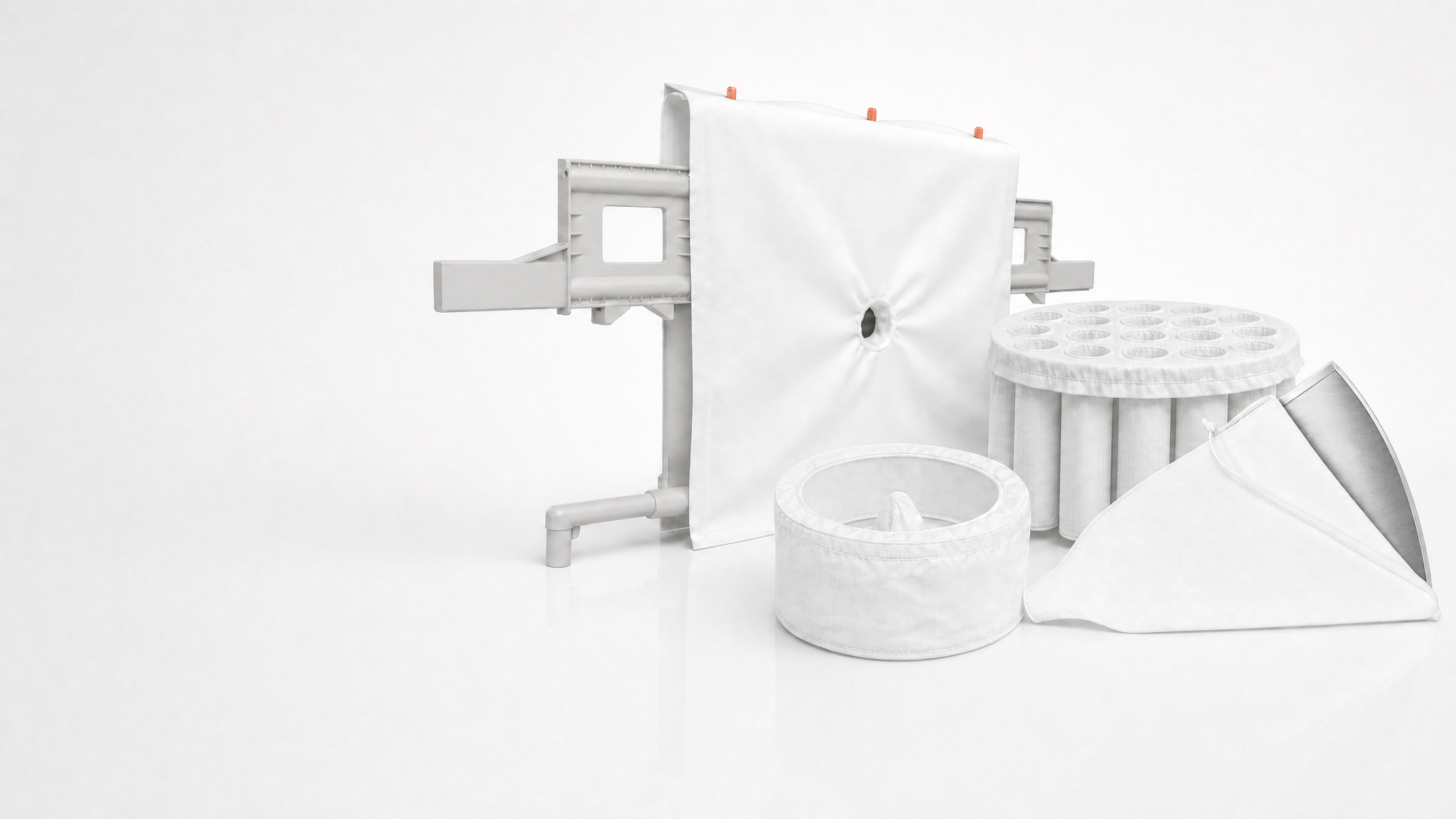
In zinc and copper electrowinning, every filtration step has a direct impact on cathode quality, electrolyte cleanliness, and overall cell efficiency. If your filter fabric cannot handle hot acid, fine solids, and continuous operation, you will quickly see blinding, leakage, or shortened service life. That is why the fabric choice matters just as much as the machine itself.
🔑 Key Takeaways
- Electrowinning filtration must withstand acidic liquor, fine particles, and repeated wash cycles.
- For zinc and copper plants, fine retention and stable cake release are critical to protect downstream purity.
- The right fabric depends on the machine, from filter presses to centrifuges and vacuum systems.
- Use the Solution Finder to configure the right filter fabric and receive a pre-filled, non-binding inquiry.
⚙️ Why electrowinning filtration is so demanding
In hydrometallurgical zinc and copper circuits, filtration often sits between leaching, purification, and electrowinning. The liquor can be acidic, warm, and loaded with very fine solids such as gypsum, jarosite, or residual precipitates. That means the fabric has to do three jobs at once: retain fines, resist chemical attack, and keep pressure drop under control.
From an operator’s point of view, the main risks are easy to spot: rising cycle times, premature blinding, unstable filtrate clarity, and frequent cloth changes. If those issues sound familiar, the problem is often not the filter press or centrifuge alone. It is the interaction between process chemistry, solids size, and the fabric structure.
💡 Tip: If your filtrate clarity is drifting, inspect both the fabric surface and seam areas. In electrowinning service, small leaks can contaminate downstream electrolyte faster than most operators expect.
🧪 What a filter fabric must withstand in zinc and copper plants
The best fabric for this application is usually not the most open or the most dense. It is the one that balances permeability with fine retention and remains dimensionally stable in acid service. For many plants, that means engineered woven fabrics with controlled pore structure and strong seam construction.
Key fabric requirements
- Chemical resistance: Stable performance in acidic process liquors and wash solutions.
- Fine retention: Reliable capture of fine precipitates without excessive blinding.
- Mechanical strength: Resistance to tension, abrasion, and repetitive discharge cycles.
- Low contamination risk: Clean stitching and seam design to protect product purity.
⚠️ Caution: Do not select a fabric based on initial flow rate alone. A cloth that drains fast on day one may blind quickly in real electrowinning duty, causing longer cycles and unstable operation.
📊 Choosing the right fabric for each machine
Different machines place different stresses on the fabric. A filter press needs strong cake release and seam reliability. A centrifuge needs robust retention at high rotational forces. Vacuum systems and disc filters place a premium on permeability and uniform solids capture. The machine determines the fabric architecture almost as much as the chemistry does.
| Machine | Primary challenge | Fabric priority |
|---|---|---|
| Filter press | Fine solids, high pressure, repeated cycles | Fine retention and strong cake release |
| Centrifuge | High mechanical stress and wet fine solids | Dimensional stability and wear resistance |
| Vacuum filter / disc filter | Continuous filtration with variable slurry load | Balanced permeability and blinding resistance |
| Pressure leaf / sparkler filter | Polishing duty and clarity-sensitive streams | High clarity, low contamination, stable seam quality |
For pressed cake systems, many operators compare RF-FF Series filter press fabrics with alternative configurations used in wet metallurgy. If the plant uses continuous solid-liquid separation, RF-BF Series belt filter fabrics are often evaluated for discharge behavior and throughput stability.
🔧 Practical operator checks before fabric selection
Before ordering a replacement cloth, collect the process data that actually drives performance. In mining and hydrometallurgical plants, small differences in solids loading or temperature can change the best fabric choice completely.
📋 Pre-selection checklist
- Slurry chemistry: acid type, pH, temperature, oxidizing agents
- Solids profile: particle size, fines content, abrasion level
- Machine type: press, centrifuge, belt filter, disc filter, or leaf filter
- Target: clarity, throughput, cake dryness, or longer cloth life
- Cleaning method: washing frequency, backflush, or mechanical discharge
Confirm whether the fabric is used for clarification, dewatering, or final polishing in the zinc or copper circuit.
Check acid concentration, wash water quality, and any temperature peaks that may shorten fabric life.
Choose the fabric structure that gives the best balance between filtrate clarity and acceptable cycle time.
Ensure stitching, edge finishing, and installation fit the machine to reduce leakage and contamination risk.
🏭 Where R+F fabrics fit in mining applications
R+F engineered filter fabrics are designed for tough process conditions in mining and hydrometallurgy. If your plant runs zinc or copper electrowinning, the most relevant starting point is usually the broader mining application page, where you can match your process to suitable fabric families.
Depending on the machine, operators may also evaluate fabrics for vacuum filtration, pressure leaf systems, or polishing filters. For example, RF-PLF Series pressure leaf filter fabrics are well suited to clarity-focused duties, while RF-CF Series centrifuge fabrics are built for demanding mechanical loads and reliable solids capture.
When you are unsure which design fits your slurry, it helps to compare alternatives side by side. The fabric that performs best in a belt filter may not be the best choice in a press or centrifuge, even if the slurry is the same.
Rule of thumb: In zinc and copper electrowinning, choose the fabric that keeps filtrate clear over the full campaign, not just the first few cycles after installation.
✅ Use the Solution Finder to speed up selection
If you already know your machine type, the fastest route is to find and configure the right filter fabric with our Solution Finder. You can select your filtration machine online, define the operating conditions, and receive a pre-filled, non-binding inquiry that makes technical review much easier for your team.
That is especially useful when you need to compare fabric options across multiple machines, such as a filter press in one circuit and a centrifuge or disc filter in another. It also helps reduce mistakes when the process has changed since the last cloth order.
📩 Need Help Choosing the Right Fabric?
Our technical team at R+F FilterElements can help you find the perfect filter fabric for your specific application. Get in touch for a free consultation — we will recommend the right solution based on your machine, process, and operating conditions.