
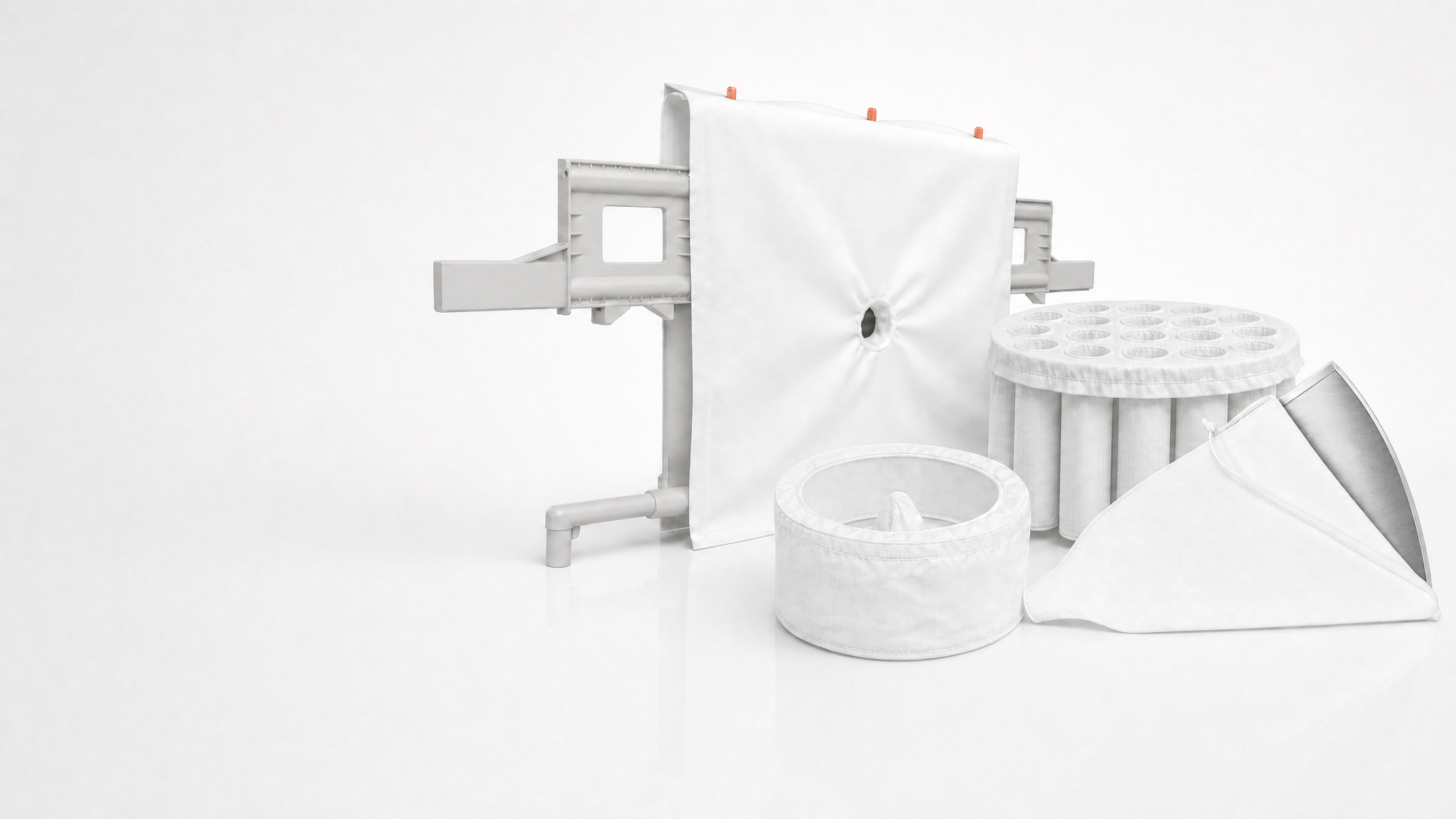
When an Andritz vacuum filter starts losing throughput, the cloth is often the first wear part to inspect. For rotary drum, disc, and pan filters, the right replacement fabric can improve cake release, reduce blinding, and extend service life without changing the machine itself.
R+F FilterElements’ RF-FF Series compatible filter fabrics are engineered as high-quality alternatives for continuous vacuum filtration, with a focus on abrasion resistance, stable pore structure, and reliable performance in demanding applications like mining filtration.
🔑 Key Takeaways
- RF-FF Series fabrics are compatible alternatives for Andritz vacuum, drum, and disc filter applications.
- Material choice matters: PP typically suits aggressive chemistry, while PET often offers better temperature stability and wear behavior.
- Good cake release and abrasion resistance help reduce downtime in continuous vacuum filtration.
- Use the online configurator to configure your vacuum / drum filter fabric online and receive a pre-filled inquiry.
⚙️ Where RF-FF Fits on Andritz Vacuum Filters
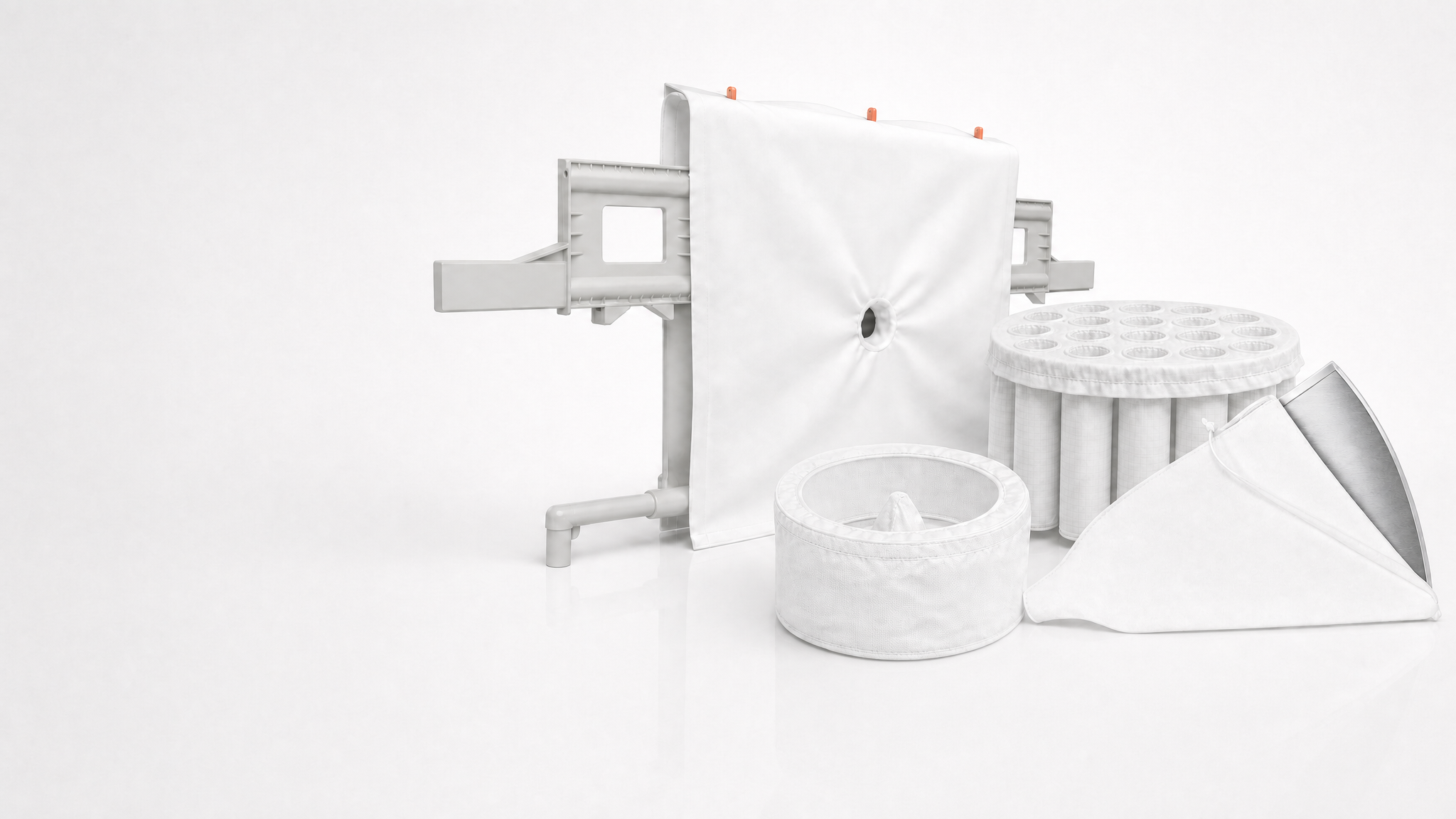
Operators usually need replacement cloths for vacuum filter systems when cloth blinding, edge wear, or poor release starts affecting cycle time. The RF-FF Series is designed to match the practical demands of vacuum filtration on Andritz rotary drum, disc, and pan filter equipment.
What matters on the plant floor is not just “fit,” but whether the cloth tracks well, seals correctly, and releases cake consistently. That is why R+F works from machine geometry and operating conditions, including drum diameter, sector layout, drainage direction, seam design, and cake discharge behavior.
- Rotary drum filters: stable cloth tension and uniform drainage across the drum surface
- Disc filters: precise sector fit and low-stress geometry for rotating elements
- Pan filters: dependable sealing and smooth discharge in cyclic operation
If your unit is a rotary disc machine, also review our rotary disc filter solutions and the dedicated RF-RD Series disc filter fabrics for application-specific builds.
🔬 Why Abrasion Resistance and Cake Release Decide Cloth Life
In vacuum filtration, the cloth is exposed to constant sliding, rake contact, vacuum stress, and repeated cleaning. If the surface wears too quickly, solids begin to embed, permeability drops, and dewatering performance becomes unstable.
💡 Tip: A cloth that releases cake cleanly often outperforms a “stronger” cloth that holds fines. In practice, cake release saves more downtime than a slight increase in tensile strength.
For operators, this usually shows up as:
- Higher vacuum consumption for the same solids loading
- Wetter cake at discharge
- More frequent washing or cloth changeouts
- Uneven performance between sectors or drum sections
⚠️ Caution: If cake release becomes inconsistent, do not only increase vacuum or washing pressure. That can mask a cloth issue and accelerate wear on the vacuum system.
Material choice has a direct impact
For many Andritz-style vacuum applications, the two most common base materials are PP and PET. Each has strengths, and the best choice depends on slurry chemistry, temperature, and mechanical loading.
| Property | PP | PET | Operator Note |
|---|---|---|---|
| Chemical resistance | Very good | Good | PP is often preferred for aggressive media |
| Temperature stability | Moderate | Higher | PET is often stronger in hotter processes |
| Abrasion behavior | Good | Very good | PET is often favored in harsh mechanical service |
| Cake release | Good | Good to very good | Surface finish and weave matter as much as polymer |
📊 Matching the Cloth to the Drum, Disc, or Pan Geometry
Good compatibility means the fabric follows the machine geometry instead of fighting it. On vacuum equipment, the cloth must align with sector spacing, drainage channels, fastening points, and the discharge path so the system stays stable during rotation.
📋 Geometry check before ordering
- Drum or disc diameter
- Sector count and sector dimensions
- Cloth fastening method
- Operating vacuum level
- Slurry solids content and particle size
- Cleaning method and discharge style
For operators who want a faster start, the configurator lets you configure your vacuum / drum filter fabric online and generate a non-binding, pre-filled inquiry. That is especially useful when replacing an existing cloth on a running plant and you need a quick cross-check of the dimensions and material.
🛠️ Ordering Replacement Cloths Without Guesswork
The fastest way to avoid mismatches is to collect the operating details before the old cloth is removed. If possible, take photos of the fastening points, note the OEM machine type, and record any recurring problems such as cloth clogging or poor discharge.
Confirm whether you are running a rotary drum, disc, or pan filter, and note the model and sector layout.
Capture slurry chemistry, temperature, solids load, and whether abrasion or cake release is the main issue.
Choose PP or PET based on chemical resistance, wear, and temperature demands.
Use the configurator or contact us with dimensions so we can propose the right RF-FF build.
Rule of thumb: If the old cloth failed by edge wear, inspect fastening and tracking first; if it failed by blinding, focus on weave, finish, and cake release characteristics.
✅ Typical Operating Problems and What to Check
Many cloth changes are driven by predictable issues rather than sudden failures. For example, if you are fighting blinding or early loss of permeability, start with solids fines, wash water quality, and cloth surface condition before changing the entire process.
- Filter cloth clogging from fines or inadequate washing
- Poor cake release leading to carryover and discharge problems
- Short filter lifespan caused by abrasion, heat, or wrong material selection
- Drip leakage where fit or sealing is no longer reliable
For plants in heavy-duty service, especially in mining, a compatible cloth with the right weave and polymer selection can reduce shutdown frequency and keep the filter running in its normal cycle.
💡 Tip: When switching cloth material, keep one variable at a time if possible. Changing weave, finish, and polymer all at once makes it harder to verify what improved performance.
📩 Need Help Choosing the Right Fabric?
Our technical team at R+F FilterElements can help you find the perfect filter fabric for your specific application. Get in touch for a free consultation — we will recommend the right solution based on your machine, process, and operating conditions.
If you already know your vacuum filter dimensions, you can also configure your vacuum / drum filter fabric online and receive a pre-filled, non-binding specification and inquiry in just a few steps.