
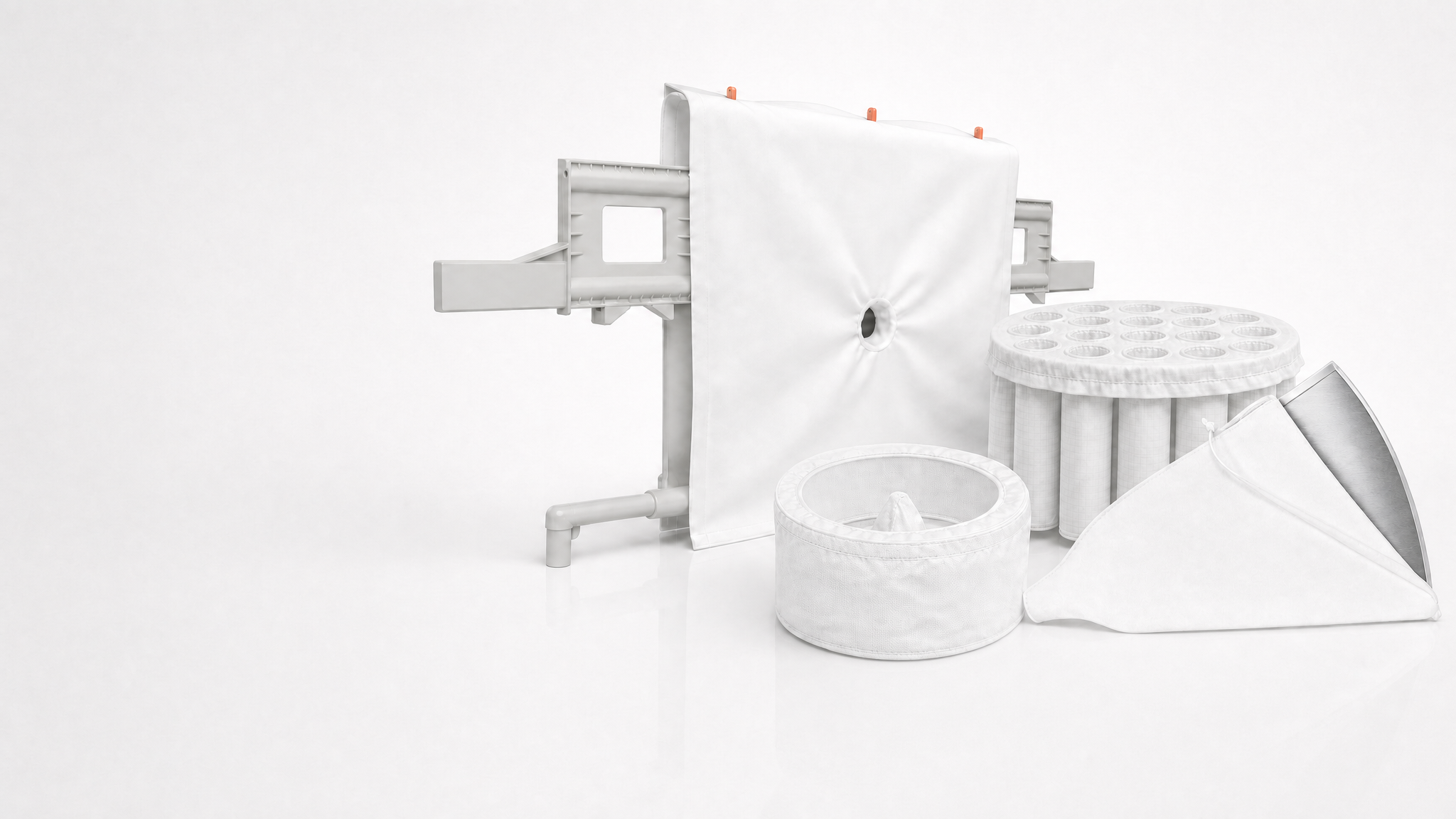
Microcrystalline wax and polyethylene wax are both valuable process materials, but they can be tricky to clean up when impurities, gels, or solid residues remain in the melt. In everyday plant operation, microcrystalline wax filtration and PE wax filtration are less about theory and more about keeping downstream product color, clarity, and consistency under control. The right synthetic wax filter cloth and machine setup can make the difference between stable production and frequent shutdowns.
🔑 Key Takeaways
- Wax filtration removes solids, gels, catalyst residues, and dark particles from hot wax streams.
- Temperature stability, release behavior, and pore structure are critical when selecting a filter medium.
- Filter press, pressure leaf, centrifuge, and sparkler systems each fit different wax purification tasks.
- Correct cloth selection reduces blinding, improves cake release, and extends service life.
⚙️ Why Wax Filtration Matters in Daily Plant Operation
In petroleum wax purification, the goal is usually simple: remove the unwanted fraction without losing usable product. In practice, that means separating fine solids, catalyst traces, oxidation by-products, and agglomerates that can affect appearance, odor, viscosity, and downstream processing.
For operators, the first sign of trouble is often not the lab report but the process behavior: rising differential pressure, slower cycle times, or a wax cake that does not release cleanly. This is where machine choice and cloth design matter. If your line runs a filter press, a pressure leaf filter, or a centrifuge, the fabric has to stay stable at elevated temperature while maintaining throughput.
If your process is sensitive to product purity, consider cross-checking the operating setup against common issues such as filter cloth clogging and poor cake release.
🔬 Choosing the Right Machine for Wax Streams
Different waxes behave differently once they cool, crystallize, or begin to gel. That is why the machine should match the product behavior, not the other way around.
For plants handling more viscous melts, a dedicated RF-FF Series filter press fabric often provides the practical combination of clarity, solids retention, and manageable cleaning. For continuous or semi-continuous processing, the RF-PLF Series pressure leaf filter fabrics can be a strong fit. If your operation relies on thermal drying after separation, the RF-FBD Series fluid bed dryer fabrics may also be relevant in the broader purification chain.
| Machine type | Typical advantage | Operator focus | Best suited for |
|---|---|---|---|
| Filter press | High solids capture | Cake release and cycle time | Batch wax purification |
| Pressure leaf filter | Compact clarification | Stable differential pressure | Fine polishing |
| Centrifuge | Fast phase separation | Balance, feed consistency | Wax with separable solids |
| Sparkler filter | Fine filtration in closed system | Clarity and sealing | High-purity wax streams |
🧪 What to Look for in a Synthetic Wax Filter Cloth
A good synthetic wax filter cloth must do more than retain particles. It has to survive heat, resist blinding, support cake formation, and release wax cleanly after cooling or blowing. In wax service, the wrong textile can soak up product, deform under temperature, or trap contamination in the weave.
- Temperature resistance: The fabric must remain dimensionally stable in hot melt service.
- Surface release: Smooth release helps reduce carryover and shortens clean-down time.
- Pore control: Tight enough for fine solids, but open enough to avoid premature blinding.
- Chemical compatibility: Important when additives, solvents, or cleaning agents are part of the process.
💡 Tip: In wax filtration, the best cloth is often the one that balances release and retention rather than simply the finest fabric available.
When operators report shorter-than-expected service life, the root cause is often not only wear. It may also be thermal stress, poor washing, or contamination buildup. Review short filter lifespan and contamination from stitching if your line shows recurring quality issues.
🛠️ Practical Setup Tips for Microcrystalline Wax Filtration
Microcrystalline wax filtration usually benefits from steady operating conditions. Sudden temperature swings can change viscosity and crystal behavior, which then affects flow through the medium. Keep feed conditions as consistent as possible and monitor the first signs of blinding.
Keep the wax at the correct filtration temperature so viscosity remains predictable.
Use your process routine to help form a stable filter layer before full loading begins.
A rapid pressure rise often means the cloth is loading too fast or the solids are too fine.
If wax sticks to the cloth, review temperature profile, surface finish, and discharge method.
⚠️ Caution: Hot wax systems can create burn and splash hazards. Always follow plant safety rules, verify pressure limits, and ensure the filtration unit is fully depressurized before opening.
For operators dealing with release problems, it is worth reading more about cake release issues and drip leakage. Both can undermine purity and increase cleanup time, especially in enclosed systems.
📋 Selection Checklist for PE Wax Filter Press Applications
Polyethylene wax can be especially sensitive to process temperature, viscosity changes, and contamination level. Before selecting a PE wax filter press setup, use the following checklist to confirm the basics.
📋 Pre-selection Checklist
- Feed temperature and viscosity range are known.
- Solids load and target clarity are defined.
- Filtration mode is batch, semi-continuous, or continuous.
- Cleaning method and solvent compatibility are documented.
- Required cloth life and maintenance interval are realistic.
If your operation is in the broader chemical industry, you may also want to compare wax filtration behavior with other solid-liquid separation tasks in the same plant. A well-chosen cloth from the RF-BF Series belt filter fabrics can be valuable in adjacent processes where drainage and continuous solids handling are needed. For enclosed and hygienic handling, the RF-NF Series needle felt fabrics may be relevant where tighter capture and robust mechanical stability are important.
Rule of thumb: If the cloth blinding starts earlier than expected, first check temperature stability and solids distribution before changing to a finer fabric.
When you want to move from trial-and-error to a structured selection, use the online tool to find and configure the right filter fabric with our Solution Finder. It helps you select the machine type, define the process conditions, and generate a pre-filled, non-binding specification inquiry.
📩 Need Help Choosing the Right Fabric?
Our technical team at R+F FilterElements can help you find the perfect filter fabric for your specific application. Get in touch for a free consultation — we will recommend the right solution based on your machine, process, and operating conditions.
If you prefer a quick guided start, use our Solution Finder to configure your filtration machine and send a pre-filled inquiry in just a few steps.