
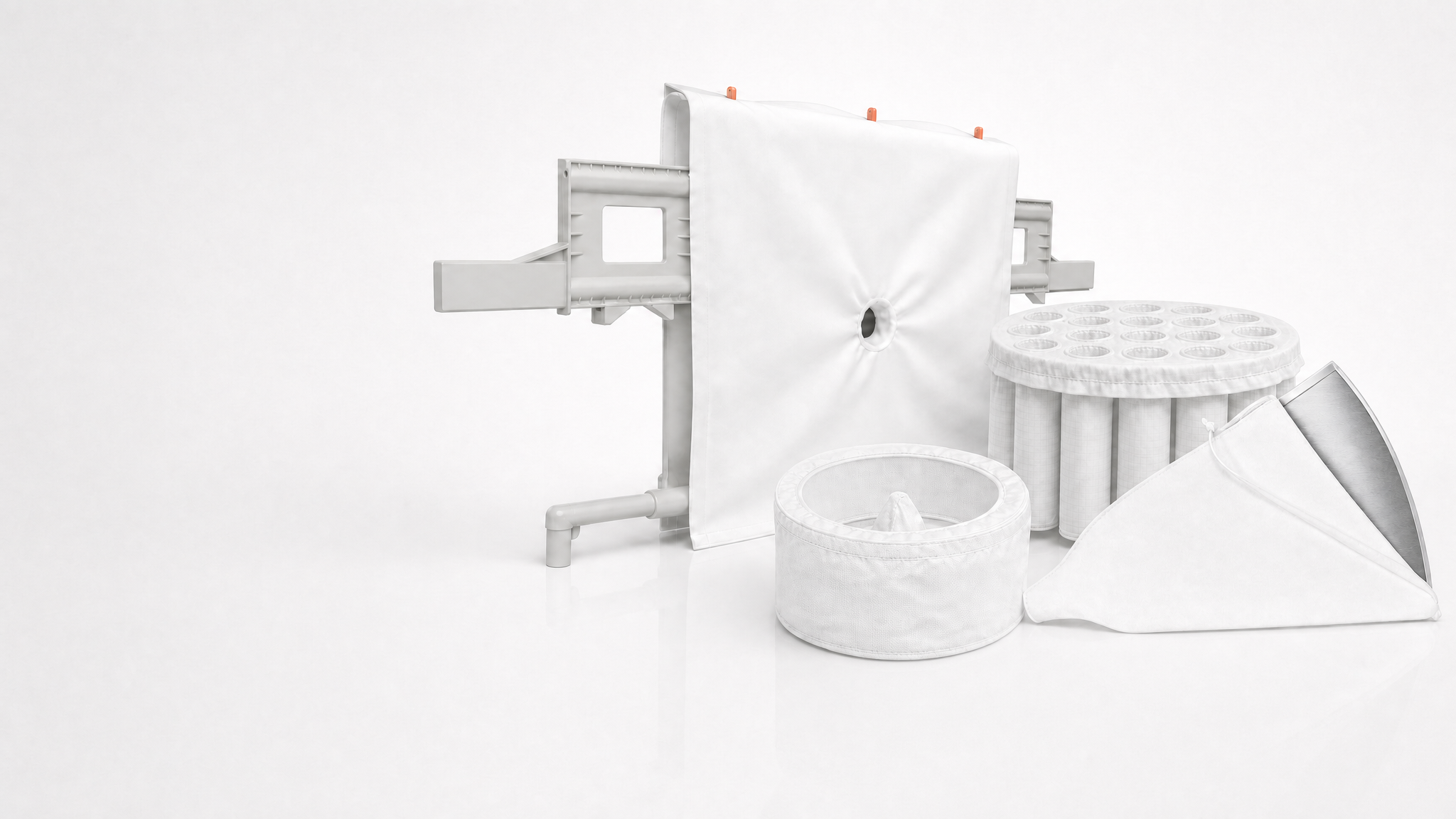
When you filter beeswax, palm wax, or other natural waxes, the goal is simple: remove solids, dark particles, and degraded residues without losing valuable product. In practice, that means matching the right filter media to a sticky, temperature-sensitive process that can quickly blind the cloth if the setup is wrong.
For operators running a filter press, belt filter, centrifuge, or vacuum-based system, wax filtration is a balancing act between clarity, throughput, and easy cake release. The right wax rendering filter cloth can make the difference between a clean melt and a constant cleanup job.
🔑 Key Takeaways
- Wax filtration depends on temperature control, low adhesion, and stable pore structure.
- Beeswax and palm wax behave differently, so the filter fabric must match the wax type and solids load.
- Operators should watch for clogging, poor cake release, and drip leakage during every batch.
- R+F can help you select the right fabric for presses, belts, centrifuges, and other wax processing machines.
⚙️ Why Wax Filtration Is Different from Other Solid-Liquid Separation
Natural waxes are not like water-based slurries. They are viscous, temperature-sensitive, and often sticky, which means the filter medium must perform under conditions where flow can change fast. If the wax cools too much, viscosity rises and solids can lock into the fabric.
This is why operators in chemical industry applications often need a fabric designed for smooth drainage and low adhesion rather than simply the finest mesh available. In many systems, the process starts with rendering, then filtration, then controlled cooling or further purification.
Common operator challenges
- Filtered solids build up in the weave and reduce throughput.
- Cooling zones create uneven viscosity across the batch.
- Residual wax sticks to the cloth, especially with fine particles.
- Drip leakage appears when the seal, seam, or support fit is poor.
⚠️ Caution: If wax is allowed to cool below its working range inside the filter, clogging and poor discharge can happen quickly. This can lead to longer cycle times and more frequent cloth cleaning.
🔬 Beeswax vs. Palm Wax: What Changes at the Filter
Beeswax filtration usually focuses on removing debris, pollen residues, and dark impurities while preserving product quality. Palm wax filtration often deals with a different impurity profile and can be more sensitive to consistency changes across the batch.
If you are choosing between a filter press and a continuous system, the wax type matters. A batch process can be ideal for tighter control, while a continuous line may suit larger volumes and stable feed conditions. For some plants, the best starting point is an operator-focused Solution Finder to find and configure the right filter fabric online, so the machine type and process data are turned into a pre-filled, non-binding inquiry.
🛠️ Choosing the Right Filter Fabric for Wax Rendering
The fabric for wax filtration should support low adhesion, good drainage, and clean release. In many cases, the weave structure is more important than extreme fineness, because wax solids can bridge pores if the medium is too tight.
For operators on a pressure leaf filter or rotary disc filter, the choice of filter cloth also affects maintenance intervals. A cloth that releases wax cleanly reduces downtime and makes batch changeovers easier.
What to look for in a wax filtration cloth
- Thermal stability: the fabric should stay dimensionally stable at process temperature.
- Low surface adhesion: helps prevent wax film buildup and eases cleaning.
- Drainage performance: supports fast liquid removal without flooding.
- Mechanical strength: important in press cycles, belt tensioning, and discharge steps.
Rule of thumb: If the cloth blinding starts early in the batch, the issue is often not just the mesh size — it is frequently the combination of temperature, solids load, and fabric surface behavior.
📊 Process Setup: How Operators Improve Wax Purification
The most successful plants treat natural wax purification as a process control problem, not only a filtration problem. The feed should be uniform, the temperature should stay stable, and the cloth should be inspected before every run.
Keep the melt at the correct working temperature so flow remains stable and solids do not harden prematurely.
Remove larger debris before it reaches the main filter to reduce clogging and extend cloth life.
Check whether the wax solids release cleanly or remain embedded in the fabric after discharge.
Use the simplest cleaning routine that restores permeability without damaging the weave or seam.
Quick comparison of common machine types
| Machine type | Best fit for wax service | Operator advantage | Watch out for |
|---|---|---|---|
| Filter press | Batch purification and tighter clarity targets | Strong control over cycle conditions | Cake release and cloth blinding |
| Belt filter | Continuous, high-volume processing | Steady throughput | Temperature drop across the belt |
| Centrifuge | Fast separation with controlled solids discharge | Short cycle times | Residual film on the fabric |
| Pressure leaf filter | Clarification where compact footprint matters | Good filtration area per vessel volume | Cleaning access and discharge behavior |
🧪 Troubleshooting: Clogging, Release Problems, and Leakage
When wax filtration goes off target, the symptoms are usually easy to spot: longer cycles, higher differential pressure, poor discharge, or sticky residue on the cloth. If that happens, first check temperature control, then solids loading, then fabric condition.
For repeated issues with solids sticking to the fabric, see our guide on cake release problems. If the problem is premature blinding, the article on filter cloth clogging can help you narrow down the cause.
📋 Pre-shift wax filtration checklist
- Confirm wax temperature is within the working window.
- Inspect cloth for buildup, seam wear, or damage.
- Verify the feed is properly screened before filtration.
- Check seals and drainage points for drip leakage.
- Review the last cycle for pressure rise or slow discharge.
💡 Tip: If your plant runs both beeswax and palm wax, keep separate operating notes for each product. A fabric that works well on one wax may behave differently on the other due to changes in viscosity and solids composition.
For plants where cleanliness and handling matter just as much as purity, R+F also supports applications in pharmaceutical processing and other sensitive industries. In every case, the same principle applies: choose the fabric to match the process, not the other way around.
📩 Need Help Choosing the Right Fabric?
Our technical team at R+F FilterElements can help you find the perfect filter fabric for your specific application. Get in touch for a free consultation — we will recommend the right solution based on your machine, process, and operating conditions.
To speed up the selection process, use our Solution Finder to find and configure the right filter fabric for your machine online and receive a pre-filled, non-binding specification and inquiry.