
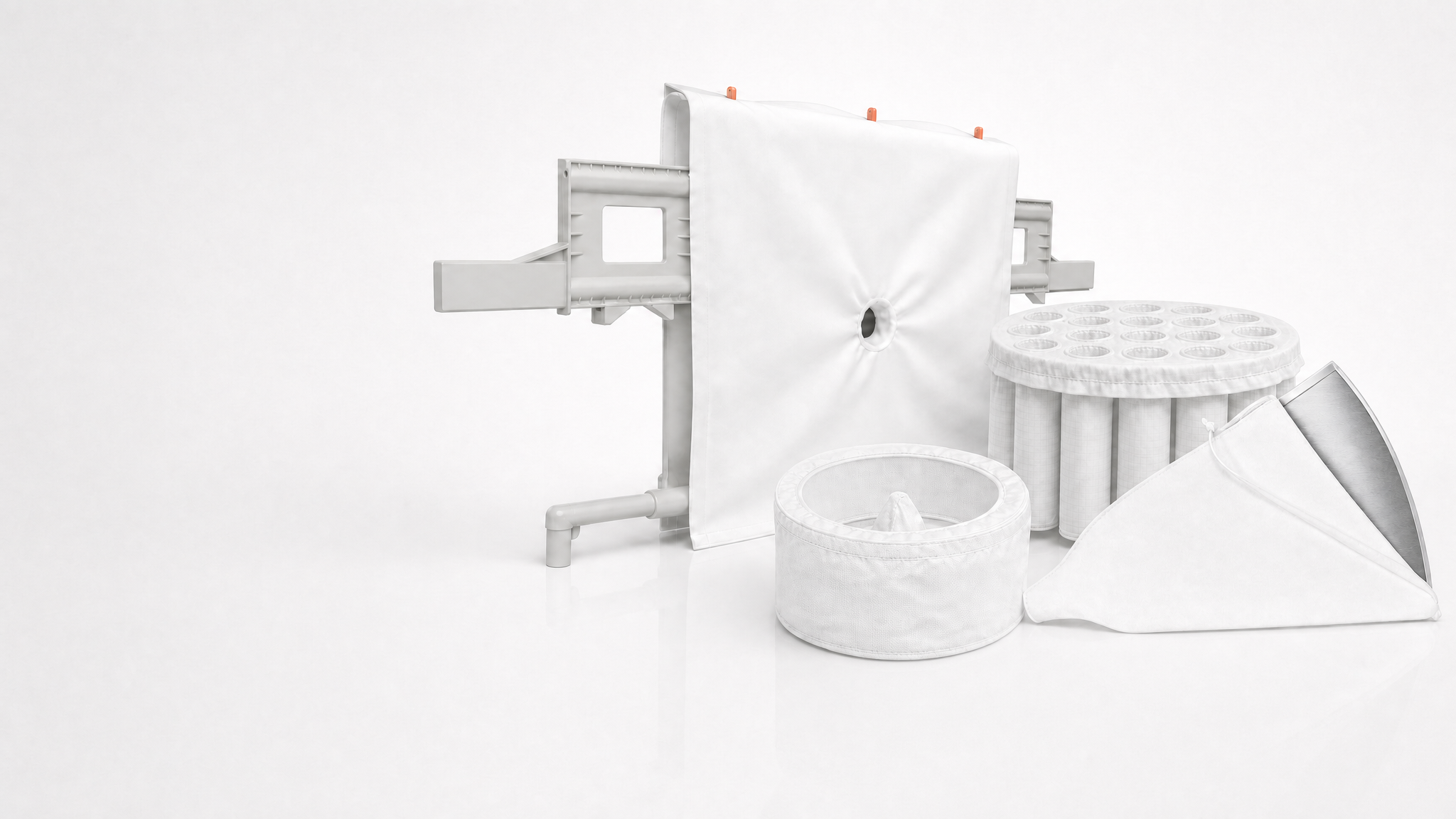
Candle wax production looks simple from the outside, but anyone running filtration in a wax plant knows how quickly fine solids, color bodies, and catalyst traces can disrupt clarity, odor, and downstream performance. The right candle wax filtration setup helps you control contamination, protect blending quality, and keep your filtration cycle stable from batch to batch.
🔑 Key Takeaways
- Wax filtration is critical for removing fine solids before filling, blending, and finishing.
- Material choice and pore structure matter because paraffin wax behaves differently when hot, cooling, or crystallizing.
- Filter cloth selection can reduce blinding, improve cake release, and extend run time.
- R+F supports candle manufacturing filtration on presses, centrifuges, leaf filters, and other solid-liquid separation systems.
🕯️ Why Candle Wax Filtration Matters in Production
In candle manufacturing, even small amounts of suspended solids can create visible specks, dull appearance, poor scent consistency, or blocked nozzles during filling. If you are handling paraffin wax, stearin blends, or additive packages, wax blending solid removal becomes a process control step, not just a cleanup task.
Filtration is especially important after:
- Wax melting and blending
- Color or fragrance addition
- De-waxing or refining steps
- Tank turnover and line cleaning
💡 Tip: If your wax looks clear at high temperature but clouds during cooling, check both the filtration stage and the particle profile in the crystallizing zone. The problem is often not one single impurity, but a mix of fines and wax crystals.
For continuous or batch operations, the machine setup matters as much as the medium. If you operate a filter press, a centrifuge, or a pressure leaf filter, the fabric or septum must hold fine particles while maintaining acceptable flow through hot wax.
🔬 Choosing the Right Filter Media for Paraffin Wax
Paraffin wax filter cloth needs to balance retention, thermal behavior, and release. Too open, and solids pass through. Too tight, and the filter blinds quickly, raising pressure and shortening the cycle.
| Filter setup | Best for | Operator advantage | Watch-outs |
|---|---|---|---|
| Filter press | Batch clarification and fine solids removal | High clarity, strong cake formation | Requires good cake release and cloth cleaning |
| Centrifuge | Fast separation of dispersed solids | Short cycle times | Fine particles may need special media selection |
| Pressure leaf filter | Large batch wax polishing | High surface area, efficient throughput | Needs stable precoat or cake management |
| Sparkler filter | Polishing after primary separation | Compact footprint, clean discharge | Less suitable for heavy solids loading |
If you want to compare media options for your line, the RF-FF Series filter press fabrics and RF-SP Series sparkler filter media are two practical starting points for candle manufacturing filtration. For centrifuge-based systems, see the RF-CF Series centrifuge fabrics.
⚙️ Common Wax Filtration Problems on the Plant Floor
Most issues in candle wax production show up as process instability: rising differential pressure, slower flow, sticky cakes, or repeated cloth changes. The root cause is often a mismatch between wax temperature, solids load, and fabric construction.
⚠️ Caution: Hot wax can change viscosity quickly with only a few degrees of cooling. If the temperature drops below your working window, you may see premature solidification, blinded cloth, and difficult cake discharge.
Typical symptoms and likely causes
- Cloudy product: insufficient fine retention or bypass leakage
- Short filter lifespan: excessive solids, poor pre-filtration, or aggressive cleaning
- Drip leakage: poor sealing, distorted cloth edges, or incorrect installation
- Poor cake release: wax adhesion, low operating temperature, or unsuitable weave
To troubleshoot faster, operators often cross-check the machine and the problem page together, for example filter cloth clogging, short filter lifespan, and cake release issues. If your setup is in a hazardous area, also review antistatic ATEX requirements.
Rule of thumb: When wax filtration starts to slow down, first check temperature stability, then solids loading, then the filter cloth. In wax service, process conditions usually explain the problem before the fabric does.
🛠️ Practical Selection Guide for Wax Blending Solid Removal
For wax blending solid removal, the best choice depends on whether you are polishing a nearly clean wax stream or removing a heavier contaminant load after melting and mixing. Your machine determines the geometry; your fabric determines the retention and release behavior.
Identify whether you are removing catalyst fines, dust, char, color residues, or crystallized wax solids.
Keep wax hot enough for stable flow, but not so hot that fine particles pass through the media.
Match your filter cloth to the machine type, solids load, and desired product clarity.
Confirm cake release, drip behavior, and cleaning time before scaling up to full production.
For wet cake handling or continuous operation, a belt system may make sense, especially when paired with belt filter or belt press equipment. If you need a more compact clarification stage, a pressure leaf or sparkler configuration can be the better fit.
📊 What Operators Should Check Before Start-Up
Before a wax run, a few short checks can prevent a long shutdown. This is especially important when changing fragrance blends, switching colors, or cleaning out a tank before the next production batch.
📋 Pre-Start Checklist for Candle Wax Filtration
- Confirm the wax temperature is inside the operating window
- Check for residue from previous blends or additives
- Inspect cloth tension, sealing edges, and support surfaces
- Verify expected solids load and cycle time
- Review discharge behavior from the previous batch
When you need help matching fabric to the machine, you can find and configure the right filter fabric with our Solution Finder. Select your filtration machine online and receive a pre-filled, non-binding specification and inquiry that you can send directly to our team.
✅ Matching R+F Fabrics to Candle Manufacturing Equipment
R+F supplies engineered filter fabrics for a range of solid-liquid separation systems used in chemical processing and wax handling. If your line is based on a centrifuge, a filter press, or a polishing filter, the goal is the same: stable flow, clean discharge, and repeatable product quality.
Relevant product options include:
- RF-CF Series centrifuge fabrics for rotating separation systems
- RF-FF Series filter press fabrics for batch clarification
- RF-SP Series sparkler filter media for polishing stages
- RF-PLF Series pressure leaf fabrics for larger batch volumes
If your plant also processes other chemical products, our fabrics are used across the chemical industry and other demanding process environments. For operator teams, that means one thing: a more predictable filtration result with fewer surprises during production.
📩 Need Help Choosing the Right Fabric?
Our technical team at R+F FilterElements can help you find the perfect filter fabric for your specific application. Get in touch for a free consultation — we will recommend the right solution based on your machine, process, and operating conditions.
Prefer to start online? Use our Solution Finder to configure the right filter fabric for your candle wax filtration process and send a pre-filled inquiry in just a few steps.