
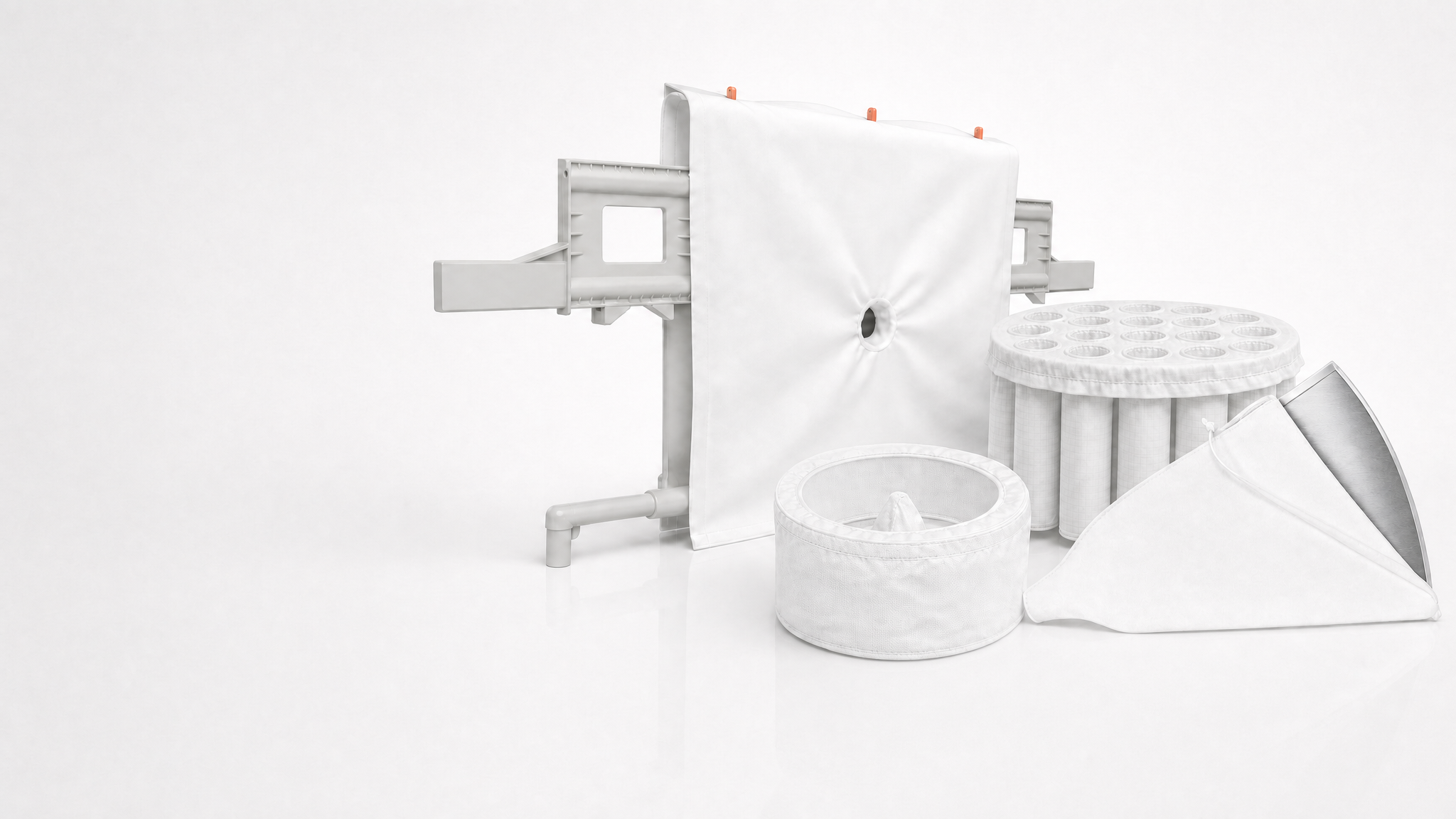
Lube oil and base oil polishing is one of those jobs where the filter cloth is easy to underestimate—until turbidity rises, discoloration slips through, or a sparkler filter starts loading too fast. In refinery and blending operations, the right fabric has to handle warm oil, solvents, and very fine solids without sacrificing flow or cleanliness.
🔑 Key Takeaways
- Lubricating oil and base oil polishing typically happens at 60–100°C and demands stable, solvent-resistant filter fabrics.
- Pressure leaf filters and sparkler filters are common for clay treatment filtration, solvent dewaxing filtrate polishing, and final product polishing.
- Fine retention, low extractables, and consistent cake release are critical for clean oil and efficient run lengths.
- R+F RF-PLF and RF-SP series fabrics are designed for these polishing duties, including re-refining of used lubricating oil.
🏭 Where lube oil filtration fits in the process
In petroleum refineries and blending plants, filtration is often the last barrier between a good batch and a complaint from the customer. After dewaxing, clay treatment, or additive blending, the operator needs a fabric that can polish the oil without shedding fibers, swelling in solvent, or clogging too quickly.
Typical polishing duties include solvent dewaxing filtrate polishing, clay treatment filtration, and final product polishing. In many plants, the same filtration logic also applies to re-refined used lubricating oil, where residual contaminants and darker color bodies make the polishing step even more demanding. For a broader view of machine types used in these duties, see our pages on the pressure leaf filter and sparkler filter.
🔬 Common filtration stages in base oil and lube oil polishing
At the operator level, these stages are usually not interchangeable. Each step creates a different loading profile on the fabric, and the cloth that works in one stage may fail in another.
Removes fine wax crystals and residual solids after dewaxing. The fabric must tolerate solvents such as MEK and toluene while maintaining pore stability.
Captures spent clay, color bodies, and trace impurities after adsorption treatment. Here, load capacity and clean release of the cake are especially important.
Removes any remaining haze or fines before storage and shipment. This is where very fine retention and low contamination risk matter most.
⚠️ Caution: Solvents used in dewaxing systems can attack unsuitable fabrics quickly. If the cloth is not chemically resistant to MEK, toluene, and process additives, filtration performance may drop abruptly and contamination risk increases.
⚙️ Pressure leaf filters vs. sparkler filters
In practice, the machine decides a lot about how the cloth should behave. Pressure leaf filters usually favor robust fabrics with good cake handling, while sparkler filters often need a finer polishing cloth with excellent permeability consistency. If you run a polishing circuit, matching the fabric to the machine geometry matters as much as selecting the right mesh or weave.
For operators who need dedicated product options, R+F offers RF-PLF Series pressure leaf filter fabrics and RF-SP Series sparkler filter fabrics. These products are designed for petroleum product polishing where warm oil, solvent exposure, and fine solids are part of everyday operation.
🛠️ What the filter cloth must do in the field
From the operator’s side, a good polishing cloth should be boring in the best possible way: predictable, durable, and easy to clean. The wrong fabric can cause long cycle times, poor filtrate clarity, and excessive downtime for cloth washing or replacement.
📋 Practical selection checklist
- Can the fabric withstand 60–100°C oil service without distortion?
- Is it resistant to MEK, toluene, and other process solvents?
- Does it provide fine retention for polishing duty?
- Will it release clay cake or wax solids cleanly during discharge?
- Does the cloth minimize extractables and contamination risk?
- Can it maintain throughput over long campaign lengths?
Rule of thumb: If your filtrate looks clean but differential pressure rises too fast, the cloth is probably loading too tightly for the solids profile—or the pore structure is not matched to the stage.
For many plants, the issue is not just initial clarity; it is how the cloth behaves after several batches. A stable filter fabric can keep throughput consistent while preserving the final product quality your customer expects.
♻️ Re-refining used lubricating oil: a tougher polishing challenge
Used lube oil re-refining brings extra uncertainty: more contaminants, wider particle distribution, degraded additives, and sometimes stronger odor and color bodies. That means the polishing stage must remove more with less margin for error. If your plant runs re-refined streams, a solvent-resistant and thermally stable cloth is not optional—it is part of process control.
Depending on the line design, operators may also use a filter press for upstream clarification or solids removal, then shift to pressure leaf or sparkler filtration for final polishing. In solvent-intensive units, the choice of fabric should also account for contamination control and stitching integrity; if that is a concern, review our guidance on contamination from stitching and filter cloth clogging.
💡 Tip: In re-refining applications, ask for fabric guidance based on the dirtiest expected batch, not the average one. That usually prevents undersizing the cloth and helps maintain a stable polishing cycle.
✅ Why operators choose R+F RF-PLF and RF-SP
R+F FilterElements supplies engineered filter fabrics for petroleum polishing duties where temperature, solvent resistance, and fine retention all matter at once. The RF-PLF series is a strong fit for pressure leaf filters in clay treatment and intermediate clarification, while the RF-SP series is tailored to sparkler filter service where clarity and final product quality are the priority.
If you are comparing options for your machine, the fastest route is often to use our online find and configure the right filter fabric with our Solution Finder. You select the machine, describe the operating conditions, and receive a pre-filled, non-binding specification and inquiry for your application team.
For plant-wide context, you may also want to review related operating areas such as chemical industry filtration, where solvent resistance and temperature stability are equally critical.
Need a quick starting point? Explore the product options directly through the RF-PLF Series pressure leaf filter fabrics and RF-SP Series sparkler filter fabrics, then refine the selection based on batch temperature, solvent exposure, and solids load.
📩 Need Help Choosing the Right Fabric?
Our technical team at R+F FilterElements can help you find the perfect filter fabric for your specific application. Get in touch for a free consultation — we will recommend the right solution based on your machine, process, and operating conditions.
Prefer a guided selection? Use our Solution Finder to configure the right filter fabric online and receive a non-binding, pre-filled inquiry tailored to your pressure leaf or sparkler filter setup.