
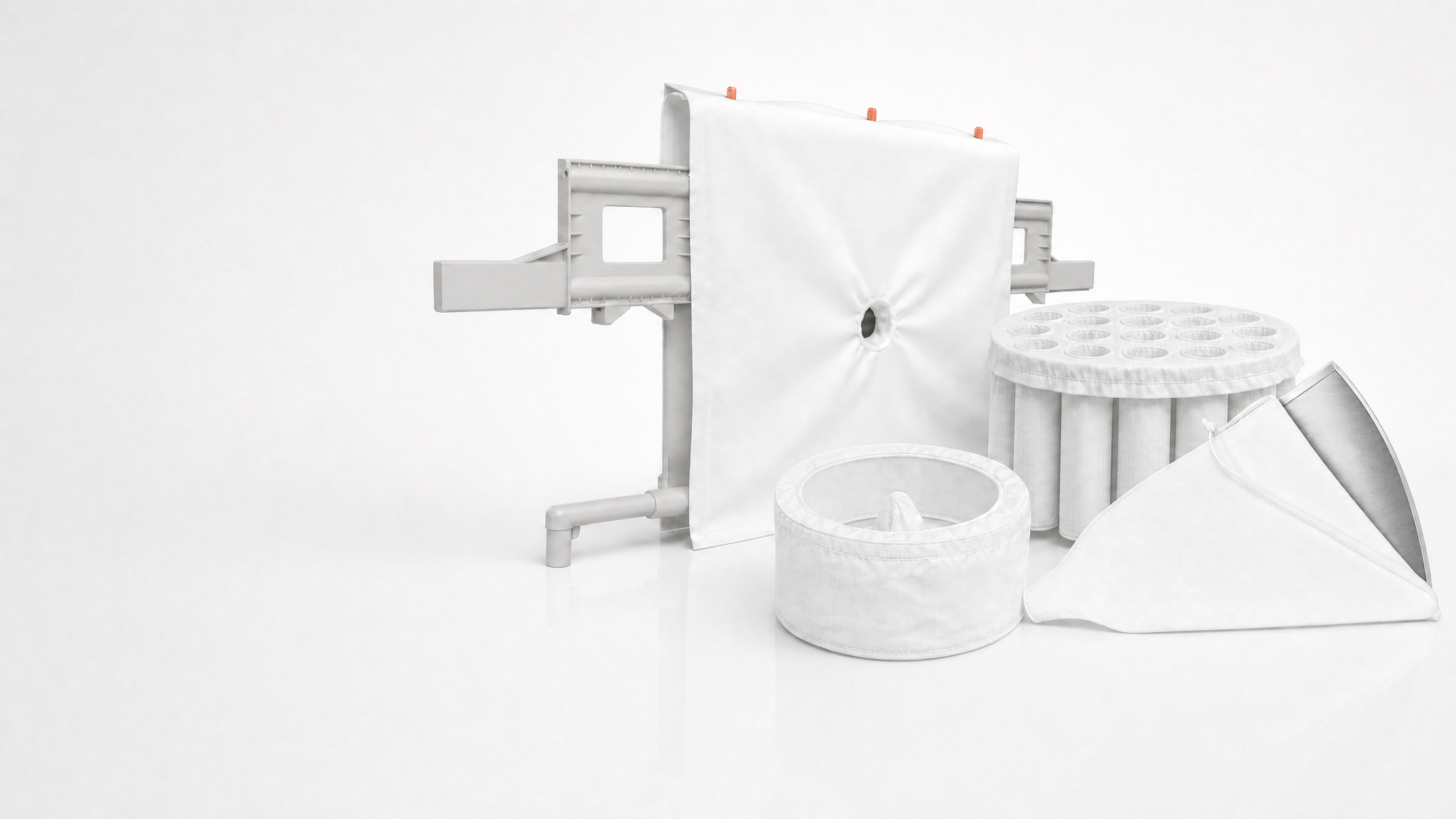
On a vacuum drum filter, poor cake discharge usually shows up as smearing, partial release, or a cake that sticks longer than it should. In practice, the fabric is often the fastest lever you can pull: the right satin weave, monofilament structure, and calendering finish can make a noticeable difference in cake release and scraper performance.
🔑 Key Takeaways
- Cake discharge improves when the fabric surface is engineered for low adhesion and fast release.
- Monofilament yarns and satin weave constructions reduce particle grip compared with rougher surfaces.
- Calendering can smooth the surface and support cleaner discharge on vacuum drum filters.
- If you are troubleshooting persistent sticking, compare fabric design with process conditions and use the cake release problem guide.
⚙️ Why Cake Discharge Fails on Vacuum Drum Filters
When cake stays on the drum too long, operators usually see one or more of these issues: incomplete peel-off, carryback into the wash zone, or a thick residual layer that builds up cycle after cycle. On a vacuum drum filter, discharge depends on the balance between cake structure, vacuum level, drum speed, scraper setup, and fabric surface behavior.
From an operator perspective, the symptom is simple: the filter is running, but the cake does not let go cleanly. That costs capacity, increases wear on the knife or scraper, and can drag moisture into the next cycle. In many plants, especially in mining and wastewater, improving discharge is one of the quickest ways to stabilize throughput.
⚠️ Caution: Do not solve sticking cake by simply increasing scraper force. Excessive mechanical action can damage the fabric, accelerate wear, and make release worse over time.
🧪 Fabric Design Choices That Improve Cake Release
1) Satin weave for a smoother release surface
A satin weave creates a more exposed, smoother face than many plain or twill constructions. For operators, that often means less mechanical interlock between the solids and the fabric surface. If your cake is fragile and should detach in one piece, satin-style surfaces can help reduce smearing during discharge.
2) Monofilament for cleaner surface behavior
Monofilament yarns are popular where release and cleanability matter. Compared with multifilament structures, they usually present a more open, less fuzzy surface that is easier for a cake to break away from. This can be especially useful when you need frequent wash-downs or when fine particles tend to embed in the cloth.
3) Calendering to smooth and stabilize the face
Calendering compresses and smooths the fabric surface. In the right application, that can help reduce microscopic roughness and give the cake fewer anchor points. It also supports more consistent drainage behavior across the fabric width, which matters when the discharge line starts to track unevenly.
💡 Tip: If cakes release in the center but stay attached at the edges, inspect fabric tension and surface finish together. Uneven release is often a sign that the fabric and drum conditions are not matched.
📊 Comparing Common Fabric Approaches
| Fabric approach | Surface behavior | Best use case | Operator result |
|---|---|---|---|
| Satin weave | Smoother face, lower interlock | Fragile cakes, cleaner peel-off | Improved release, less smearing |
| Monofilament | Clean, low-fuzz surface | Fine solids, frequent cleaning | Less blinding, easier discharge |
| Calendered finish | Compressed, refined surface | Sticky cakes and surface drag | More consistent release |
🛠️ Practical Steps to Improve Discharge Performance
Before changing hardware or scraper settings, check the full process chain. A fabric that performs well in one slurry may fail in another if vacuum level, cake thickness, or wash conditions shift.
Look for peeling, smearing, edge retention, or residual cake on the drum after the scraper passes.
Check whether the current cloth is rough, blinding, or too open for the cake type.
Trial a satin weave, monofilament construction, or calendered surface if release is the limiting factor.
Compare cake moisture, cycle stability, and scraper load before and after the change.
Rule of thumb: If the cake is strong enough to form cleanly but weak enough to break at discharge, the fabric surface should support release — not fight it.
✅ Selection Checklist for Better Cake Discharge
📋 Before changing your drum filter fabric
- Confirm whether the issue is true adhesion or a scraper/mechanical alignment problem
- Check if the cake is fine, sticky, compressible, or brittle
- Assess whether a smoother surface would help release
- Review washing, vacuum, and drum speed settings
- Compare current cloth behavior with a monofilament or satin weave option
- Consider calendering if the surface finish is contributing to drag
If you are looking for a fabric matched to your process, you can configure your vacuum / drum filter fabric online and receive a pre-filled, non-binding specification and inquiry. It is a fast way to compare options before requesting a quote.
For operators handling difficult solids, it can also help to compare fabric behavior across nearby filtration platforms such as RF-FF Series filter press fabrics and RF-BF Series belt filter fabrics. That comparison often makes it easier to spot whether the real issue is cloth surface design, cake structure, or process tuning.
📩 Need Help Choosing the Right Fabric?
Our technical team at R+F FilterElements can help you find the perfect filter fabric for your specific application. Get in touch for a free consultation — we will recommend the right solution based on your machine, process, and operating conditions.
To speed up your selection, you can also configure your vacuum / drum filter filter fabric online and send us a non-binding specification request in just a few steps.