
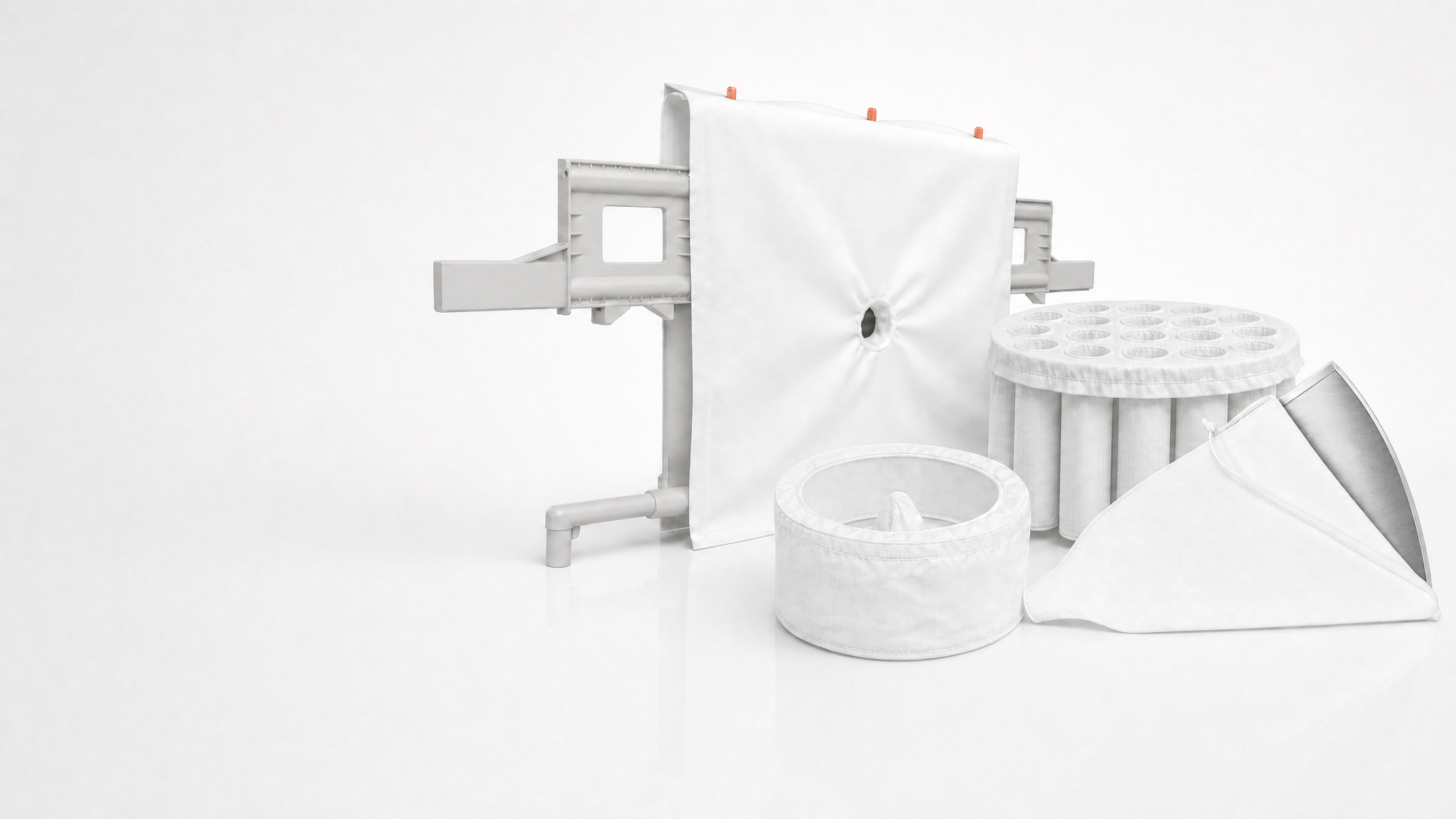
BHS-Sonthofen vacuum belt filters and vacuum drum filters depend on fabric performance just as much as on machine design. If drainage slows, cake builds unevenly, or the belt does not run cleanly in continuous service, the whole separation process feels it immediately.
R+F FilterElements supplies compatible replacement fabrics for these systems: RF-BF Series woven belts for belt-type vacuum filters and RF-FF Series filter cloths for drum-type units. The goal is straightforward: stable drainage, reliable cake formation, and consistent operation in demanding industrial environments such as the chemical industry.
🔑 Key Takeaways
- RF-BF woven belts are designed for vacuum belt filters where continuous transport and drainage are critical.
- RF-FF cloths suit vacuum drum filters that need even filtration and dependable cake release.
- Fabric structure affects permeability, cake formation, and washing performance more than many operators expect.
- R+F helps you select compatible fabrics for process stability, easier changeouts, and longer service life.
⚙️ How compatible fabrics support vacuum filtration
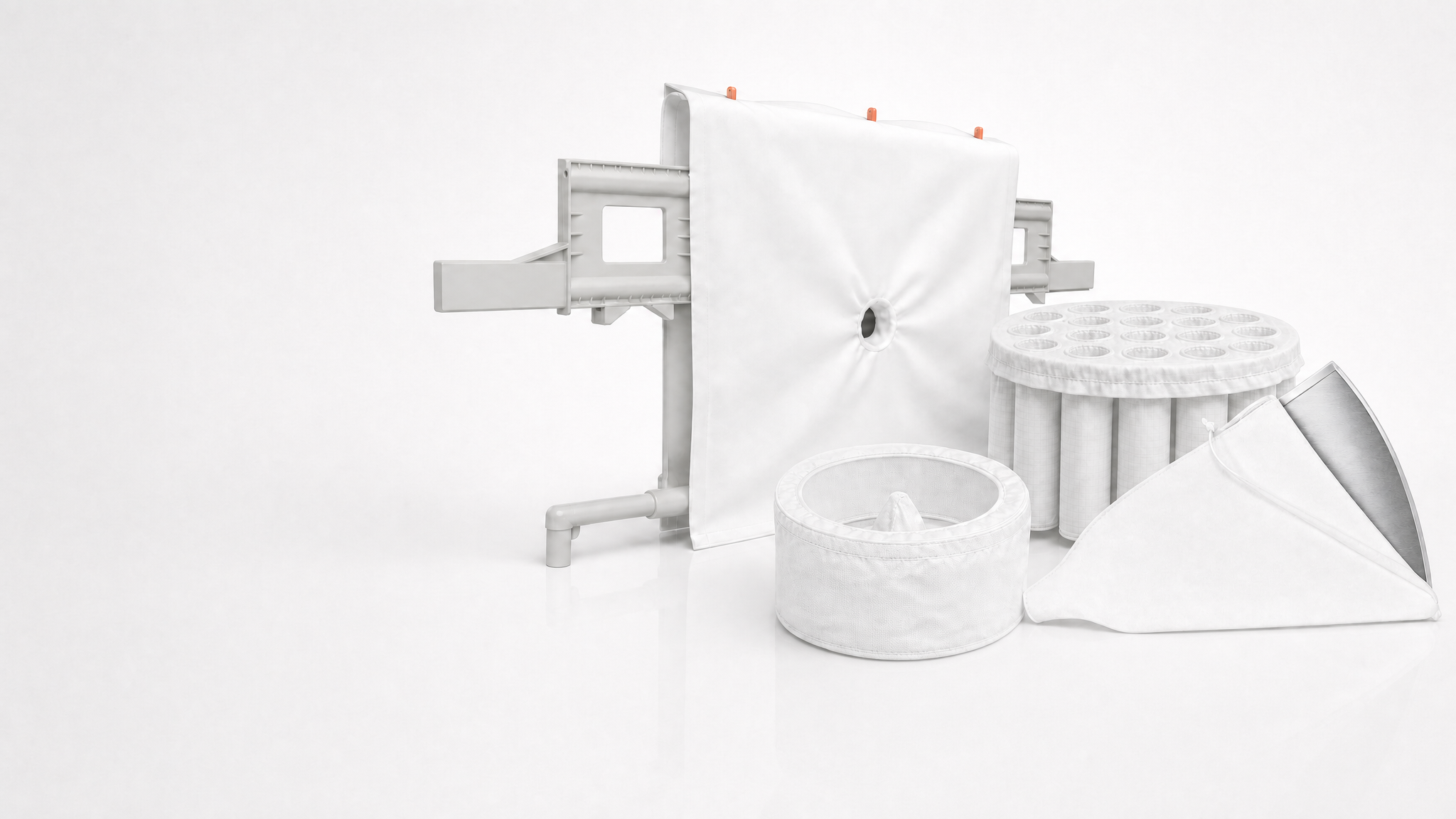
In vacuum filtration, the fabric is not just a barrier. It is the active surface that controls how liquid passes through, how solids anchor into a cake, and how the cake releases later on. For operators, that means the right replacement fabric can improve throughput without changing the filter itself.
On vacuum belt filters, the fabric must drain quickly while staying dimensionally stable during continuous movement. On drum filters, the cloth has to hold a uniform cake across the rotating surface and tolerate repeated discharge cycles. That is why R+F offers machine-matched solutions like RF-BF Series belt filter fabrics and RF-FF Series filter cloths for compatible replacement use.
🔬 RF-BF for vacuum belt filters
Vacuum belt filters need fabrics that keep liquid moving while the belt stays aligned and mechanically stable. RF-BF woven belts are built for these conditions, especially where continuous dewatering, washing, and discharge run in one uninterrupted cycle.
Why drainage matters first
In a belt filter, drainage starts the separation. If the fabric is too tight, fines can blind the surface and slow the vacuum effect. If it is too open, solids may migrate and weaken cake structure. The right RF-BF fabric balances open area and retention so operators can keep the belt productive across long runs.
- Promotes fast initial drainage under vacuum
- Supports even cake build across the belt width
- Helps reduce edge leakage and uneven loading
- Maintains performance during continuous belt movement
💡 Tip: If your belt filter shows wet cake streaks or uneven discharge, inspect fabric permeability first before changing vacuum level or wash settings.
Continuous operation needs stable cloth behavior
In continuous duty, even small fabric changes can show up as longer cycle times, higher residual moisture, or more frequent cleaning stops. A compatible replacement fabric should help preserve the process window you already know, while reducing surprises after installation.
Rule of thumb: For belt filters, choose the fabric that gives the best balance of drainage and cake integrity — not simply the highest open area.
🧪 RF-FF for vacuum drum filters
Vacuum drum filters rely on consistent cloth tension and a predictable cake layer as the drum rotates through filtration, washing, drying, and discharge zones. RF-FF cloths are intended for those conditions, with an emphasis on uniform formation and dependable release.
What operators watch on drum filters
On a drum filter, the cloth must help form a stable cake at the right speed. If the fabric is not matched to the slurry, operators may see poor cake pickup, blinding, or sticky discharge. A well-selected RF-FF cloth supports the cycle from the first immersion point through final cake release.
| Operating need | Vacuum belt filter | Vacuum drum filter |
|---|---|---|
| Primary fabric task | Fast drainage during continuous belt travel | Uniform cake formation on the rotating drum |
| Key risk if fabric is wrong | Flooding, edge leakage, uneven moisture | Blinding, weak cake build, poor release |
| Preferred outcome | Steady throughput and stable discharge | Clean cake removal and repeatable cycles |
For plants running abrasive or chemically aggressive slurries, fabric selection becomes even more important. In chemical industry applications, a compatible replacement cloth can help maintain process reliability while keeping maintenance planning straightforward.
⚠️ Caution: Do not judge a replacement cloth only by visual weave pattern. Chemical compatibility, temperature, particle size, and cake release behavior must all be considered before installation.
📋 How to choose between RF-BF and RF-FF
Most selection decisions come down to machine type and process behavior. If the equipment moves fabric continuously in a belt format, RF-BF is the natural starting point. If the filtration surface is a rotating drum with repeating submersion and discharge phases, RF-FF is the better match.
Quick pre-selection checklist
📋 Before you request a replacement fabric
- Confirm the machine type and filtration geometry
- Note the slurry solids content and particle size distribution
- Check process temperature, pH, and chemical exposure
- Define the target cake dryness and release behavior
- Document current fabric issues such as blinding or tearing
If you want a fast starting point, use our online tool to configure your vacuum / drum filter filter fabric online. It helps you define the fabric specification and generates a pre-filled, non-binding inquiry for our team.
🛠️ Working with R+F on compatible replacements
R+F supports operators who need a practical replacement path, not a full machine redesign. That means we focus on the details that matter in day-to-day operation: permeability, mechanical stability, seam design, and fit for the installed system.
Tell us whether you run a belt filter or a drum filter, plus the product, slurry, and operating conditions.
We recommend RF-BF Series woven belts for belt systems or RF-FF Series cloths for drum systems.
We align the fabric structure with your cycle goals so cake formation and discharge remain stable in continuous service.
After start-up, watch cake moisture, vacuum response, edge wear, and cleaning frequency to confirm the match.
For broader machine references, see our pages for vacuum filter systems and belt filter machines. These pages help operators match fabric behavior to the actual process layout.
✅ Practical takeaways for operators
When a vacuum filter starts missing its target, the fabric is often one of the first places to look. Stable drainage and predictable cake formation usually come from a fabric that is matched to the machine, not just replaced with a visually similar one.
- Use RF-BF for belt-type vacuum filtration where continuous drainage matters most
- Use RF-FF for drum-type filtration where uniform cake build and release are key
- Check the slurry, temperature, and chemistry before ordering replacements
- Track start-up performance after installation to confirm the fabric match
Whether you are troubleshooting moisture, blinding, or uneven discharge, a compatible replacement fabric can restore steady operation without unnecessary downtime. If your process is part of a larger chemical industry line, that stability is often the difference between routine running and repeated interventions.
📩 Need Help Choosing the Right Fabric?
Our technical team at R+F FilterElements can help you find the perfect filter fabric for your specific application. Get in touch for a free consultation — we will recommend the right solution based on your machine, process, and operating conditions.
Prefer to start online? You can configure your vacuum / drum filter filter fabric online and receive a pre-filled, non-binding specification and inquiry in just a few steps.