
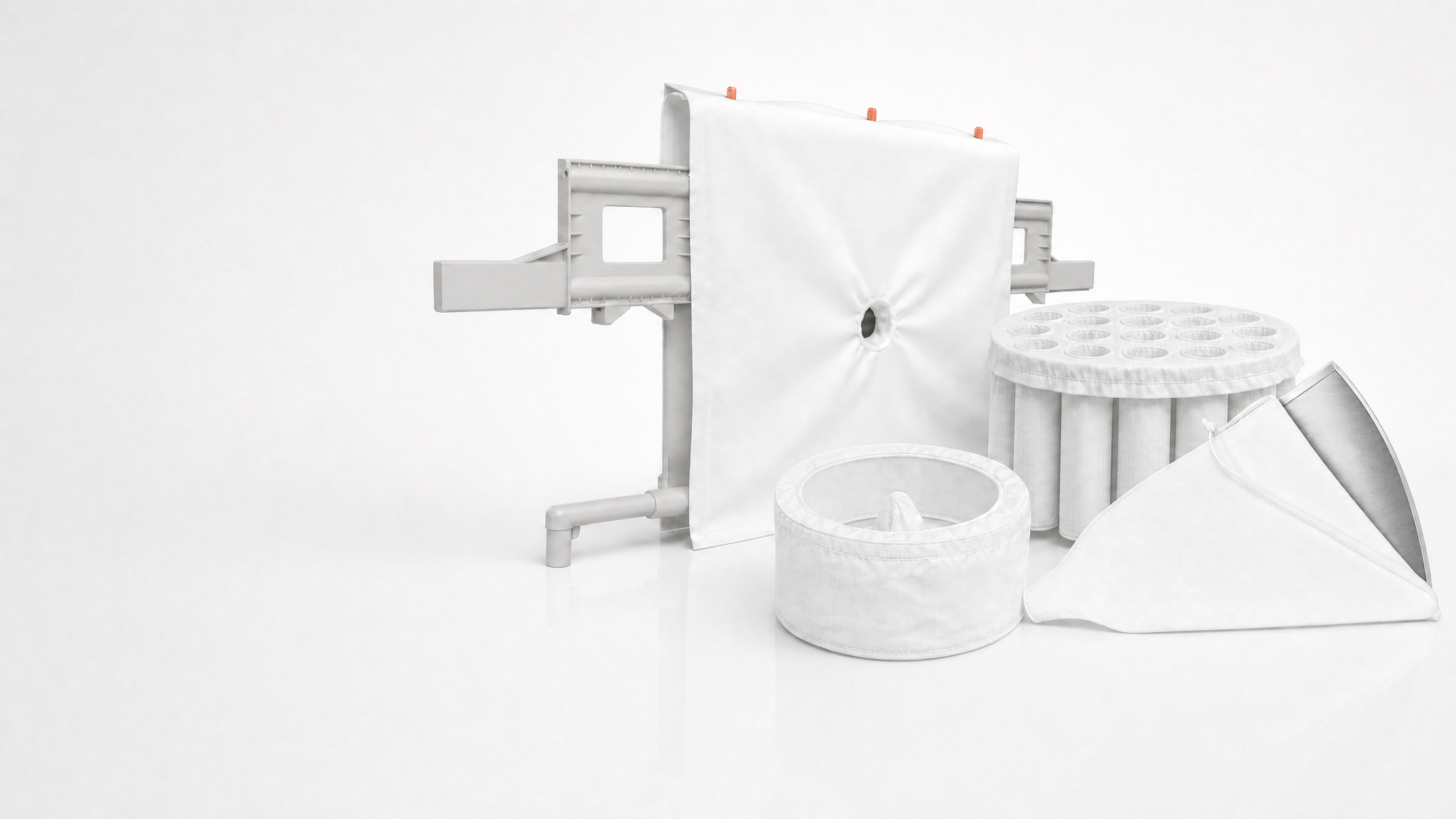
Flue gas desulphurisation (FGD) gypsum may look like a straightforward by-product, but in the plant it can be one of the toughest solids to dewater reliably. Between abrasive particles, residual process chemicals, and changing cake consistency, the filter cloth is often what decides whether your belt filter or filter press runs steadily or becomes a maintenance headache.
For operators, the goal is simple: stable moisture, clean discharge, and long cloth life. The fabric has to match the machine, the gypsum grain structure, and the chemistry of the scrubber loop.
🔑 Key Takeaways
- FGD gypsum is abrasive and chemically exposed, so cloth selection must prioritize wear resistance and stable filtration.
- Belt filters and filter presses need different fabric structures, air permeability, and release behavior.
- Cloth blinding, edge wear, and poor cake release are the most common reasons for rising moisture and downtime.
- Matching the fabric to the machine and process conditions can extend service life and reduce washing frequency.
🏭 Why FGD Gypsum Is So Demanding on Filter Cloth
In FGD systems, gypsum typically comes from wet scrubbers and enters dewatering with fine particles, residual limestone, salts, and process water. That combination creates an operating environment where the cloth sees abrasion, chemical attack, and frequent solids load changes.
On the shop floor, this shows up as a few familiar problems:
- rapid cloth wear in the feed zone or at belt edges
- fines penetration and gradual blinding
- higher residual moisture in the cake
- slower drainage and longer cycle times
- poor release that carries gypsum back into the next cycle
💡 Tip: If your gypsum cake looks stable but moisture keeps creeping up, check cloth permeability and surface condition before changing process chemistry. In many plants, the fabric is the first restriction point.
If you are running a filter press or belt filter, the cloth must be chosen for the machine’s mechanical loading as well as the slurry properties. For a broader view of machine-specific fabric options, the RF-FF Series filter press fabrics and RF-BF Series belt filter fabrics are the most relevant starting points.
⚙️ Belt Filter vs. Filter Press: What the Cloth Needs to Do
Although both systems separate the same gypsum slurry, the fabric job is different. A belt filter needs excellent drainage, controlled release, and resistance to mechanical wear from rollers, wash systems, and tensioning. A filter press needs precise particle retention, good cake release, and stable seam construction under repeated compression.
For continuous dewatering, the RF-BF Series belt filter fabrics are designed around throughput and drainage stability. For batch dewatering, the RF-FF Series filter press fabrics are better suited to pressure-driven cake formation and discharge.
| Operating factor | Belt filter cloth | Filter press cloth |
|---|---|---|
| Primary demand | Continuous drainage and release | Pressure resistance and cake separation |
| Wear profile | More mechanical abrasion | More compression and seam stress |
| Blinding sensitivity | High if fines and wash water accumulate | High if particle distribution is very fine |
| Best focus | Surface release and cleanability | Retention, stability, and discharge quality |
🛠️ Key Cloth Properties for FGD Gypsum
When we specify fabric for gypsum service, we focus on a few practical features that directly affect uptime. The right fabric is not just “strong”; it must survive the process conditions without sacrificing drainage.
1) Abrasion resistance
Gypsum slurry is not as sharp as some mineral feeds, but it still wears cloth quickly in high-flow zones. A stable weave structure and suitable filament choice help resist edge fraying and surface damage.
2) Chemical compatibility
Residual acids, salts, and scrubber additives can affect fabric performance over time. Even when the pH looks moderate, long-term exposure can shorten service life if the material choice is too optimistic. This is especially important in plants that also handle other corrosive duties such as chemical-industry filtration.
3) Cake release
Good release is essential for low carryover and reduced wash demand. If the cloth holds onto gypsum, the next cycle starts with a wet, contaminated surface. That often leads to cake release problems and rising moisture.
4) Cleanability and permeability
In many FGD plants, operators underestimate how much performance is lost through gradual blinding. When drainage slows, check for filter cloth clogging and verify whether the cloth can still be cleaned effectively in your wash regime.
Rule of thumb: If the cloth needs aggressive washing to keep performance acceptable, it is usually the wrong fabric for the duty or the wrong permeability for the solids load.
⚠️ Caution: Do not treat seam construction and edge reinforcement as minor details. In gypsum service, small weaknesses often become the first failure points under tension, suction, and repeated cake discharge.
📋 Pre-selection checklist for gypsum dewatering
- Machine type: belt filter or filter press
- Solids particle size and fines content
- Slurry chemistry and temperature
- Target cake moisture
- Wash water availability and cloth cleaning method
- Expected abrasion level and service interval
- Edge, seam, and discharge-zone loading
🔧 How to Reduce Downtime and Extend Cloth Life
Most gypsum cloth failures do not start as dramatic tears. They begin with small performance losses: slower drainage, more carryover, and a gradual rise in cake moisture. That is why a structured inspection routine matters.
Check belt edges, discharge points, seams, and any contact area exposed to rollers or cake scraping.
Monitor filtrate clarity, cycle time, cake moisture, and wash frequency to spot gradual blinding early.
Review changes in reagent dosage, scrubber chemistry, solids loading, or upstream maintenance that may affect dewatering.
If you are unsure whether your current cloth specification is still the best fit, our Solution Finder lets you select your filtration machine and configure the right filter fabric online. You receive a pre-filled, non-binding specification and inquiry that makes the next step much easier.
For related duties where solids handling and dust control matter, plants often cross-reference process conditions with mining applications and wastewater applications, because the same practical issues appear again: wear, clogging, and release.
✅ Selecting the Right Fabric Partner for FGD Plants
In FGD gypsum service, a good filter cloth is one that keeps working under real operating conditions, not just in a datasheet. The best results usually come from matching the fabric to the machine, solids profile, and cleaning strategy rather than choosing the highest-permeability or heaviest cloth by default.
When you are evaluating a new fabric, ask these questions:
- Will the cloth maintain drainage after repeated washing?
- Does it resist abrasion in the discharge and edge zones?
- Does the seam design support the machine’s loading pattern?
- Can the fabric help prevent drip issues and carryover?
For operators dealing with leakage or contamination around seams and stitch lines, it is also worth checking drip leakage and contamination stitching as part of the maintenance review. If your plant has ATEX-related constraints, consider the impact of dust and static on your system design as well.
Gypsum dewatering is demanding, but it is very manageable when the cloth specification matches the machine and the chemistry. That is where the difference between a routine maintenance item and a recurring production problem is made.
📩 Need Help Choosing the Right Fabric?
Our technical team at R+F FilterElements can help you find the perfect filter fabric for your specific application. Get in touch for a free consultation — we will recommend the right solution based on your machine, process, and operating conditions.
Or, if you want to move faster, use our Solution Finder to find and configure the right filter fabric for your machine and receive a pre-filled, non-binding inquiry.