
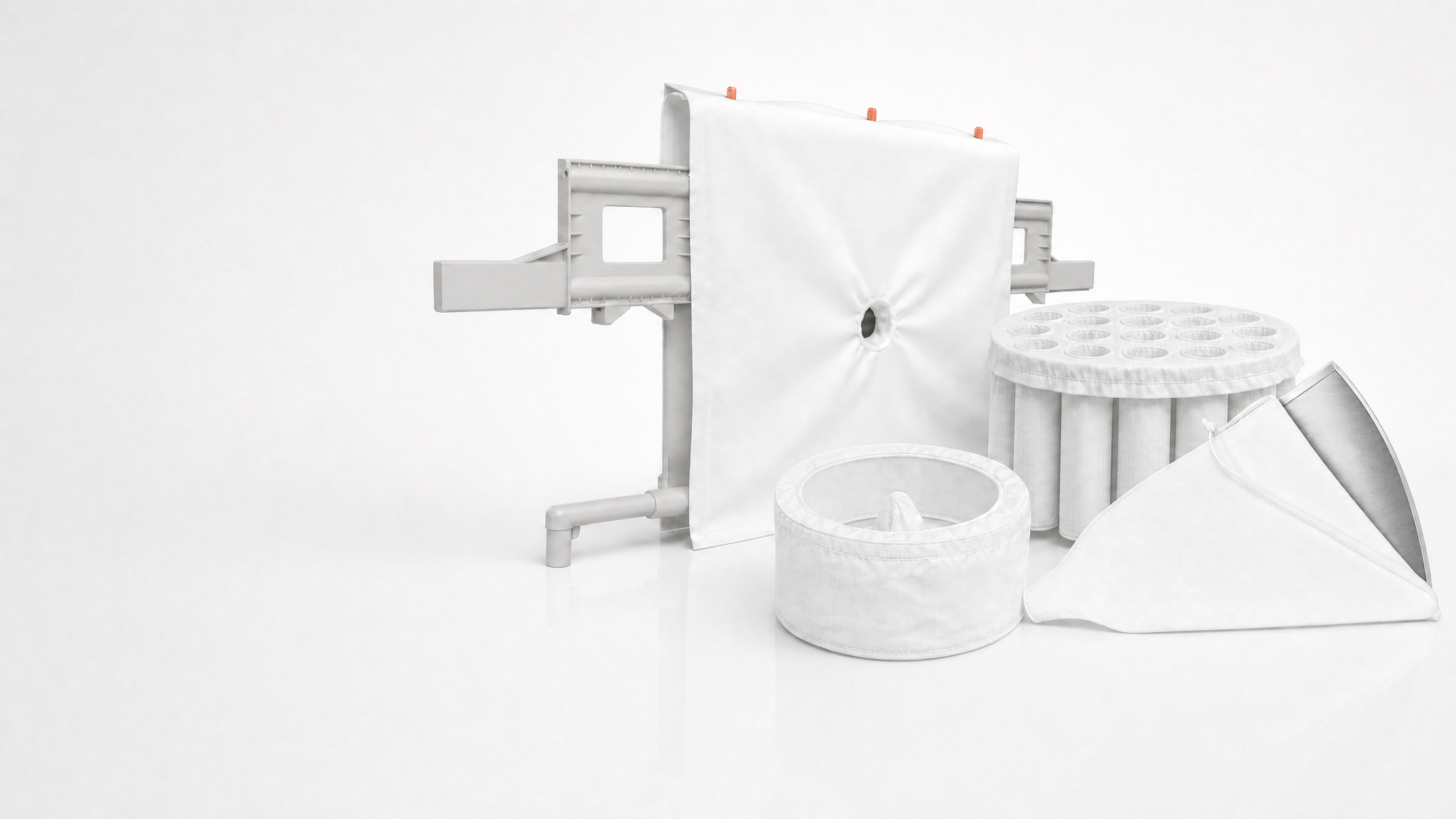
Kaolin and clay processing puts your filter media under two tough conditions at once: extremely fine particles and high abrasive wear. In practice, that means fast blinding, rising differential pressure, and shortened cloth life if the fabric is not matched to the machine and slurry behavior.
For operators running mining and mineral processing lines, the right fabric can make the difference between steady throughput and constant downtime. Whether you use a filter press or a rotary disc filter, the fabric must balance retention, permeability, cake release, and abrasion resistance.
🔑 Key Takeaways
- Kaolin and clay filtration demands fine particle retention without rapid blinding.
- Abrasion from mineral solids makes yarn choice and fabric construction critical.
- Disc filters and filter presses need different fabric traits for cake release and throughput.
- Proper cleaning, tensioning, and fabric selection can significantly extend service life.
🏭 Why Kaolin and Clay Are Hard on Filter Fabrics
Kaolin and clay slurries are notorious for creating a dense, compressible cake. The particles are very small, often plate-like, and they tend to settle into the fabric surface, which can reduce flow quickly. At the same time, mineral abrasion can wear exposed yarn surfaces, especially at seams, fold lines, and high-contact zones.
In clay duty, the fabric must hold back solids while still allowing enough filtrate flow to keep cycle times stable. If the cloth closes too quickly, you may see rising cake moisture, longer cycle times, or more frequent wash cycles. If it is too open, you risk solids passage and dirty filtrate.
⚠️ Caution: In abrasive mineral service, excessive cloth tension, poor alignment, or rough cleaning practices can accelerate wear and lead to early seam failure or fabric distortion.
🔬 What Filter Fabric Properties Matter Most?
For kaolin and clay applications, the fabric choice usually comes down to a few practical criteria. These are the properties an operator should evaluate before ordering replacement media:
- Surface structure: Smooth surfaces reduce particle penetration and help with cake release.
- Yarn type: Monofilament styles often help with release and cleaning, while multifilament structures may be chosen for other process needs.
- Abrasion resistance: Strong fibers and stable weave construction reduce wear in mineral service.
- Permeability: Enough open area is needed to keep throughput acceptable, especially with fine solids.
- Dimensional stability: Stable fabrics help maintain fit, sealing, and predictable performance over time.
Rule of thumb: For fine, abrasive mineral slurries, start with a fabric that prioritizes surface release and wear resistance, then tune permeability to your cycle time target.
Disc filters vs. filter presses
Both machine types are common in clay duty, but they stress the fabric differently. A RF-RD Series disc filter fabric must support continuous operation and consistent cake discharge, while a RF-FF Series filter press fabric must tolerate repeated filling, pressure, and cake release cycles.
| Machine | Typical Fabric Priority | Main Operational Challenge |
|---|---|---|
| Rotary disc filter | Continuous release, stable permeability | Fine particles can blind the surface |
| Filter press | High retention, strong cake release | Repeated pressure cycles and wear on seams |
| Belt filter | Open drainage and easy cleaning | Abrasive solids can wear the belt surface |
🛠️ How to Select the Right Fabric for Your Machine
If your plant runs a filter press, the fabric must combine tight particle retention with a structure that can release the clay cake cleanly. If the cake sticks, you lose throughput and increase manual cleaning time. For that reason, many operators compare different fabric constructions before selecting a final design. For example, the RF-FF Series filter press fabrics are typically evaluated for pressure service, while RF-RD Series disc filter fabrics are more relevant for continuous vacuum filtration.
For operators who want to speed up specification, it helps to find and configure the right filter fabric with our Solution Finder. You can select your machine type and operating details online to receive a pre-filled, non-binding inquiry.
✅ Operating Practices That Extend Cloth Life
Even the best fabric will wear early if the process is unstable. Kaolin and clay circuits benefit from disciplined operating habits, especially around washing and maintenance. Fine particles can lock into the cloth surface, so cleaning frequency and method matter.
Check alignment, sealing, and tension before startup to avoid edge wear and bypassing.
Watch filtrate rate and differential pressure for early signs that fine clay is closing the fabric surface.
Apply washing methods that remove buildup without damaging yarns or seam areas.
Plan cloth replacement based on wear trends, not only on visible tears or leaks.
📋 Pre-Changeout Checklist
- Confirm whether cake release has degraded
- Inspect seam areas for abrasion damage
- Check for blinding, staining, or uneven flow
- Verify the fabric matches the current slurry solids content
- Review wash water quality and cleaning interval
💡 Tip: If cloth life is dropping faster than expected, compare wear patterns on the lead edge, seam, and discharge area. That often shows whether the issue is abrasion, cake stickiness, or installation misalignment.
📊 Common Failure Signs and What They Usually Mean
When kaolin and clay filtration starts drifting, the symptoms usually point to fabric behavior before they point to the machine itself. The earlier you recognize the pattern, the easier it is to prevent downtime.
- Slow filtrate rate: Often a sign of blinding or incorrect permeability.
- Wet cake: May indicate poor release, low pressure, or fabric closure.
- Frequent cloth washing: Suggests fine particles are embedding in the fabric surface.
- Edge wear or holes: Usually linked to abrasion, tracking issues, or tension errors.
- Dirty filtrate: Can indicate insufficient retention or a damaged fabric zone.
For related troubleshooting, operators can also review filter cloth clogging, cake release problems, and short filter lifespan to narrow down the root cause.
💡 Practical Takeaway for Clay Operators
Kaolin and clay filtration is a balancing act: retain very fine solids, survive abrasion, and still release the cake cleanly enough to keep production moving. The right filter fabric depends on your machine type, slurry behavior, and how aggressively you clean and maintain the system.
If you run a disc filter, focus on continuous release and surface stability. If you run a filter press, prioritize retention, release, and seam durability. Matching the fabric to the actual process conditions is the fastest way to improve uptime and reduce cloth replacement costs.
📩 Need Help Choosing the Right Fabric?
Our technical team at R+F FilterElements can help you find the perfect filter fabric for your specific application. Get in touch for a free consultation — we will recommend the right solution based on your machine, process, and operating conditions.
Want to speed up the selection process? Use our Solution Finder to pick your filtration machine and configure the right filter fabric online. You will receive a pre-filled, non-binding specification request that makes quoting faster and more accurate.