
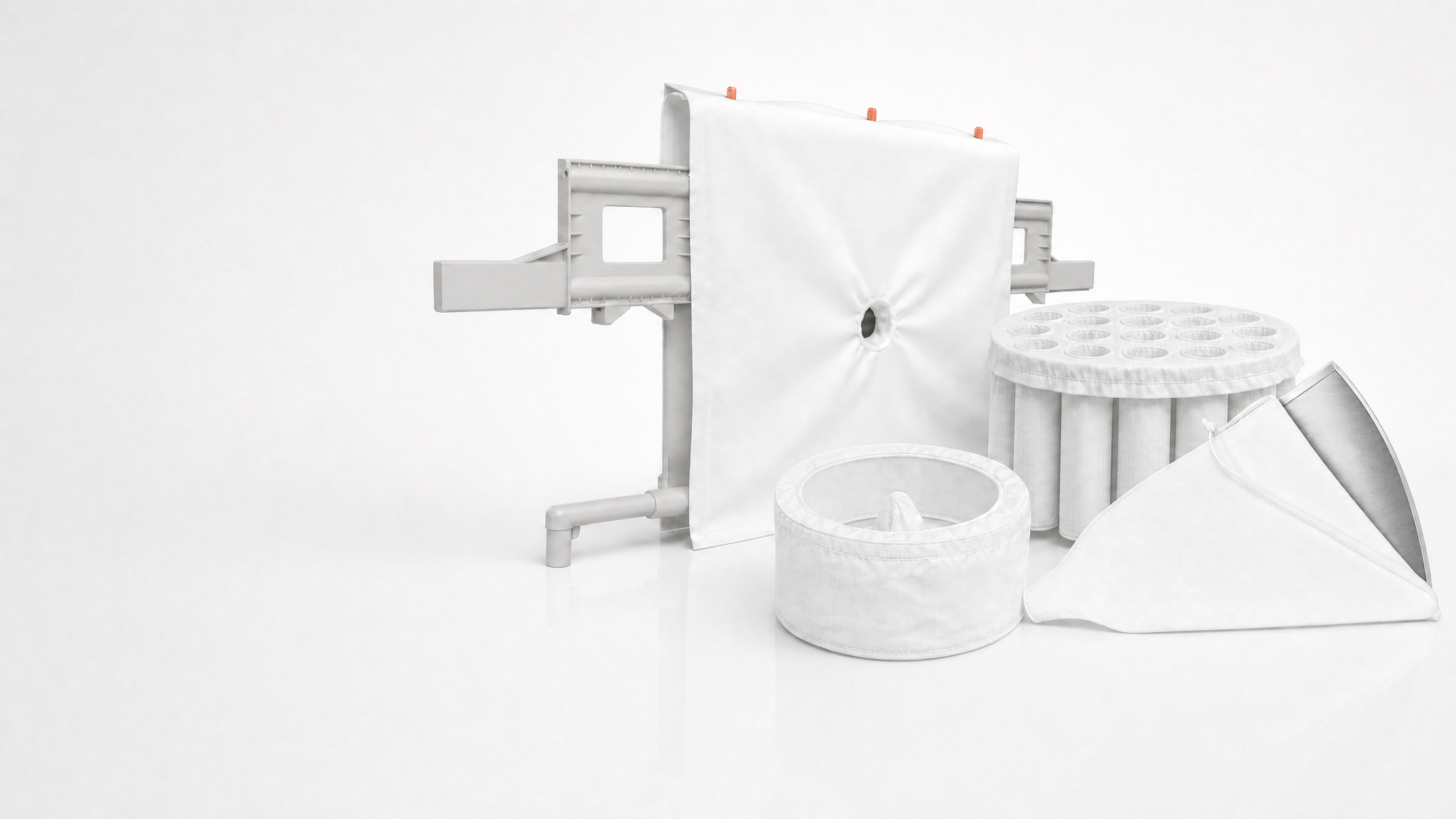
If you run a BOKELA rotary disc filter, you already know that cloth performance is not just a spare-part issue — it directly affects cake dryness, filtrate clarity, and uptime. Choosing a compatible replacement cloth with the right media structure, seam design, and disc fit helps keep your process stable while reducing unplanned shutdowns.
🔑 Key Takeaways
- Compatible replacement cloths must match the disc sector geometry, process temperature, and slurry chemistry.
- Cloth wear often shows up first as poor cake release, rising moisture, or drip leakage at the disc edge.
- R+F’s RF-RD Series disc filter fabrics are designed as compatible alternatives for rotary disc filter systems.
- Using the right fabric can improve uptime, simplify cleaning, and support more consistent filtration results.
⚙️ What Makes a Disc Filter Cloth “Compatible”?
For an operator, “compatible” means the cloth must install correctly, seal properly, and survive the real process conditions on the floor. On a rotary disc filter, the fabric has to work with the sector shape, vacuum level, slurry abrasiveness, and cleaning method — not just the nominal dimensions.
In practice, a good replacement cloth should help you maintain:
- Stable filtrate clarity even as the cake builds and releases
- Good cake discharge without excessive blinding or hanging solids
- Low leakage at seams, edges, and fastening points
- Predictable lifetime under your actual chemical and mechanical load
🔬 Common Signs Your Disc Filter Cloth Needs Replacement
Most cloth problems become visible before a complete failure. Operators usually notice a slow decline in performance rather than a sudden stop, which makes routine inspection important.
⚠️ Caution: If you continue running with severe cloth wear, you may see solids carryover, wet cake, rising vacuum demand, and contamination of downstream process steps.
Typical symptoms on the machine
- Poor cake release after discharge, especially on sticky or fine solids
- Drip leakage around seams, edges, or fixing points
- Short filter cycles caused by blinding or reduced permeability
- Unexpected cloth shrinkage or deformation after cleaning
💡 Tip: When cake moisture rises but slurry conditions have not changed, inspect the cloth first. In many plants, the fabric is the fastest route to restoring performance.
If your current setup is showing recurring blinding or poor discharge, the issue may overlap with filter cloth clogging or cake release problems. These symptoms often point to media selection, not just operating settings.
📊 How to Choose the Right Replacement Fabric
The right cloth depends on the process, but the selection logic is straightforward: start with the machine, then the slurry, then the operating stress. For BOKELA-style disc filters, that usually means confirming fit first and then matching the fabric to the duty.
| Selection Factor | What the Operator Should Check | Why It Matters |
|---|---|---|
| Sector geometry | Disc size, segment shape, fastening details | Ensures correct installation and sealing |
| Solid properties | Particle size, abrasiveness, stickiness | Influences cake release and cloth wear |
| Chemical resistance | pH, oxidizers, solvents, wash fluids | Prevents premature fabric degradation |
| Operating temperature | Peak process and cleaning temperatures | Protects seam integrity and dimensional stability |
Rule of thumb: If the cloth lasts only a fraction of the expected campaign, do not just increase wash frequency — first verify whether the fabric construction matches the real process chemistry and solids load.
For plants running multiple solid-liquid separation technologies, it helps to standardize cloth choices where possible. R+F also supplies compatible fabrics for filter press cloths and pressure leaf filter fabrics, which can simplify spare-part planning across the site.
🛠️ Practical Replacement Workflow for Operators
A disciplined replacement process reduces installation issues and avoids wasted shutdown time. If your maintenance window is short, preparation matters as much as the cloth itself.
Check wear patterns, seam damage, edge leakage, and blinding to identify the main failure mode.
Verify disc sector size, fastening style, and any special cutouts or overlaps before ordering.
Select the construction based on abrasion, filtration fineness, temperature, and cleaning method.
After installation, monitor filtrate clarity, cake release, and cycle time during the first production runs.
📋 Pre-Installation Checklist
- Disc sector dimensions verified
- Mounting and seam details confirmed
- Process chemistry and temperature reviewed
- Cleaning method and interval defined
- Spare cloths and tools prepared
If you want a faster way to prepare an inquiry, you can configure your rotary disc filter fabric online and receive a pre-filled, non-binding specification for your plant. That is especially useful when you need to compare options before a shutdown.
💡 Where RF-RD Series Fits into Daily Operation
The RF-RD Series disc filter fabrics are intended for operators who need a compatible replacement that supports reliable filtration without forcing changes to the entire machine setup. The focus is on fit, durability, and process consistency.
In some plants, similar performance goals are also needed on other machines, such as rotary disc filters, centrifuges, and fluid bed dryers. The point is the same: the fabric must fit the machine and the process, not the catalog alone.
💡 Tip: Keep one installed cloth as a reference sample. It helps when comparing wear patterns, seam construction, and replacement details during the next maintenance stop.
✅ Final Thoughts for Reliable Disc Filter Operation
Compatible replacement cloths are not just a spare part — they are a process control tool. When the cloth matches the disc geometry, slurry behavior, and operating environment, you get better discharge, fewer leaks, and more predictable production.
For operators searching for a practical replacement option for BOKELA disc filter systems, R+F’s RF-RD Series provides a compatible path forward. If you are planning the next shutdown, use the configurator to configure your rotary disc filter fabric online and get a non-binding specification prepared for your inquiry.
📩 Need Help Choosing the Right Fabric?
Our technical team at R+F FilterElements can help you find the perfect filter fabric for your specific application. Get in touch for a free consultation — we will recommend the right solution based on your machine, process, and operating conditions.