
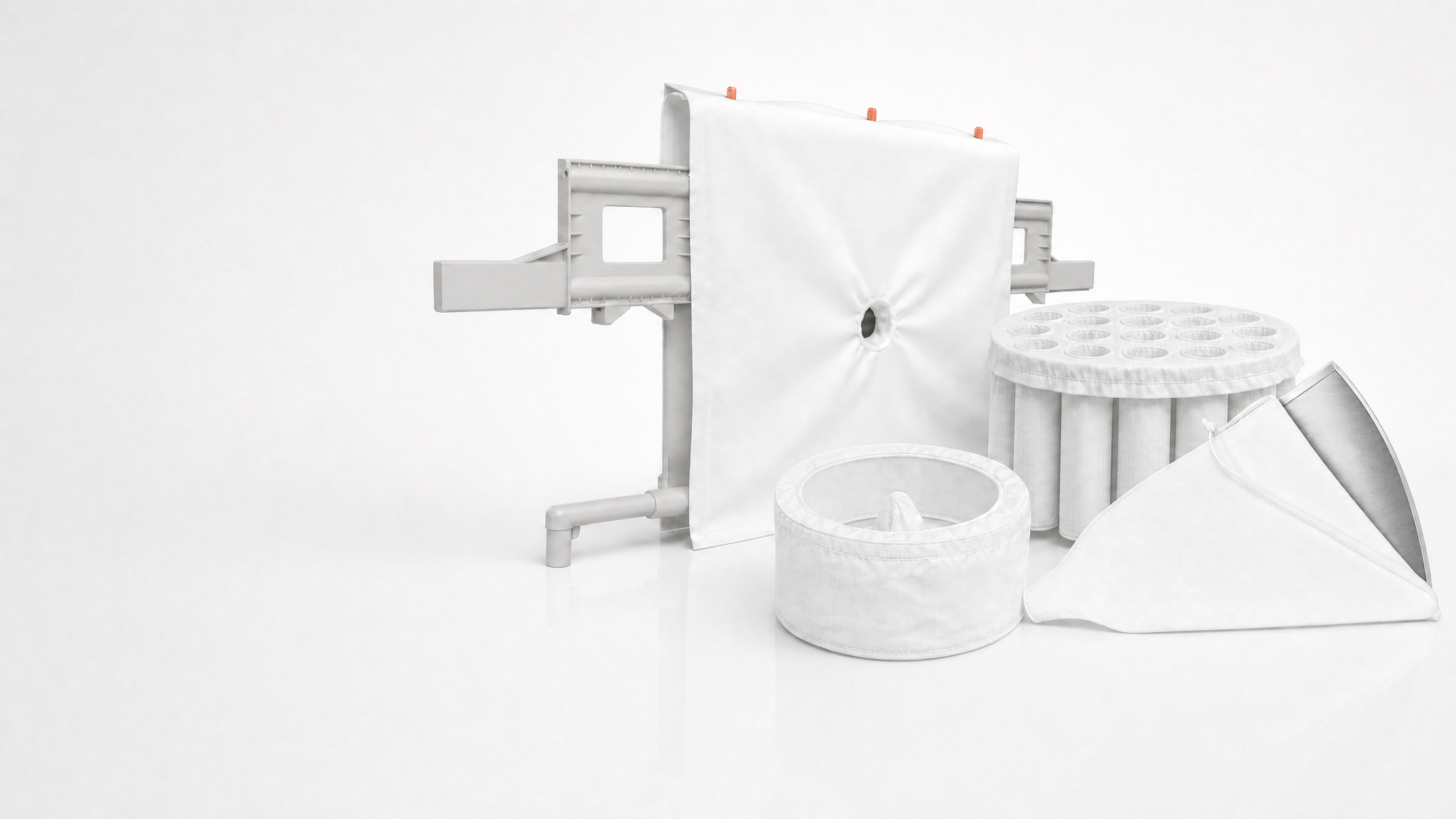
For BHS-Sonthofen and Pannevis horizontal vacuum belt filters, the replacement belt is a critical wear part that directly affects cake release, filtrate performance, and uptime. In chemical and mineral processing, many plants switch to made-to-measure aftermarket belts to get the exact spec they need without waiting for an OEM delivery slot.
🔑 Key Takeaways
- Replacement vacuum filter belts must match width, length, seam design, weave, and permeability.
- Monofilament belts with a smooth cake-side surface can improve cake release and cleaning behavior.
- Plants often choose independent aftermarket belts for shorter lead times, tailored specs, and supply flexibility.
- R+F FilterElements can reverse-engineer a belt from a sample, drawing, or operating data.
💡 Tip: If you still have the removed belt, even a worn sample can be enough to start a technical review. A clean photo of the seam, belt edge, and cake-side surface also helps.
⚙️ What matters when replacing a horizontal vacuum belt
On a BHS-Sonthofen or Pannevis horizontal belt filter, the belt is not just a transport medium. It defines how the slurry drains, how the cake forms, and how easily the cake releases after vacuum dewatering. For chemical slurries, salts, pigments, ores, and fine mineral concentrates, the fabric must balance filtration rate, mechanical strength, and surface release.
When operators search for a replacement belt, the first question is usually fit. The second is performance. The practical data you need is straightforward:
- Belt width and overall length
- Seam type and seam position
- Mesh / air permeability
- Weave structure and surface finish
- Material selection for chemical resistance and temperature
If you also run other separation equipment, it can help to compare the belt-filter requirements with your broader filtration setup, such as a vacuum filter, belt filter, or even the belt fabric families in our filter belt portfolio.
🔬 Monofilament belts and smooth cake-side release
For many horizontal vacuum belt filter duties, operators prefer monofilament filter belts because they provide a stable structure, predictable drainage, and easier cleaning. A smooth cake-side surface is especially useful when the process cake tends to stick, bridge, or smear.
In chemical and mineral processing, the best option is rarely the finest or most open weave. Instead, the belt should be tuned to the slurry:
- Fine crystals may need a tighter structure for retention.
- Coarser mineral slurries may benefit from higher permeability.
- Sticky cakes often need a smoother release surface.
- Corrosive media may call for a specific polymer blend.
📊 How to identify the correct replacement belt
For a compatible replacement on a BHS-Sonthofen or Pannevis horizontal vacuum belt filter, identification is usually a matter of documenting the existing belt correctly. A technical drawing is ideal, but a sample belt is often enough for a solid reverse-engineering assessment.
| Specification item | Why it matters | What to provide |
|---|---|---|
| Belt width | Must fit the filter deck and tracking system | Measured width in mm |
| Belt length | Determines installation fit and tension range | Overall circumference or cut length |
| Seam type | Affects strength, flexibility, and running smoothness | Photo, sample, or drawing |
| Mesh / permeability | Controls drainage and solids retention | Target range or original spec |
| Weave and surface | Influences release and blinding behavior | Observed belt construction |
| Material | Must suit chemistry, temperature, and abrasion | Process medium and operating conditions |
📋 Belt identification checklist
- Measure width and length carefully.
- Note seam style, seam location, and belt direction.
- Record chemical exposure, pH, and temperature.
- Check whether cake release or drainage is the main issue.
- Send photos of the old belt, including edges and seam area.
When you do not have a full drawing, R+F FilterElements can help reconstruct the requirement from a belt sample. This is especially useful when the original paperwork is incomplete or the filter has been running for many years. You can also use the online tool to configure your belt filter fabric online and receive a pre-filled, non-binding inquiry for review.
🏭 Why plants choose independent replacement belts
In day-to-day operation, the decision is often practical. Independent aftermarket belts can reduce downtime risk by offering shorter lead times and more flexible specification matching. They also help avoid single-source dependency when a plant runs multiple belt filters across different lines.
Rule of thumb: If your belt is critical to plant output, keep one verified spare spec on file and one physical sample in stores for fast reordering.
Typical reasons operators switch to a compatible replacement belt include:
- Need for faster delivery during shutdown windows
- Requirement for tailored permeability or weave adjustments
- Better alignment with process conditions after product changes
- Supply-chain resilience across multiple filter installations
For broader process context, you may also want to review the relevant chemical industry applications and mining applications, where belt performance is often tied directly to throughput and cake quality.
🛠️ How R+F reverse-engineers a compatible belt
R+F FilterElements works from the operator’s reality: what is installed, how it runs, and what the process needs. If you send a worn sample, old drawing, or a set of operating measurements, the technical review focuses on fit and function rather than just copying a label.
Measure dimensions, inspect the seam, and note the operating conditions and solids behavior.
We assess weave, permeability, fiber type, and surface finish against the process objective.
The belt is specified as a made-to-measure compatible replacement with the right seam and fabric behavior.
For horizontal vacuum duty, seam options and belt finishing matter as much as the base weave. Depending on the machine and installation constraints, the belt can be produced with different seam concepts, edge reinforcements, and surface characteristics to support smoother operation and easier maintenance. If your line also uses other separation systems, the same portfolio includes fabrics for vacuum belt applications, belt press belts, and drainage belts.
⚠️ Caution: A belt that is too open may improve drainage but can reduce solids retention; a belt that is too tight may help retention but slow filtration. Always match permeability to the actual slurry, not only to the old belt appearance.
✅ Quality, seam options, and related R+F product families
R+F compatible replacement belts are made to support dependable running behavior, clean release, and consistent filtration. For plants managing mixed equipment, it is often useful to keep related fabric families aligned across the site.
For plants that run adjacent dewatering or process-drying equipment, you may also want to explore fabric families for spiral belts, mining belts, FGD belts, and antistatic dryer belts. If your installation is a press-based system rather than a vacuum belt filter, the broader machinery overview at belt press machines is also useful.
In the end, the right replacement belt should do three things well: fit the machine, suit the process, and arrive when the plant needs it. If you can share an old belt spec, a drawing, or a sample, R+F FilterElements can turn that into a made-to-measure compatible proposal for your BHS-Sonthofen or Pannevis horizontal vacuum belt filter.
📩 Need Help Choosing the Right Fabric?
Our technical team at R+F FilterElements can help you find the perfect filter fabric for your specific application. Get in touch for a free consultation — we will recommend the right solution based on your machine, process, and operating conditions.
Prefer to start digitally? You can configure your belt filter fabric online and send us a pre-filled, non-binding inquiry with your specification data.