
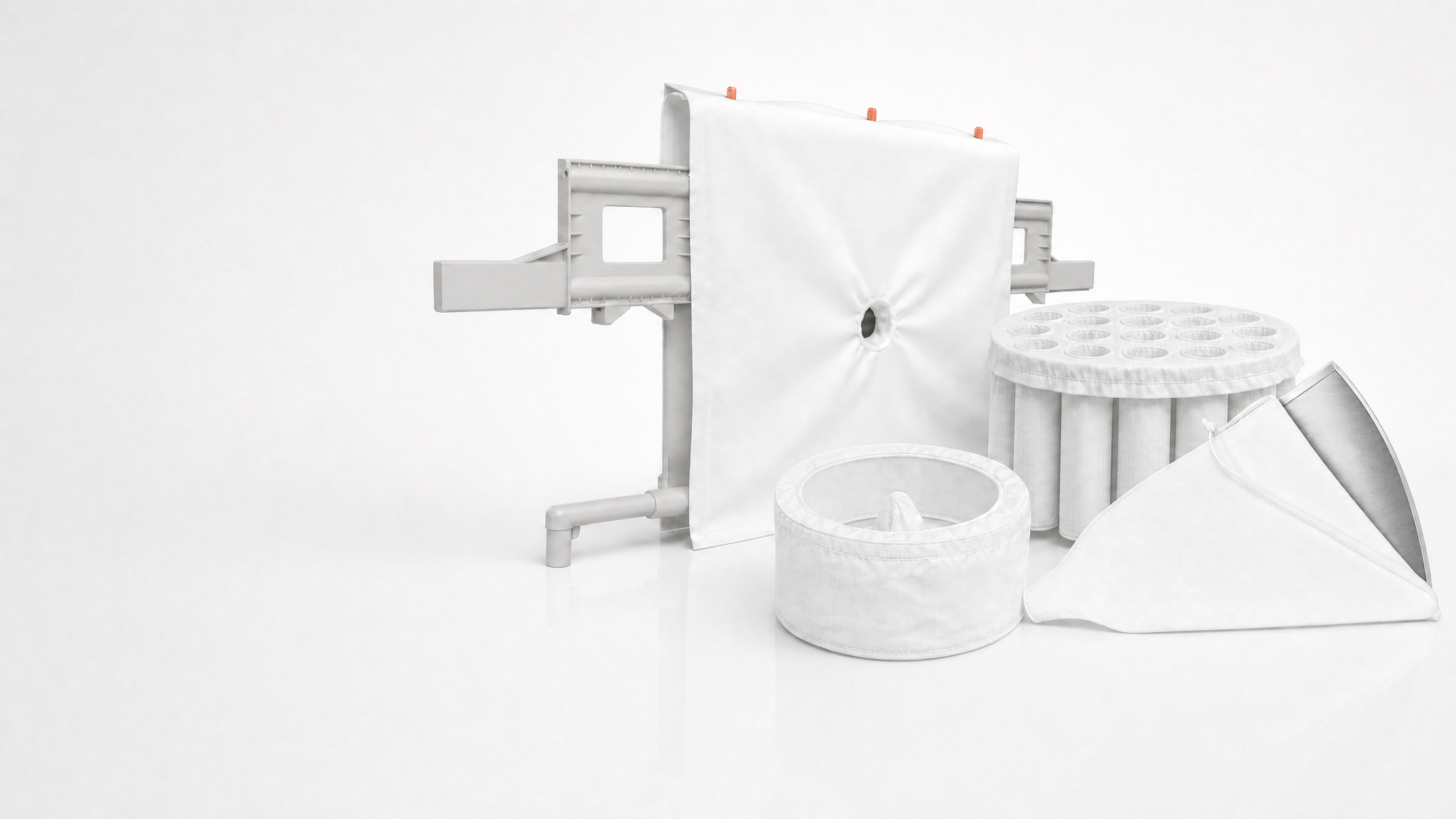
Choosing between monofilament and multifilament fabrics on a disc filter is not just a fabric decision — it directly affects cake release, filtrate clarity, and how often you have to stop the line for cleaning. If you run a rotary disc filter in mining, wastewater, or chemical service, the right fabric structure can make the difference between stable throughput and constant troubleshooting.
🔑 Key Takeaways
- Monofilament fabrics are usually the better choice for cake release and blinding resistance.
- Multifilament fabrics often give better retention and can help improve filtrate clarity.
- The best choice depends on your slurry, particle size distribution, cake structure, and cleaning strategy.
- For rotary disc filters, fabric selection should be checked together with vacuum level, cloth support, and discharge behavior on the machine.
⚙️ How Monofilament and Multifilament Fabrics Behave on Disc Filters
On a disc filter, the fabric has to do two jobs at once: build a stable cake and then release it cleanly when the disc rotates out of the slurry and toward discharge. A monofilament structure uses smooth, single filaments that tend to shed solids more easily, while a multifilament structure contains many finer filaments bundled together, creating a denser capture surface.
That difference matters most when you compare open, free-draining cakes versus fine, sticky, or compressible solids. If the fabric surface is too open, you may lose fines. If it is too tight, you may gain clarity but pay for it with blinding and difficult discharge.
🔬 When to Choose Monofilament on a Rotary Disc Filter
As an operator, you usually reach for monofilament when the cake should release cleanly and the cloth needs to stay open over long cycles. Smooth filament surfaces are less likely to trap fine solids deep inside the weave, which makes them a strong option when blinding is a recurring problem.
Best fit for these conditions
- Coarser or moderately sized solids with good cake structure
- Sticky slurries where cake release is critical
- Processes with frequent cloth washing and limited downtime
- Operations where filter cloth clogging is a repeated issue
💡 Tip: If your disc filter loses capacity because discharge is incomplete, a monofilament fabric often restores performance faster than changing vacuum settings alone.
⚠️ Caution: A very open monofilament fabric may improve discharge but can reduce fine particle retention. Always verify filtrate quality before switching permanently.
📊 When Multifilament Makes More Sense
Multifilament fabrics are often preferred when the priority is retention and clarity. The finer fiber bundle creates more capture points, which can help hold back small particles that would otherwise pass through a more open cloth. This is especially useful when the downstream process is sensitive to suspended solids.
In practice, multifilament can be a strong option for difficult slurries in chemical industry applications or where product quality depends on low carryover. It is also worth considering if your system behaves more like a polishing step than a bulk dewatering step.
💡 Tip: If your filtrate looks clean at startup but quality drifts during the run, the fabric may be loading internally. In that case, compare a multifilament option against your current cloth.
📋 Side-by-Side Comparison for Disc Filter Operators
| Criterion | Monofilament | Multifilament |
|---|---|---|
| Cake release | Excellent | Moderate |
| Blinding resistance | High | Moderate to low |
| Retention of fines | Moderate | High |
| Filtrate clarity | Good | Very good to excellent |
| Cleaning effort | Lower | Higher |
| Typical use case | Bulk dewatering, sticky cakes | Fine solids, clarity-focused duty |
🛠️ Practical Selection Rules from the Plant Floor
In real operation, the fabric type should match the cake behavior, not just the solids analysis on paper. On a disc filter, the most useful question is: what is causing the bottleneck right now?
If the cake does not drop cleanly, test a monofilament structure before changing cycle timing.
If fines are escaping, consider a more retentive multifilament fabric.
Higher retention fabrics usually need more disciplined wash water control and inspection.
Test the fabric on your rotary disc filter under normal vacuum and slurry conditions.
📋 Before You Change the Fabric
- Current cake moisture and release behavior
- Filtrate solids level and clarity trend
- Wash water pressure and spray coverage
- Vacuum stability across the disc
- Any signs of short filter lifespan or seam wear
💡 Use the Configurator to Narrow the Right Disc Filter Fabric
If you want a faster starting point, use our online tool to configure your rotary disc filter fabric online. It helps you define the key fabric specifications and creates a pre-filled, non-binding inquiry so our team can review your process quickly.
This is especially useful when you are comparing monofilament and multifilament options for different duties, such as mining, wastewater, or cement and bulk solids. If your disc filter is part of a broader separation train, you may also want to compare cloth behavior with other units such as RF-FF Series filter press fabrics or RF-BF Series belt filter fabrics to align maintenance strategy across the plant.
Rule of thumb: Start with monofilament when discharge is the pain point; start with multifilament when clarity is the pain point.
📩 Need Help Choosing the Right Fabric?
Our technical team at R+F FilterElements can help you find the perfect filter fabric for your specific application. Get in touch for a free consultation — we will recommend the right solution based on your machine, process, and operating conditions.
Or, if you already know you need a new disc filter cloth, configure your rotary disc filter fabric online and send us your requirements in just a few minutes.