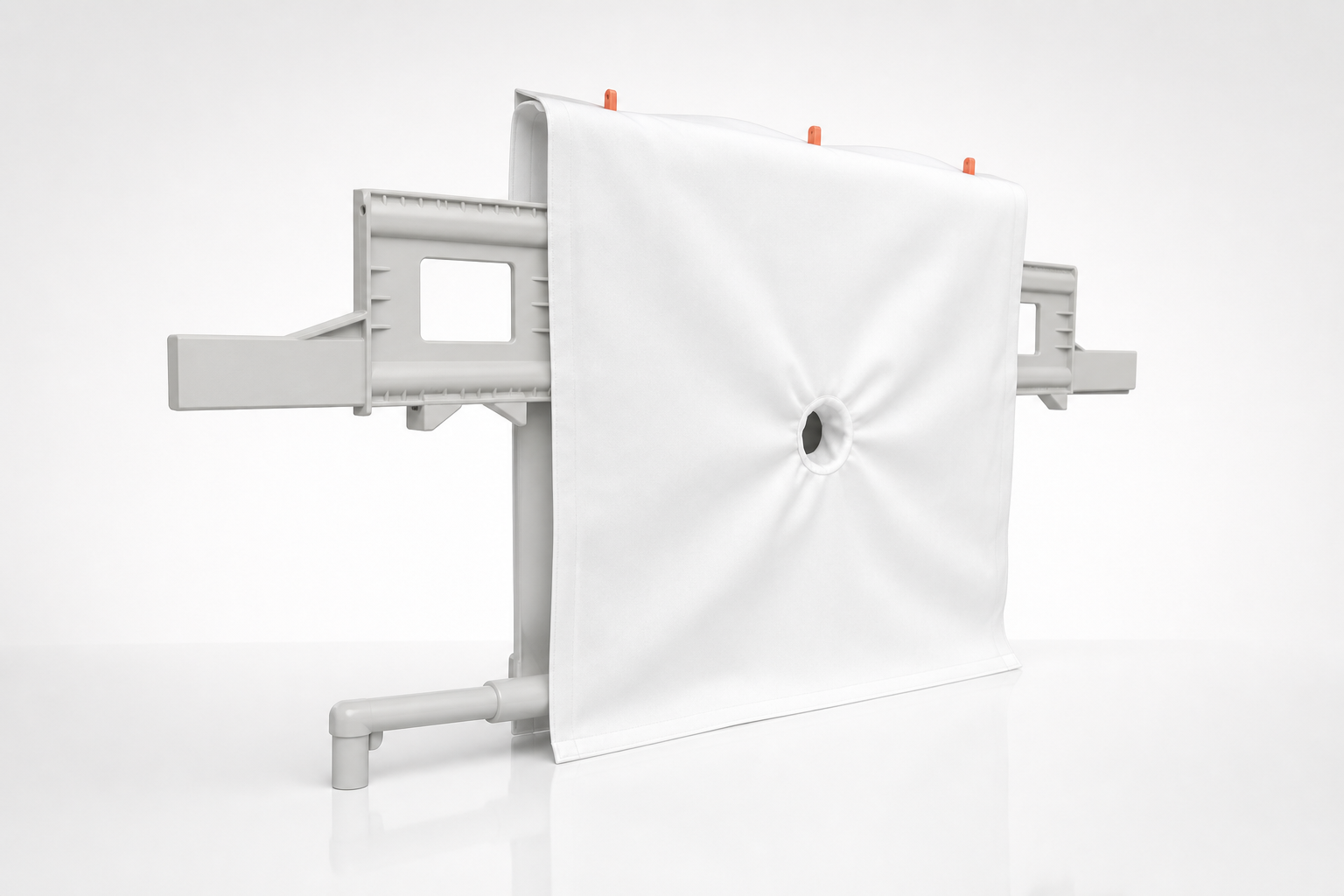
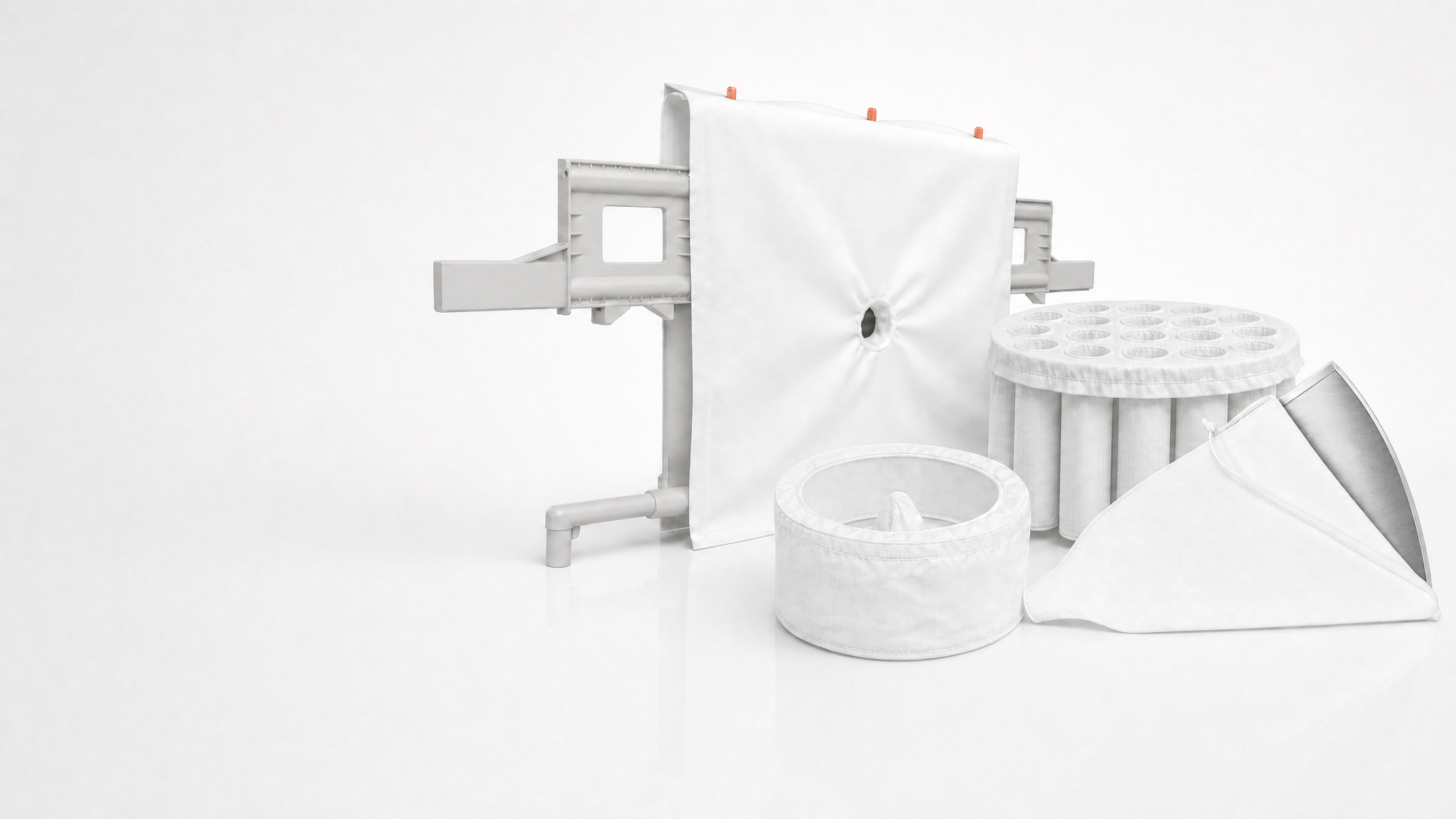
When a filter press cloth fails early, the damage often starts at the inlet, not across the full filtration area. Barrel neck inlet reinforcement strengthens that weak point, helping the cloth survive abrasive feed, repeated cycles, and the constant movement around the feed zone. For operators, that usually means fewer changeouts, more stable cycles, and less unplanned cleaning work.
🔑 Key Takeaways
- Barrel neck reinforcement protects the feed opening, where cloth wear usually starts.
- Compared with a standard inlet, it spreads stress and reduces fraying, tearing, and seepage.
- Operators benefit from longer cloth life, cleaner operation, and fewer shutdowns.
- It is especially useful in abrasive, high-cycle, or hard-to-seal filter press applications.
⚙️ What Barrel Neck Reinforcement Does at the Inlet
In a filter press, the inlet is one of the hardest-working areas on the cloth. Slurry enters under pressure, solids can scour the fabric, and the cloth has to stay sealed while the press opens and closes. A barrel neck design adds a reinforced collar around the feed opening so the stress is not concentrated on a thin edge or a simple cut-out.
In practice, that reinforcement helps the cloth hold its shape around the nozzle and protects the surrounding fabric from rubbing, flexing, and edge damage. If you run a press with a standard inlet, you may already know the pattern: the filtration area still looks usable, but the neck starts fraying, the seal gets less reliable, and the cloth has to come out early. On a properly matched press cloth from the RF-FF Series, the inlet construction is designed to better handle that repeated mechanical load.
🔬 Why It Lasts Longer Than a Standard Inlet
The main difference is how the load is distributed. A standard inlet can leave the most stressed area exposed to direct abrasion and repeated flexing. Barrel neck reinforcement adds material and structure where the cloth meets the feed opening, so the inlet takes the punishment instead of the fabric edge.
Where standard inlet cloths typically fail
- Edge fraying from mechanical rubbing against the nozzle or inlet hardware.
- Tear propagation starting at a small nick or stressed seam.
- Leakage paths that appear when the inlet loses shape and sealing force.
- Premature cloth removal even when the main filtration area is still in good condition.
That is why barrel neck construction often improves overall cloth longevity more than simply choosing a heavier fabric everywhere. You are reinforcing the place that actually fails first. If your maintenance log shows inlet damage before the rest of the cloth is worn, that is a strong sign that the problem is mechanical design, not just fabric quality.
| Feature | Standard Inlet | Barrel Neck Reinforcement |
|---|---|---|
| Wear concentration | High at the cut edge | Reduced by reinforced collar |
| Sealing stability | More likely to loosen over time | Better shape retention around feed opening |
| Failure pattern | Fraying, cracking, leakage | Slower wear and less damage spread |
| Typical operator result | Earlier replacement | Longer campaign and more predictable service life |
💡 Tip: When you install a barrel neck cloth, align the inlet carefully before final tensioning. A clean fit around the feed nozzle does more for longevity than over-tightening the cloth after the fact.
📊 What Operators Notice in Daily Production
For the person running the press, the value is practical. A reinforced inlet often means the cloth stays serviceable longer between washdowns and changeouts. You also tend to see a more stable seal around the feed area, which helps reduce drip points, stray solids, and cleanup around the press frame.
Practical benefits in the plant
- Fewer unplanned cloth changes during the campaign.
- Cleaner operation with less seepage at the inlet.
- More consistent filtration cycles because the cloth holds its shape.
- Lower maintenance pressure on operators and shift crews.
If you are also troubleshooting drip leakage, short filter lifespan, or poor cake release, inlet construction should be part of the review. A damaged neck area can distort the cloth and make other symptoms look like process problems when the real issue is mechanical wear at the feed opening.
Rule of thumb: If inlet wear shows up before the rest of the cloth is tired, upgrade the inlet construction before you upgrade the entire fabric spec.
⚠️ Caution: Do not force a barrel neck cloth over a mismatched nozzle or sharp-edged inlet hardware. Misalignment can destroy the benefit of the reinforcement and create new tear points.
🛠️ How to Decide If You Need Barrel Neck Construction
Not every press needs the same inlet design. If your slurry is gentle, cycle counts are low, and cloth changes are already part of a routine maintenance plan, a standard inlet may be enough. But if your press sees abrasive solids, high pressure, frequent opening and closing, or repeated seal issues at the feed area, barrel neck reinforcement is usually the better long-term choice.
How this fits into the bigger machine setup
Barrel neck construction works best when the cloth is matched to the press design, feed geometry, and solids profile. That is true whether you are running a high-throughput press in mineral processing or a more controlled unit in chemical production. For broader process context, operators often review the press design alongside the machine pages at /machines/filter-press and the application-specific requirements under /products.
📋 Fitting and Inspection Checklist
Check for burrs, sharp edges, and worn nozzle surfaces before fitting the cloth.
Make sure the reinforced collar sits evenly around the feed opening with no twists or pinched zones.
After startup, inspect the inlet seal, cloth tension, and any signs of rubbing or seepage.
📋 Pre-Start Operator Checklist
- Inlet nozzle is smooth and compatible with the cloth opening.
- Barrel neck sits flat and centered before pressurizing.
- No visible folds, twists, or contact points at the feed area.
- First-cycle inspection is scheduled after installation.
- Any recurring inlet wear is logged for the next cloth review.
For many plants, the biggest gain is not only longer cloth life but also fewer surprises during a run. A stronger inlet means fewer emergency interventions and a better chance of finishing the campaign on schedule.
📩 Need Help Choosing the Right Fabric?
Our technical team at R+F FilterElements can help you find the perfect filter fabric for your specific application. Get in touch for a free consultation — we will recommend the right solution based on your machine, process, and operating conditions.