
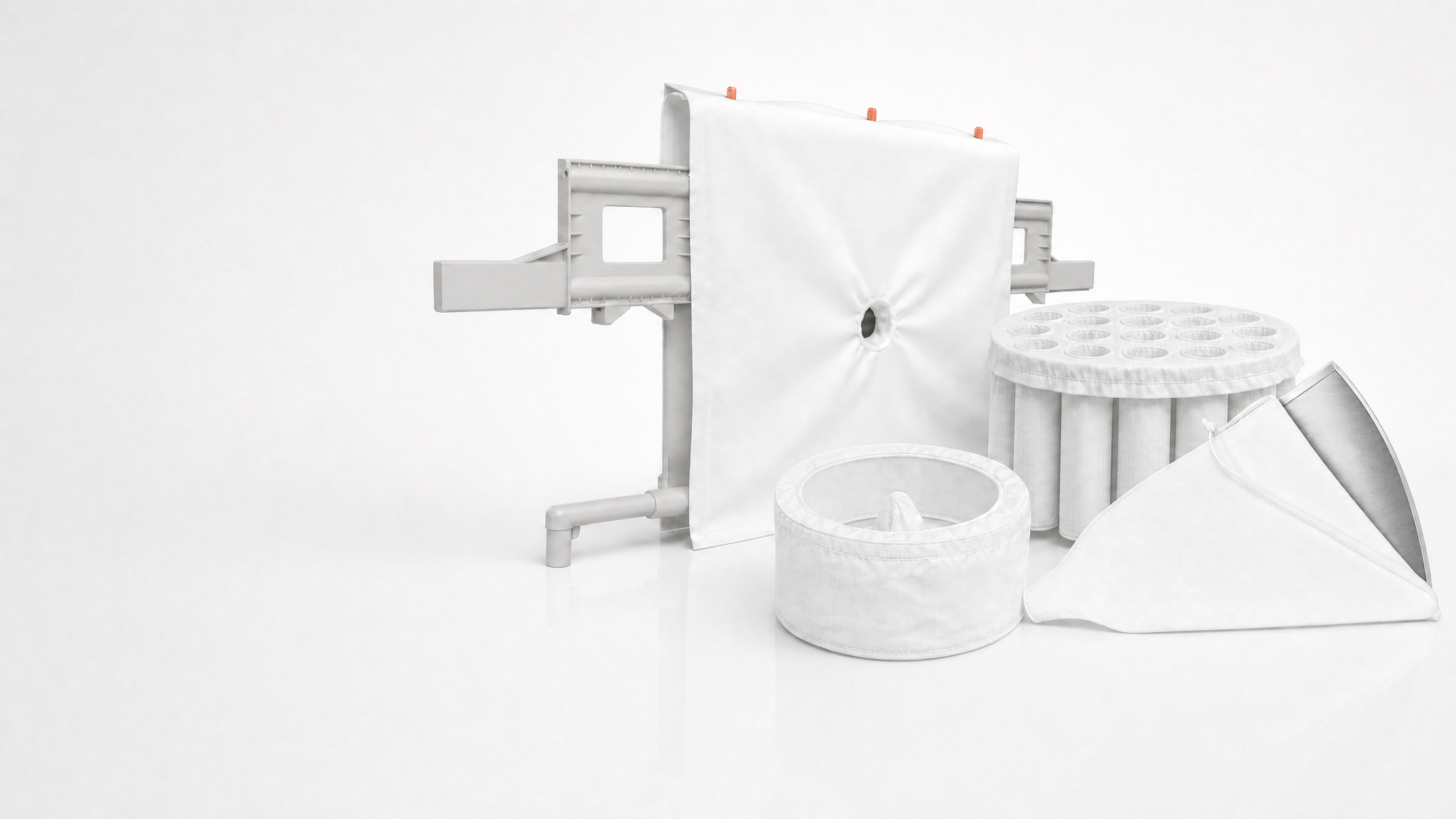
Filter press cloth blinding is one of those problems that quietly steals throughput: the press still runs, but cycle times creep up, filtrate gets cloudier, and cake release becomes less reliable. In most plants, the root cause is not one single issue — it is a mix of fine solids, sticky oils, and a cloth that is not matched to the slurry.
🔑 Key Takeaways
- Blinding happens when solids pack into the cloth structure and block flow paths.
- Fine particles and oily slurries are the most common blinding triggers.
- The wrong pore size can make a cloth clog faster than the process can clean it.
- Preventive cleaning, correct fabric selection, and stable operating parameters reduce downtime.
⚙️ What Filter Cloth Blinding Looks Like in Operation
From the operator’s side, blinding usually shows up as a press that needs more time to reach the same cake dryness, higher feed pressure for the same flow, or a cloth that no longer releases cake cleanly. If you are seeing these symptoms, start by checking the cloth condition before blaming the pump or the slurry alone. For a broader troubleshooting overview, see filter cloth clogging and related causes.
💡 Tip: If flow drops after a few cycles but recovers only after aggressive washing, you are likely dealing with progressive pore loading, not just a temporary cake issue.
Common signs you can spot at the press
- Longer fill times even though feed solids have not changed much
- Wet spots or streaking on the cloth surface
- Uneven cake thickness across plates
- More frequent cloth washing or manual scraping
- Poor cake release, especially with sticky or greasy slurries
🔬 The Main Causes: Fine Particles, Oils, and Wrong Pore Size
Most blinding starts with the solids themselves. Ultra-fines can migrate deep into the cloth structure, while oily or tacky slurries create a film that traps more particles on top. If the pore size is too small for the solids distribution, the cloth becomes the first place where the process “filters too much,” too early.
| Cause | What the operator sees | What is happening in the cloth | Best prevention |
|---|---|---|---|
| Fine particles | Fast pressure rise, slow filtrate flow | Particles penetrate and bridge inside the fabric structure | Use a cloth with the right pore opening and a stable weave |
| Oily / sticky slurry | Poor cake release, greasy cloth surface | Surface film traps solids and reduces permeability | Choose a smoother fabric and establish effective wash cycles |
| Wrong pore size | Early clogging or solids breakthrough | Either the cloth blocks too early or lets too much fine matter through | Match cloth selection to particle size distribution and target clarity |
⚠️ Caution: Do not “solve” blinding by simply increasing feed pressure. That can drive fines deeper into the fabric and make the clogging permanent.
Why oily slurries are especially difficult
Oils, resins, fats, and surfactants can coat the cloth and reduce the effective open area. In chemical processing and wastewater dewatering, this often looks like normal filtration at the start of the batch, followed by a sudden slowdown as the surface seals. If your process includes emulsions or lubricating residues, consider cloth surfaces that release cake more easily and clean more predictably.
🛠️ How to Prevent Blinding Before It Starts
Prevention is usually cheaper than trying to recover a blinded cloth after production has already been lost. The best results come from matching fabric structure to solids characteristics, keeping the feed consistent, and building cleaning into the operating routine.
Look at particle size distribution, oil content, and solids concentration before choosing the cloth.
Too fine and you blind early; too open and you lose clarity or solids capture.
Rinse before buildup hardens, especially in sticky or oily applications.
Log fill time, filtrate clarity, cake release, and cleaning frequency to spot drift early.
Rule of thumb: If a cloth needs increasingly aggressive cleaning to perform, it is usually the fabric selection or the slurry conditioning that needs adjustment — not just the wash pressure.
📊 Choosing the Right Fabric for Your Filter Press
For filter press operators, the fabric needs to balance retention, flow, and cleanability. A cloth that looks “fine” on paper can still blind quickly if the weave traps soft solids or if the surface is too rough for the cake to release. That is why a fabric designed for your machine and slurry is more important than a one-size-fits-all replacement.
| Fabric Type | Typical Strength | Blinding Resistance | Best Use |
|---|---|---|---|
| Monofilament weave | Easy surface cleaning | High | Sticky cakes, frequent wash cycles |
| Multifilament style | Good retention | Medium | Applications where clarity matters and fouling is moderate |
| Needle felt / deeper structure | Fine solids capture | Lower if the slurry is very fine | When capture is more important than rapid release |
If you are standardizing your press inventory, the RF-FF Series is the key reference point for filter press applications. For plants with related solid-liquid separation equipment, it can also help to compare cloth behavior with other machines such as filter presses and adjacent dewatering systems.
📋 Pre-Order Selection Checklist
- Particle size distribution confirmed
- Oil, fat, resin, or surfactant content known
- Target filtrate clarity defined
- Required cake discharge method understood
- Cleaning method and wash interval planned
✅ Troubleshooting a Blinded Cloth in Daily Operation
When blinding is already happening, work methodically. Do not jump straight to replacement unless the cloth has reached the end of its service life. In many cases, a better wash strategy, a short process adjustment, or a different weave can restore stable operation.
Look for visible cake loading, hard deposits, or grease films.
Check feed solids, additives, pH, temperature, or oil content.
If normal rinsing does not restore flow, evaluate chemical compatibility and wash pressure.
If blinding returns quickly, a different cloth construction is likely the permanent fix.
Quick operator checks
- Are cycle times increasing without a feed change?
- Does the cake peel cleanly from every plate?
- Is the cloth equally loaded across the full area?
- Did the slurry chemistry change recently?
For recurring clogging cases, the most efficient next step is often to redesign the cloth choice rather than repeatedly cleaning a fabric that is not suited to the service. If you want help translating your process data into a better fabric specification, our team can support you with practical selection guidance.
📩 Need Help Choosing the Right Fabric?
Our technical team at R+F FilterElements can help you find the perfect filter fabric for your specific application. Get in touch for a free consultation — we will recommend the right solution based on your machine, process, and operating conditions.