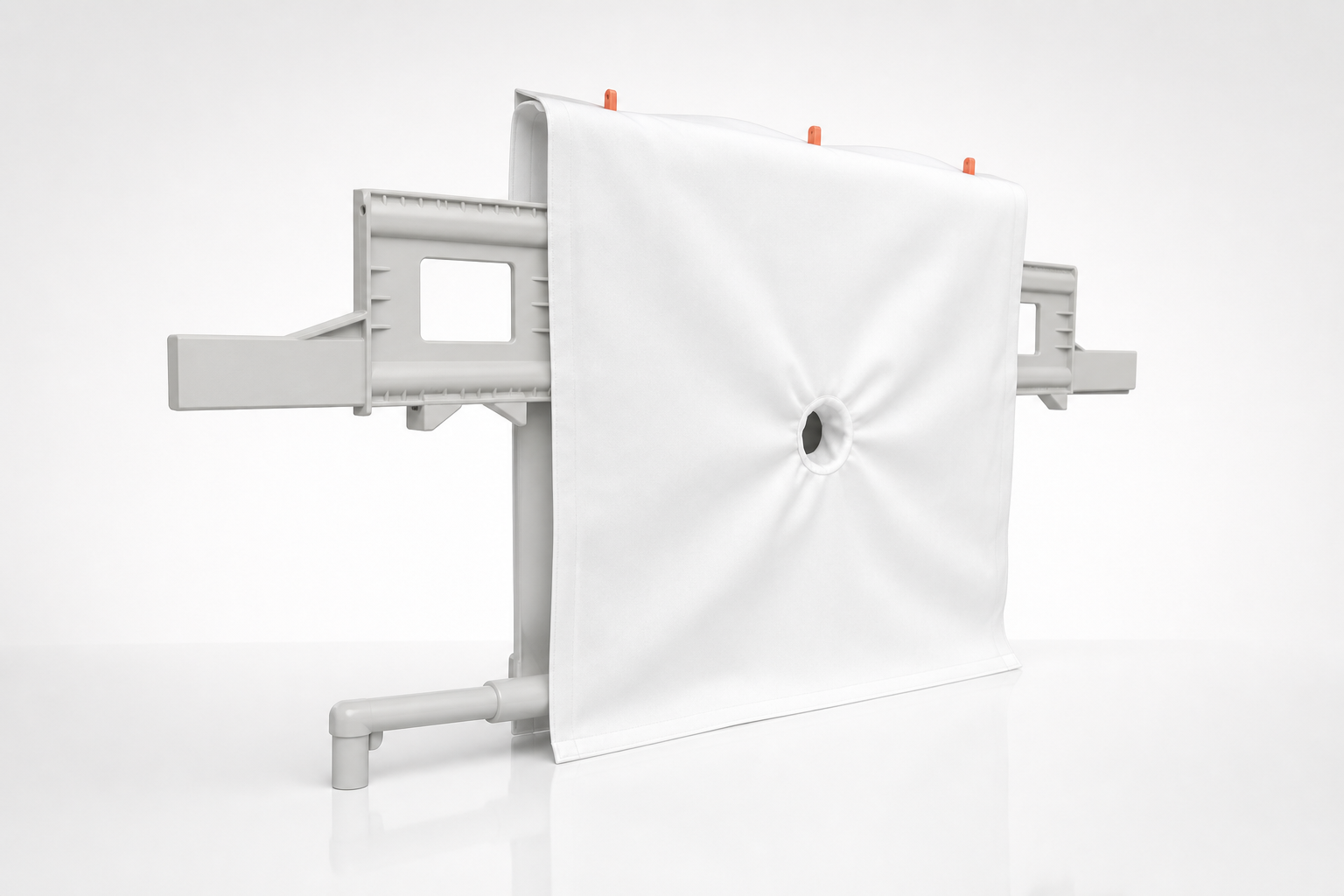
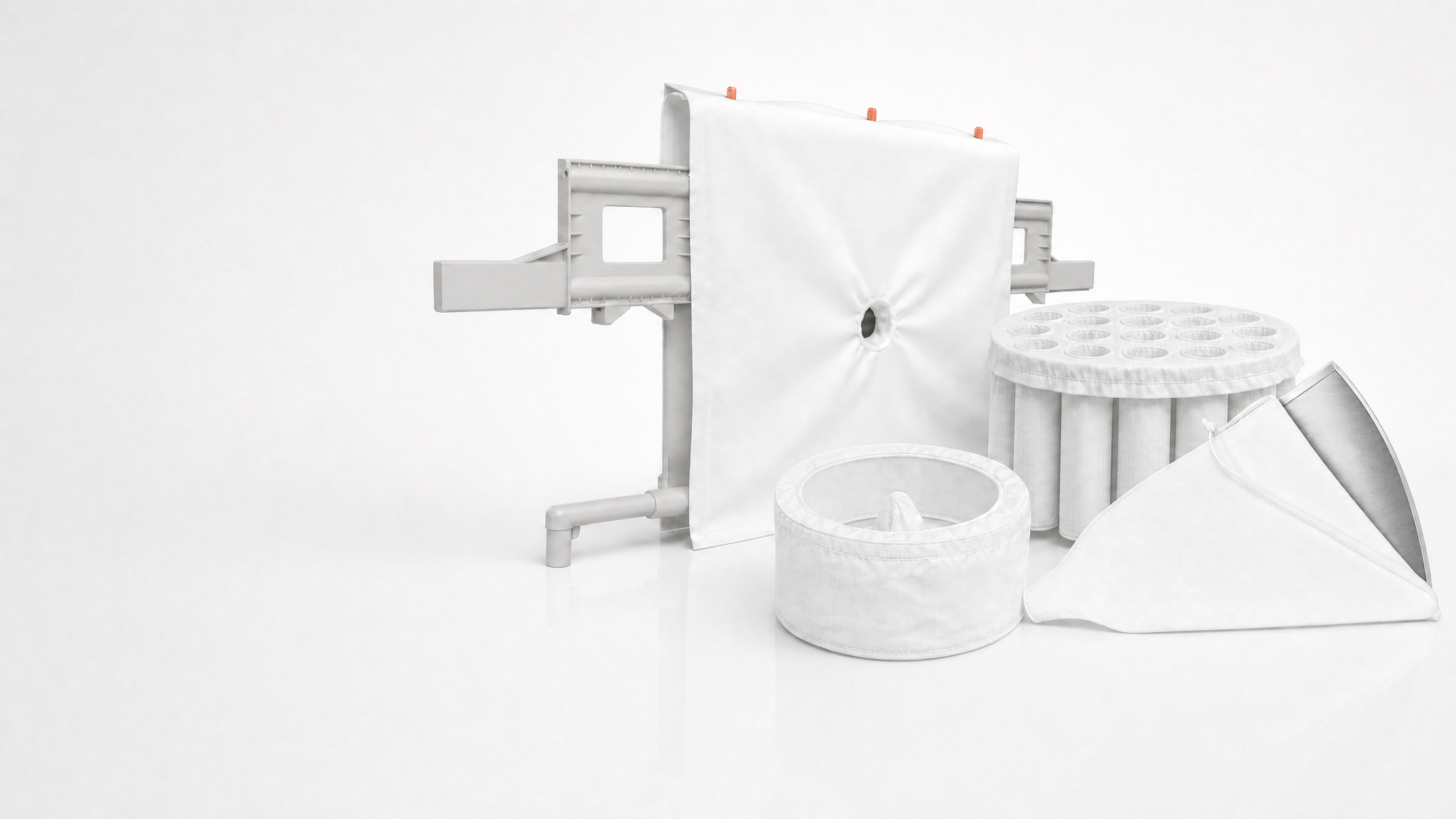
When you run a DIEMME filter press, the cloth is not just a wear part — it directly affects sealing, cycle stability, and how cleanly the cake releases at discharge. That is why many operators choose RF-FF compatible replacement cloths as a practical alternative when the original fabric is worn, blinded, or no longer performing as expected.
🔑 Key Takeaways
- RF-FF compatible cloths are designed to match the plate geometry, openings, and sealing zones used on DIEMME filter presses.
- Good replacement performance depends on fit, edge sealing, and the right media structure for your slurry.
- Installation errors — not the cloth alone — are a common cause of drip leakage, bypass, and short cloth life.
- For operators, the best replacement is the one that restores stable cycles, clean cake release, and predictable maintenance intervals.
⚙️ What Must Match on a DIEMME Filter Press
On the plant floor, “compatible” only matters if the cloth mounts correctly and seals reliably under pressure. For DIEMME filter presses, the replacement fabric must align with the plate dimensions, feed port position, cloth fastening method, corner cut-outs, and sealing surfaces. If any of those points are off, you will usually see premature drip leakage, uneven cake formation, or cloth movement during closing.
💡 Tip: Before ordering, record the plate model, chamber depth, port layout, and whether your press uses sewn-in eyelets, welded seams, or another fastening detail. That saves time and prevents avoidable rework.
In most plants, the goal is simple: install a cloth that behaves like the original in the press, but gives you better availability and easier sourcing. That is where the RF-FF Series fits in for operators looking for a compatible replacement path.
🔬 Fit and Sealing: Where Most Changeovers Succeed or Fail
The biggest difference between a cloth that “fits on paper” and one that runs well in service is the seal. A press cloth can be the correct size and still leak if the edge finish, tensioning, or port reinforcement is wrong. If you are already fighting drip leakage, the cloth edge and corner treatment should be part of the root-cause check, not an afterthought.
⚠️ Caution: Do not compensate for poor fit by overtightening plates or forcing the cloth into place. That can distort the sealing edge, increase wear, and create new leak paths.
Rule of thumb: If a cloth needs force to seat evenly across the plate, the issue is usually sizing, port alignment, or edge construction — not just installation technique.
For broader machine context, see our overview of filter press solutions. If your plant also runs mineral or chemical slurries, the same fit principles apply, but the required media structure may change with solids load and particle shape. That is why operators in mineral processing and chemical processing often specify the cloth after the process conditions are confirmed, not before.
📊 Performance: What You Should Expect in Daily Operation
Once installed, a good RF-FF compatible cloth should restore the things operators care about most: stable fill, predictable filtrate clarity, manageable cake moisture, and a clean release at discharge. If cake sticks or smears, review cake release issues before assuming the press cycle is the problem. If solids begin blinding the fabric too quickly, the guide on filter-cloth clogging can help narrow down whether the issue is cloth selection, particle structure, or cleaning practice.
| Operator Priority | What Good Compatibility Looks Like | What to Verify on Site |
|---|---|---|
| Sealing | Uniform edge contact with no visible bypass | Port alignment, corner fit, tension across the plate |
| Cake release | Cake drops cleanly without smearing or hanging | Surface finish, fabric structure, washing routine |
| Cycle stability | Consistent fill and discharge from press to press | Cloth tension, plate condition, closing pressure |
| Service life | Wear matches your planned maintenance interval | Solids abrasiveness, chemical exposure, cleaning method |
📋 Pre-Start Checklist
- Confirm the cloth matches the plate model and port pattern.
- Inspect seams, eyelets, and edge reinforcement before closing the press.
- Check that the cloth sits flat without twisting or puckering.
- Run the first cycle at normal pressure and inspect for seepage.
- Document any deviation in cake release or filtrate quality.
🛠️ How to Change Over to RF-FF Compatible Cloths
A clean changeover is usually straightforward if the press is isolated, the plates are clean, and the new cloths are handled carefully. The sequence below reflects how most operators reduce installation errors and avoid false leak diagnosis after startup.
Note the plate type, chamber depth, port layout, and any special sealing details before you remove the old cloths.
Take off residual cake, scale, and fines so the new cloth can seat evenly across the plate face and edges.
Mount the RF-FF compatible cloth without twisting, then check that corners, ports, and sealing edges are fully aligned.
Run the press under normal operating conditions and inspect the first cycle for leaks, bypass, or abnormal cake behavior.
💡 Tip: If you are changing cloth type at the same time as you change solids grade or feed chemistry, only alter one variable at a time. That makes troubleshooting much faster if the new setup behaves differently.
✅ Selecting the Right RF-FF Cloth for Your Process
Operators do best when the cloth is chosen for the actual slurry, not just the machine name. A DIEMME press in wastewater service has different needs than one in pigments, minerals, or fine chemicals. The right replacement should match solids load, particle size, pH, temperature, and cleaning method, while still meeting the dimensional requirements of the press.
- For coarse, fast-draining slurries: prioritize drainage and quick cycle recovery.
- For fines and challenging solids: prioritize sealing and cloth structure that resists blinding.
- For aggressive chemistry: confirm material resistance before the first install.
- For frequent washing: choose a fabric that tolerates your cleaning routine without rapid loss of performance.
Rule of thumb: The best replacement cloth is the one that gives you the same press behavior you trust today, with fewer stoppages and a more predictable maintenance interval.
If you are evaluating options beyond a single machine, our team can also support other solid-liquid separation equipment such as belt filters, centrifuges, Nutsche filters, and fluid bed dryers. But for DIEMME filter presses, the starting point is always the same: correct fit, reliable sealing, and a fabric that matches the process.
📩 Need Help Choosing the Right Fabric?
Our technical team at R+F FilterElements can help you find the perfect filter fabric for your specific application. Get in touch for a free consultation — we will recommend the right solution based on your machine, process, and operating conditions.