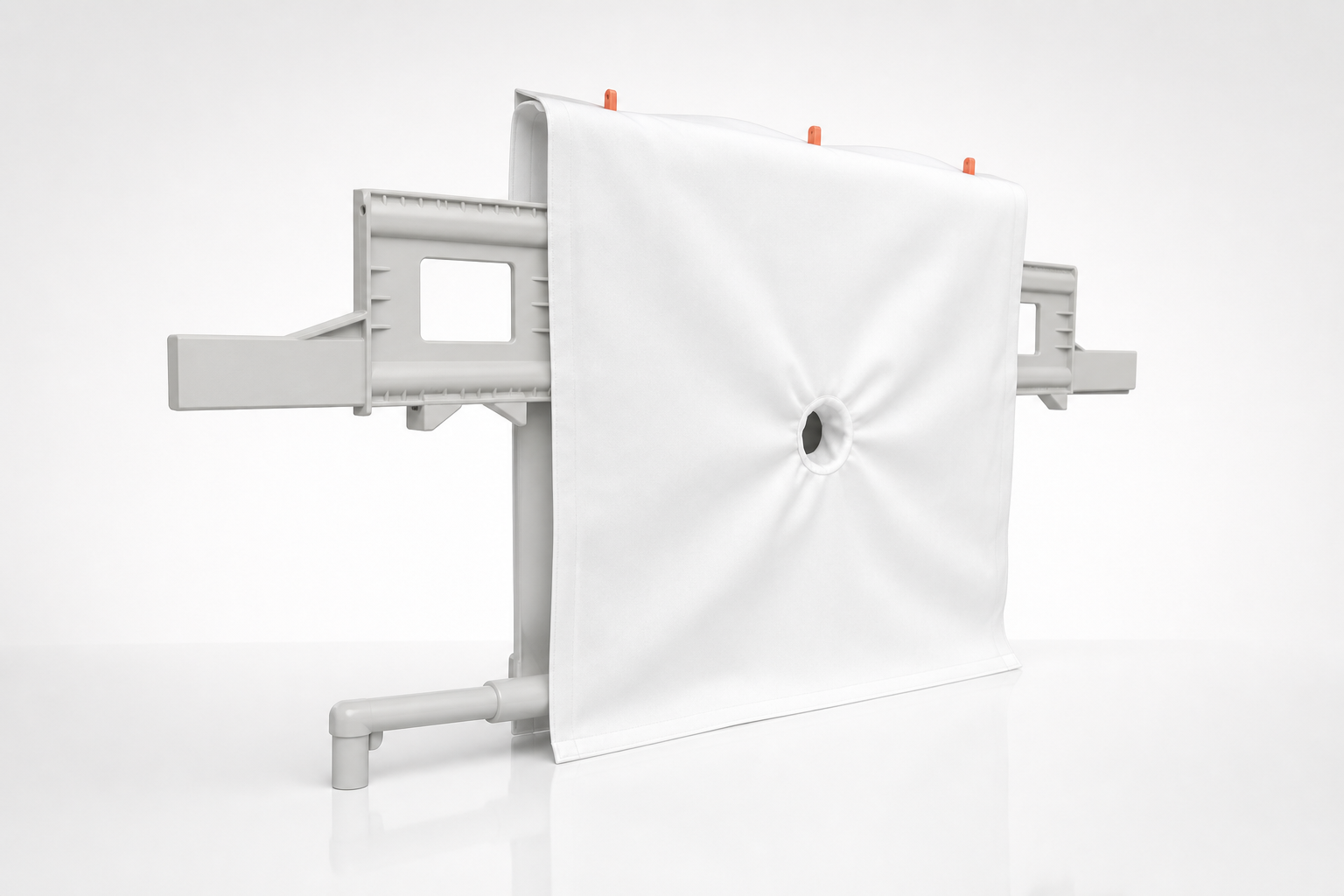
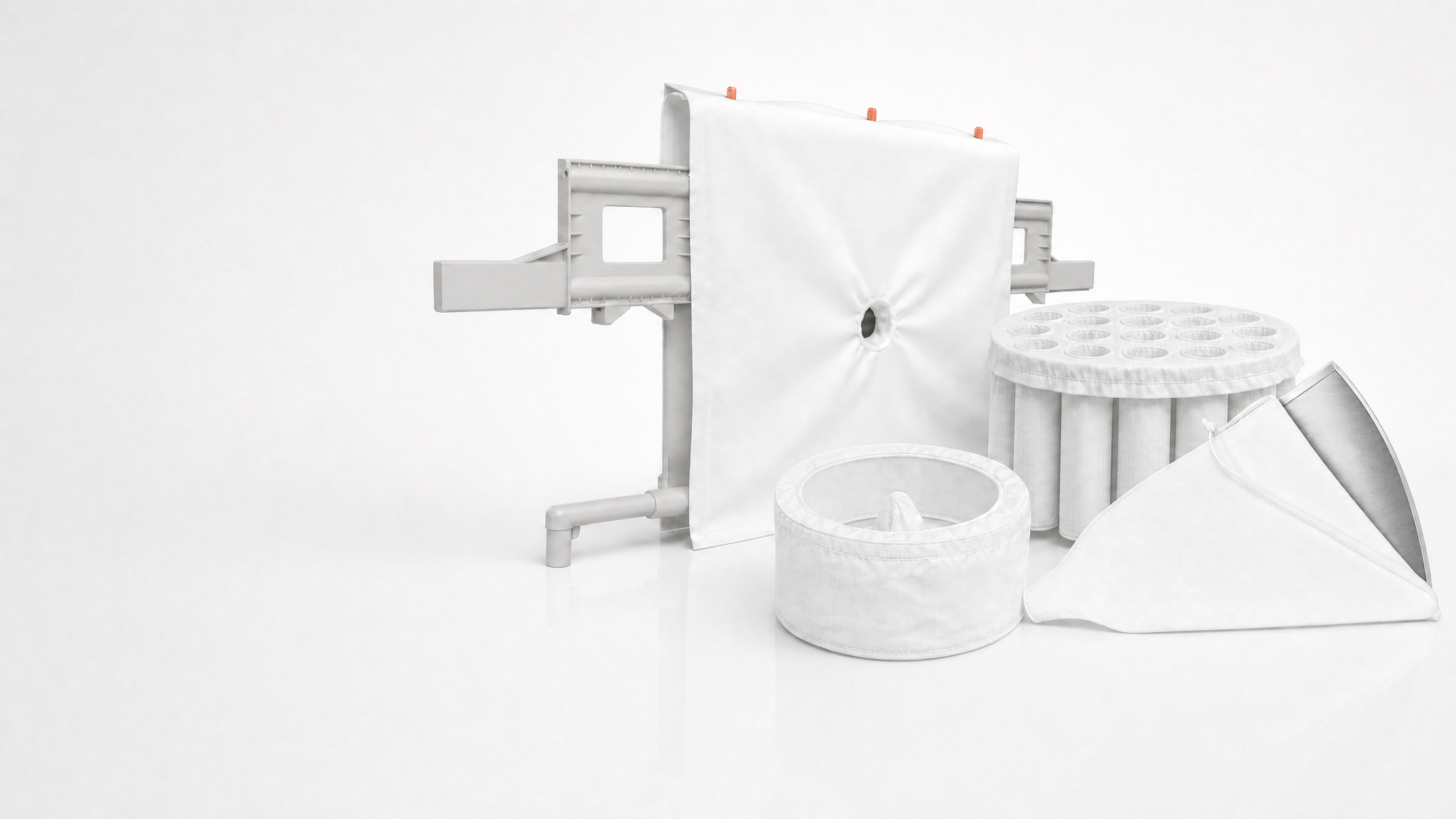
At 15–16 bar, a filter cloth is no longer just a filtration medium — it becomes a loaded mechanical component. If you run a high-pressure filter press, cloth life depends on how well the fabric, seams, and cleaning routine withstand repeated compression, flexing, and cake release.
The good news: with the right construction and operating habits, you can extend service life, stabilize cycle times, and reduce unplanned cloth changes. In many plants, the biggest gains come from small changes in reinforcement, seam quality, and cleaning frequency.
🔑 Key Takeaways
- High-pressure filter presses demand reinforced fabrics that resist stretch and seam fatigue.
- Seam quality matters as much as the base material because it carries repeated load under 15–16 bar.
- Cleaning too rarely causes blinding; cleaning too aggressively can damage yarns and stitching.
- Tracking wear signs early helps you avoid leaks, poor cake release, and premature downtime.
⚙️ Why High Pressure Accelerates Cloth Wear
In a high-pressure filter press, the cloth sees more than just slurry contact. It is compressed against the plate, pulled during cake discharge, and repeatedly exposed to pressure spikes as the feed pump ramps up and the cake builds. That cycle creates mechanical fatigue, especially near the edges, seams, and feed zones.
Operators usually notice wear first as slower filtrate flow, more drip leakage, or cake that starts sticking instead of dropping cleanly. If that sounds familiar, it is worth reviewing our guide to short filter lifespan and checking whether the issue is fabric design or operating practice.
💡 Tip: If your press is often run close to maximum pressure, treat the cloth like a wear part with a scheduled inspection interval — not just a consumable you replace when it fails.
🔬 Choosing Fabrics That Survive 15–16 Bar
For demanding presses, the base fabric must resist elongation and retain pore stability under compression. In practice, that means selecting a fabric structure that balances filtration efficiency with mechanical strength. The best cloth for a high-pressure application is not always the finest cloth — it is the one that keeps its geometry stable through the full cycle.
What to look for in the fabric
- Reinforced yarns in stress zones to limit stretch and distortion.
- Stable weave construction that maintains pore size under pressure.
- Heat and chemical resistance matched to your slurry and wash media.
- Controlled air permeability to support cake release without sacrificing capture efficiency.
If you want a cloth built for press duty, start with our RF-FF Series. It is a practical choice for operators who need stable filtration performance on chamber and membrane presses, including abrasive duties common in mineral processing and filter press installations.
| Fabric Feature | Standard Construction | Reinforced Construction | Operator Benefit |
|---|---|---|---|
| Yarn stability | Good for moderate duty | Higher resistance to stretch | More consistent filtration under pressure |
| Seam durability | Acceptable in lighter cycles | Improved load handling | Fewer seam failures and leaks |
| Cake release | Can degrade as cloth ages | More stable over time | Cleaner discharge and shorter downtime |
| Service life | Shorter in high-pressure duty | Better suited for repeated compression | Lower replacement frequency |
🛠️ Seam Quality and Reinforcement Details
Many cloths fail at the seam before the base fabric is fully worn out. That is why seam design matters so much in high-pressure service. A well-made seam should handle repeated loading without opening, creeping, or creating a weak point that turns into drip leakage.
Why the seam is the first weak point
Every closing cycle pulls and compresses the cloth slightly. Over time, even small inconsistencies in stitching, welding, or edge finishing become visible as fraying, distortion, or small leaks around the perimeter. If your press uses aggressive discharge or frequent wash cycles, seam quality becomes even more important.
⚠️ Caution: Do not compensate for poor seam quality by simply increasing wash pressure. Excessive cleaning pressure can damage yarns, open stitching, and shorten cloth life faster than the process wear itself.
Rule of thumb: If you can see edge fraying, seam puckering, or uneven tension after shutdown, the cloth is already telling you it is time to inspect the installation and loading pattern.
📊 Cleaning Frequency: Keep the Cloth Open, Not Overwashed
Cleaning is essential, but more is not always better. On high-pressure presses, too little cleaning leads to blinding and longer cycle times; too much cleaning can weaken fibers, distort the weave, and reduce seam life. The right interval depends on slurry fines, cycle time, and how fast cake release declines.
Use filtrate flow trends and cake release behavior as your trigger, not only the calendar.
Apply only the pressure and chemistry needed to clear pores and remove residual solids.
Log cycle time, discharge quality, and cloth condition after each cleaning so you can spot trends.
📋 Shutdown Inspection Checklist
- Check for frayed edges, seam opening, or stitching damage
- Look for blinded zones around feed points and corners
- Inspect for uneven cake release or sticking areas
- Verify that wash nozzles are not concentrating flow in one spot
- Confirm the cloth is seated correctly and not under abnormal tension
If cleaning problems keep returning, review the issue with our filter cloth clogging and cake release resources. Often the fix is not just more washing — it is better timing, better fabric selection, or both.
💡 When to Replace Before Failure
In high-pressure operation, waiting for a cloth to burst or leak is expensive. Replace before the fabric starts affecting uptime. The most reliable warning signs are not dramatic — they are subtle changes in discharge, filtration time, and appearance.
💡 Tip: Keep one used cloth from a good run as a visual reference. Comparing today’s cloth against a known-good example makes wear easier to spot during a fast turnaround.
Use this simple rule: if the press needs noticeably longer to reach the same dryness, or if cake release becomes inconsistent after cleaning, the cloth has likely crossed from “serviceable” into “costing you money.”
Common symptoms of end-of-life cloths
- Repeated drip leakage along the seam or edge
- Longer fill times at the same feed pressure
- Persistent blinding after normal cleaning
- Poor or uneven cake discharge
- Visible thinning, fraying, or distortion in loaded zones
📋 Replacement Decision Checklist
- Has the cloth lost its original shape or tension?
- Are seams or edges showing mechanical damage?
- Has cleaning frequency increased without improving flow?
- Is the process now producing wetter cakes or longer cycles?
📩 Need Help Choosing the Right Fabric?
Our technical team at R+F FilterElements can help you find the perfect filter fabric for your specific application. Get in touch for a free consultation — we will recommend the right solution based on your machine, process, and operating conditions.