
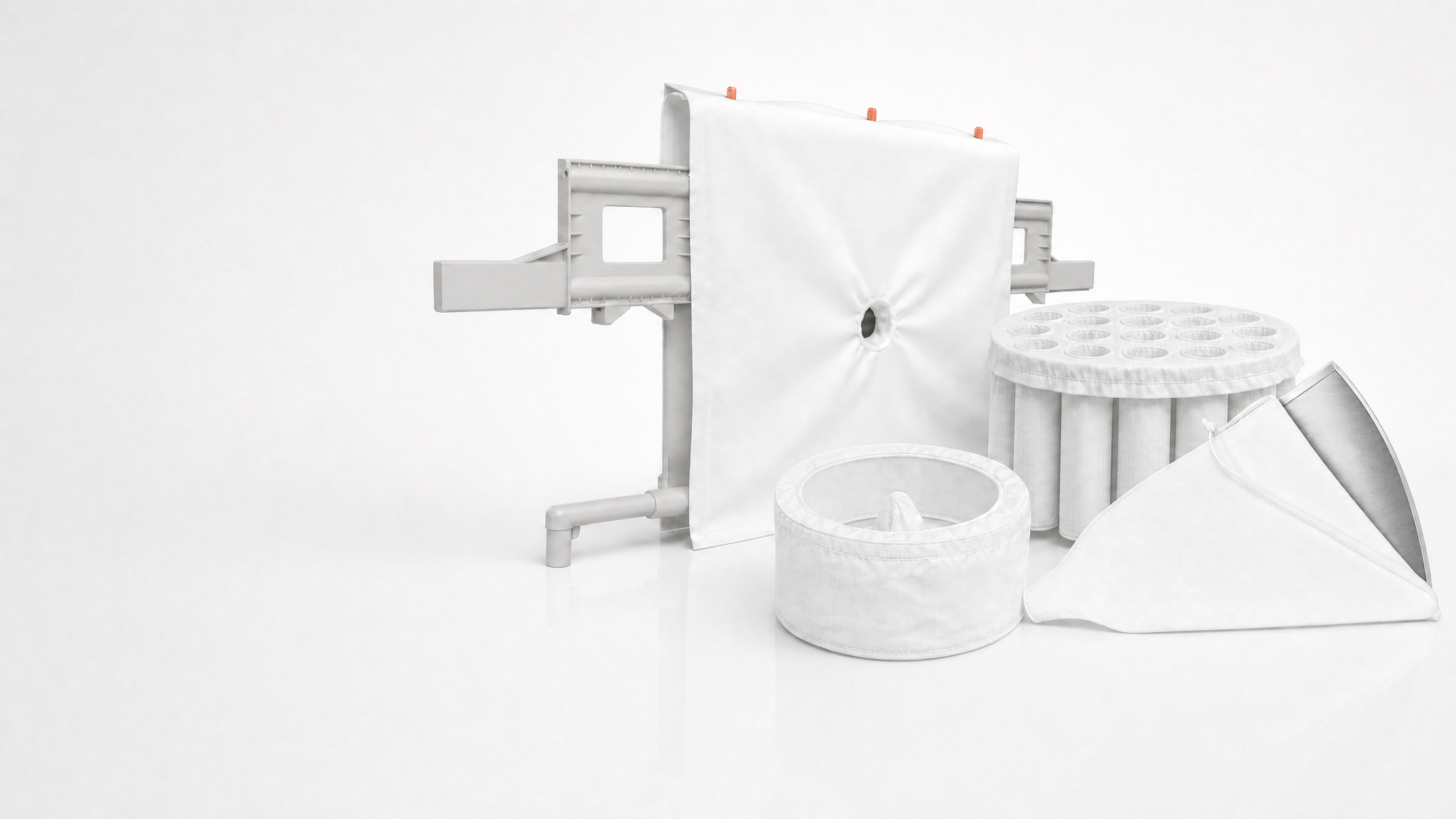
When a filter cloth looks fine at startup but starts swelling, hardening, or losing strength after a few shifts, chemical compatibility is often the hidden cause. As an operator, you need a practical way to match the fabric to the process medium — not just by the liquid name, but by concentration, temperature, and cleaning routine.
This guide gives you a field-ready overview of chemical resistance for PP, PET, PA, and PEEK filter fabrics, with a simple reference table and selection tips for real plant conditions. If you are working on a filter press, centrifuge, or chemical processing line, this is the kind of quick check that can prevent premature failure and unplanned downtime.
🔑 Key Takeaways
- PP is the common workhorse for many acids and bases, but weak against strong oxidizers and some solvents.
- PET offers good mechanical stability, but limited resistance to strong alkalis and certain aggressive chemicals.
- PA can perform well in some mechanical duties, but moisture, acids, and some process chemicals can shorten service life.
- PEEK is the premium option for harsh chemical and temperature conditions, especially where standard fabrics fail.
⚙️ Why Chemical Resistance Matters in Daily Operation
In solid-liquid separation, the fabric is exposed to more than just the product slurry. It also sees CIP chemicals, wash water, temperature swings, and drying cycles. A fabric that is technically “compatible” on paper can still fail early if the chemistry is too concentrated, the temperature is high, or the cloth stays wet for long periods.
💡 Tip: Always evaluate chemical resistance + temperature + exposure time together. A fabric that survives short contact may not last in continuous immersion or repeated wash cycles.
For operators in chemical industry applications and pharmaceutical production, the wrong fabric choice can lead to contamination, fiber embrittlement, poor cake release, or frequent cloth changeouts. If your process also involves fine particles and sticky solids, review the related guidance on filter cloth clogging and cake release problems.
🧪 Reference Table: PP, PET, PA, and PEEK vs. Common Chemicals
| Chemical group | PP | PET | PA | PEEK |
|---|---|---|---|---|
| Mineral acids | Good to very good | Moderate to good | Poor to moderate | Excellent |
| Alkalis / caustics | Good | Poor to moderate | Moderate | Excellent |
| Organic solvents | Moderate, depends on solvent | Moderate | Poor to moderate | Very good to excellent |
| Oxidizing agents | Poor to moderate | Poor | Poor | Very good |
| Hot cleaning solutions | Moderate | Moderate | Poor to moderate | Excellent |
How to read the table
The ratings above are practical operator guidance, not a substitute for a full chemical compatibility test. Final performance depends on concentration, pH, temperature, exposure duration, and whether the cloth is under tension or abrasion. If you are unsure, it is safer to validate the fabric in the actual process before committing to a full changeover.
⚠️ Caution: Do not assume that “resistant” means “unlimited exposure.” Elevated temperature and oxidizing chemicals can reduce service life dramatically, even when the base polymer seems acceptable.
📊 Choosing the Right Material for Your Machine
Different machine types place different stresses on the fabric. A RF-FF Series filter press fabric may see sharp pressure pulses, while a RF-CF Series centrifuge fabric must handle high mechanical load and fast drainage. The same chemical can behave very differently depending on the machine and cycle.
| Material | Strengths in operation | Watch-outs | Typical best fit |
|---|---|---|---|
| PP | Broad acid/base resistance, cost-effective, widely used | Weaker against oxidizers and some solvents | Wastewater, mining, general chemical separation |
| PET | Good dimensional stability and mechanical strength | Limited alkali resistance, not ideal for harsh CIP | Dryer and filtration duties with moderate chemistry |
| PA | Tough, flexible, good in some mechanical applications | Can absorb moisture; weaker in acids | Applications where flexibility matters more than chemical aggressiveness |
| PEEK | Excellent chemical and thermal resistance | Higher cost | Pharma, specialty chemicals, severe process conditions |
Rule of thumb: If the process includes hot caustic cleaning, elevated temperature, and frequent cycle changes, move one material grade higher than your “minimum acceptable” choice.
🛠️ Practical Selection Workflow on the Plant Floor
Operators usually do not need a textbook — they need a repeatable way to decide quickly. Start with the process fluid, then check the cleaning regime, then match the fabric to the machine. For more structured support, you can find and configure the right filter fabric with our Solution Finder and receive a pre-filled, non-binding specification and inquiry.
List product slurry, wash chemicals, and any solvent or CIP exposure.
Hot, continuous, or repeated exposure is more demanding than brief rinsing.
Presses, belts, centrifuges, and dryers place different demands on drainage and mechanical stability.
Review short life, contamination, drip leakage, and release issues before full-scale use.
✅ Operator Checklist Before You Sign Off a Fabric
📋 Chemical Resistance Check
- Confirm product chemistry, cleaning agents, and maximum operating temperature
- Check whether the fabric sees immersion, splash, or short contact only
- Review pH, oxidizing agents, and solvent content
- Match the fabric to the machine type and cycle time
- Ask for compatibility guidance if the process has changed recently
If you are running a belt filter in wastewater or a wastewater application, chemical resistance is only part of the equation; drainage and release behavior matter just as much. The same applies to drying equipment such as a fluid bed dryer, where heat and cleaning chemistry can shorten the life of the wrong fabric.
💡 Tip: When in doubt, test a spare cloth under real plant conditions for one full cycle window before changing the entire machine over.
📩 Need Help Choosing the Right Fabric?
Our technical team at R+F FilterElements can help you find the perfect filter fabric for your specific application. Get in touch for a free consultation — we will recommend the right solution based on your machine, process, and operating conditions.
For a faster starting point, use our Solution Finder to configure the right filter fabric online and receive a pre-filled, non-binding inquiry for your machine.