
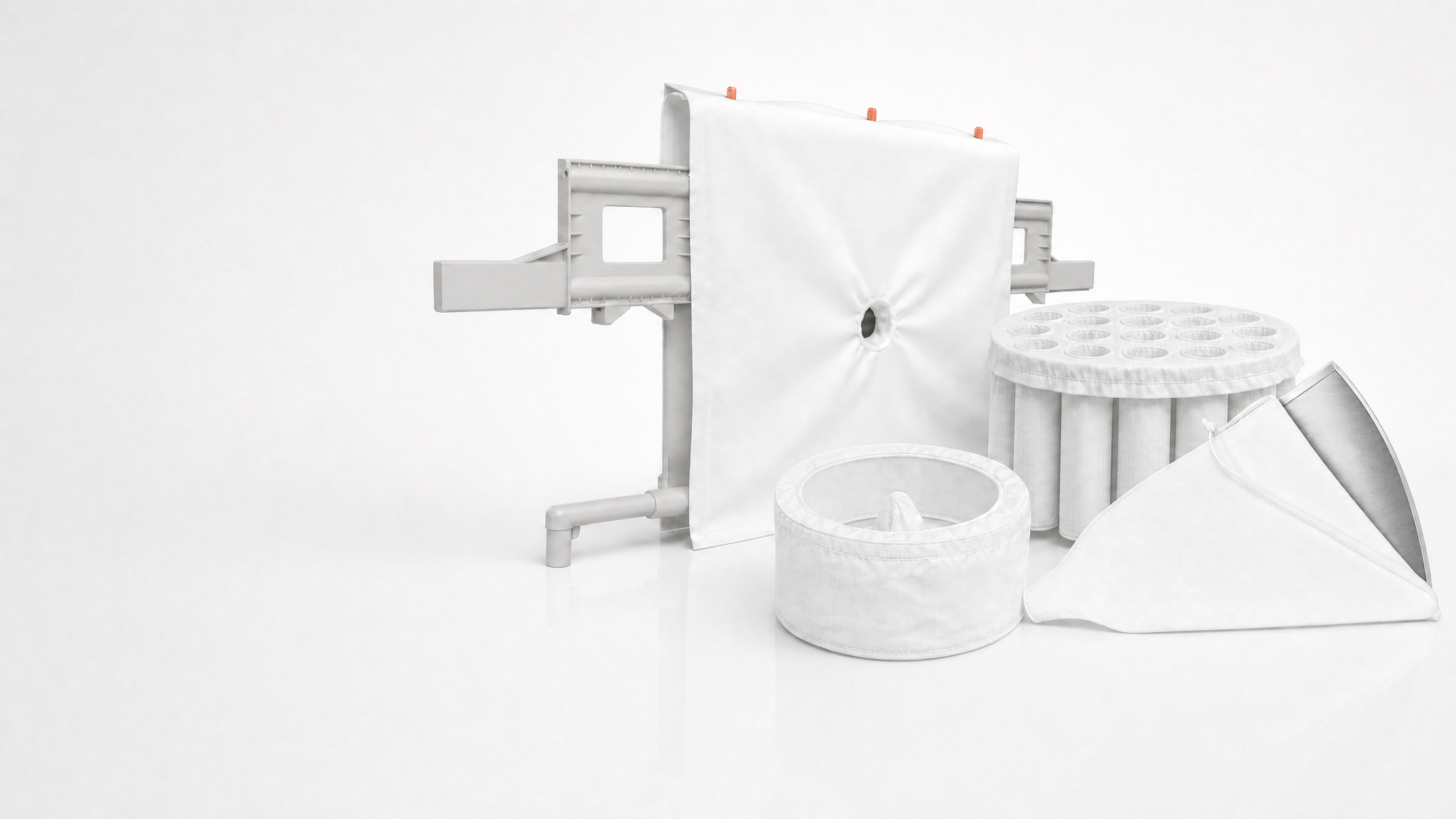
PTFE membrane lamination is one of the most effective ways to turn a standard filter fabric into a high-performance surface filtration media. For operators, that usually means faster cake release, less blinding, and more stable results when the process fluid is sticky, fine, or chemically aggressive.
In the right application, the upgrade can pay back through longer service life, cleaner filtrate, and fewer shutdowns. In this article, we look at where PTFE membranes make sense, which machines benefit most, and when a high-end laminated fabric is worth the investment.
🔑 Key Takeaways
- PTFE membrane lamination creates a finer surface for true surface filtration instead of deep particle penetration.
- Operators often see better cake release, lower cloth blinding, and more consistent dewatering performance.
- PTFE-laminated fabrics are especially valuable for sticky, very fine, abrasive, or chemically demanding slurries.
- The investment is usually justified when downtime, contamination risk, or cake discharge issues are costing more than the fabric itself.
⚙️ What PTFE Membrane Lamination Does on the Plant Floor
A PTFE membrane is a very thin, non-stick layer bonded to a support fabric such as woven synthetics or needle felt. In practice, this changes how solids build up: instead of penetrating into the fabric structure, they stay at the surface and form a more uniform cake.
For operators running a filter press, belt filter, or centrifuge, that surface effect can make a major difference in daily operation. It reduces the tendency for fine particles to clog the cloth and helps the cake discharge more cleanly.
💡 Tip: If your main issue is fine particle penetration into the fabric, PTFE membrane lamination is often more effective than simply changing the base weave.
🔬 Main Benefits: Surface Filtration, Cake Release, and Resistance
1) Improved surface filtration
Without a membrane, particles can enter the fabric structure and reduce permeability over time. A PTFE membrane creates a controlled top layer that supports uniform cake formation. This is especially useful in demanding chemical industry and wastewater processes where fine solids are hard to capture consistently.
2) Better cake release
PTFE has a naturally low surface energy, which is why cakes tend to release more readily after filtration. That matters when you are fighting cake release problems or trying to reduce manual cleaning between cycles. Less adhesion usually means less operator intervention and shorter turnaround time.
3) Higher chemical resistance
PTFE is highly resistant to many acids, bases, and solvents, making it a strong choice in aggressive process environments. If your slurry chemistry is forcing frequent cloth changes, a membrane-laminated fabric can help extend uptime and reduce unexpected failures linked to short filter lifespan.
📊 Where PTFE Membrane Fabrics Make the Biggest Difference
| Application / Machine | Main Challenge | Why PTFE Membrane Helps |
|---|---|---|
| Filter press | Fine solids, blind cloths, difficult cake discharge | Improves surface filtration and promotes clean cake release |
| Belt filter / belt press | Continuous operation, wet sticky cakes | Reduces adhesion and helps maintain drainage performance |
| Centrifuge | High-speed separation, abrasive or fine particles | Supports cleaner discharge and stable filtration behavior |
| Needle felt and Nutsche systems | Process control, contamination risk, chemical exposure | Improves separation consistency and resistance in harsh media |
For operators in mining, pharmaceutical, and cement & bulk solids, the membrane can be a practical answer when standard fabrics no longer keep up. It is also relevant for Nutsche filters and fluid bed dryer applications where clean handling and contamination control matter.
⚠️ Caution: PTFE membrane lamination is not a universal upgrade. If your process needs maximum open area for very fast flow and the solids are coarse and easy to release, a membrane may reduce throughput without adding enough value.
🛠️ When Is the Investment Worth It?
The best time to specify a PTFE-laminated fabric is when the process cost of poor separation is higher than the fabric premium. In most plants, that decision comes down to a few practical factors: downtime, cleaning effort, filtration consistency, and product quality.
Rule of thumb: If cloth cleaning, stoppages, or cake release problems cost you more than one fabric upgrade cycle, PTFE membrane lamination usually deserves serious consideration.
📋 Selection Checklist Before You Upgrade
📋 Operator Checklist
- Identify whether the main problem is blinding, cake release, or chemical attack
- Confirm the machine type and filtration cycle time
- Check slurry particle size and solids loading
- Review process temperature and chemical compatibility
- Evaluate whether a membrane will improve cake discharge enough to justify the cost
If you are still deciding between fabric types, compare the requirements for your machine and process on our product pages such as RF-FF Series filter press fabrics and RF-BF Series belt filter fabrics. For more demanding dewatering or separation duties, the RF-CF Series centrifuge fabrics and RF-NF Series needle felt fabrics are also worth reviewing.
For a faster starting point, you can also find and configure the right filter fabric with our Solution Finder. Select your filtration machine, enter your process details, and receive a pre-filled, non-binding specification and inquiry.
✅ Practical Takeaway for Operators
PTFE membrane lamination is most valuable when your process is sensitive to fine particles, cake adhesion, chemical exposure, or inconsistent cake formation. It is not the cheapest choice, but in the right application it can reduce downtime, improve discharge, and keep your filter press, centrifuge, or belt filter running more predictably.
Need help deciding whether a PTFE membrane is the right fit for your machine and slurry? Use the Solution Finder first, then compare the results with your real operating problems such as filter cloth clogging or drip leakage before you order the next set of fabrics.
📩 Need Help Choosing the Right Fabric?
Our technical team at R+F FilterElements can help you find the perfect filter fabric for your specific application. Get in touch for a free consultation — we will recommend the right solution based on your machine, process, and operating conditions.