
When static charge builds up in a filter fabric, it can become more than a nuisance: in the wrong process, it can create ignition risk, product contamination, or unstable filtration performance. That is why antistatic filter fabrics are used in plants handling dusts, powders, and flammable atmospheres where charge must be controlled reliably.
🔑 Key Takeaways
- Conductive fibres or grids help dissipate electrostatic charge before it can accumulate.
- ATEX-relevant processes often require antistatic filtration components and a documented risk assessment.
- Antistatic fabrics are common in centrifuges, filter presses, belt filters, Nutsche filters, and fluid bed dryers.
- Choosing the right fabric depends on machine type, product properties, cleaning method, and explosion protection concept.
⚙️ How Antistatic Filter Fabrics Work
In normal filtration, friction between solids, liquids, and the fabric surface can generate electrostatic charge. With insulating textiles, that charge may remain on the cloth, especially in dry or low-humidity conditions. Antistatic filter fabrics reduce this risk by creating a controlled path for charge dissipation.
Conductive fibres, grids, and yarns
Depending on the design, the fabric may contain conductive fibres, woven-in conductive yarns, or a conductive grid structure. These elements do not “remove” static by themselves; instead, they guide the charge away so it can be safely equalised through grounding and the machine concept.
💡 Tip: An antistatic fabric only works as part of a complete concept: conductive fabric, proper installation, and reliable grounding of machine and ancillary components.
📋 When Do You Need ATEX-Compliant Antistatic Fabrics?
If you operate in an area where explosive atmospheres may occur, static control is not optional. In practice, that affects many plants in chemical processing, pharmaceutical production, bulk solids handling, and certain mining or recycling applications.
For operators, the key question is simple: Can the filtered product or the process atmosphere form an explosive dust cloud or vapour mixture? If yes, then the fabric specification must be checked against the ATEX concept and the machine’s safety design. If you are already dealing with static-related incidents, our problem page on antistatic and ATEX requirements is a good starting point.
⚠️ Caution: Do not assume that “slightly conductive” is enough. The entire filtration setup, including fabric, frame, installation, and grounding, must match the hazard assessment and site rules.
Rule of thumb: If dust is dry, fine, combustible, and moved at high speed, treat static control as a design requirement — not a later upgrade.
🏭 Where Antistatic Fabrics Are Used in Practice
Antistatic properties are especially important where the solids are dry, abrasive, or easily chargeable. Typical machine and product combinations include:
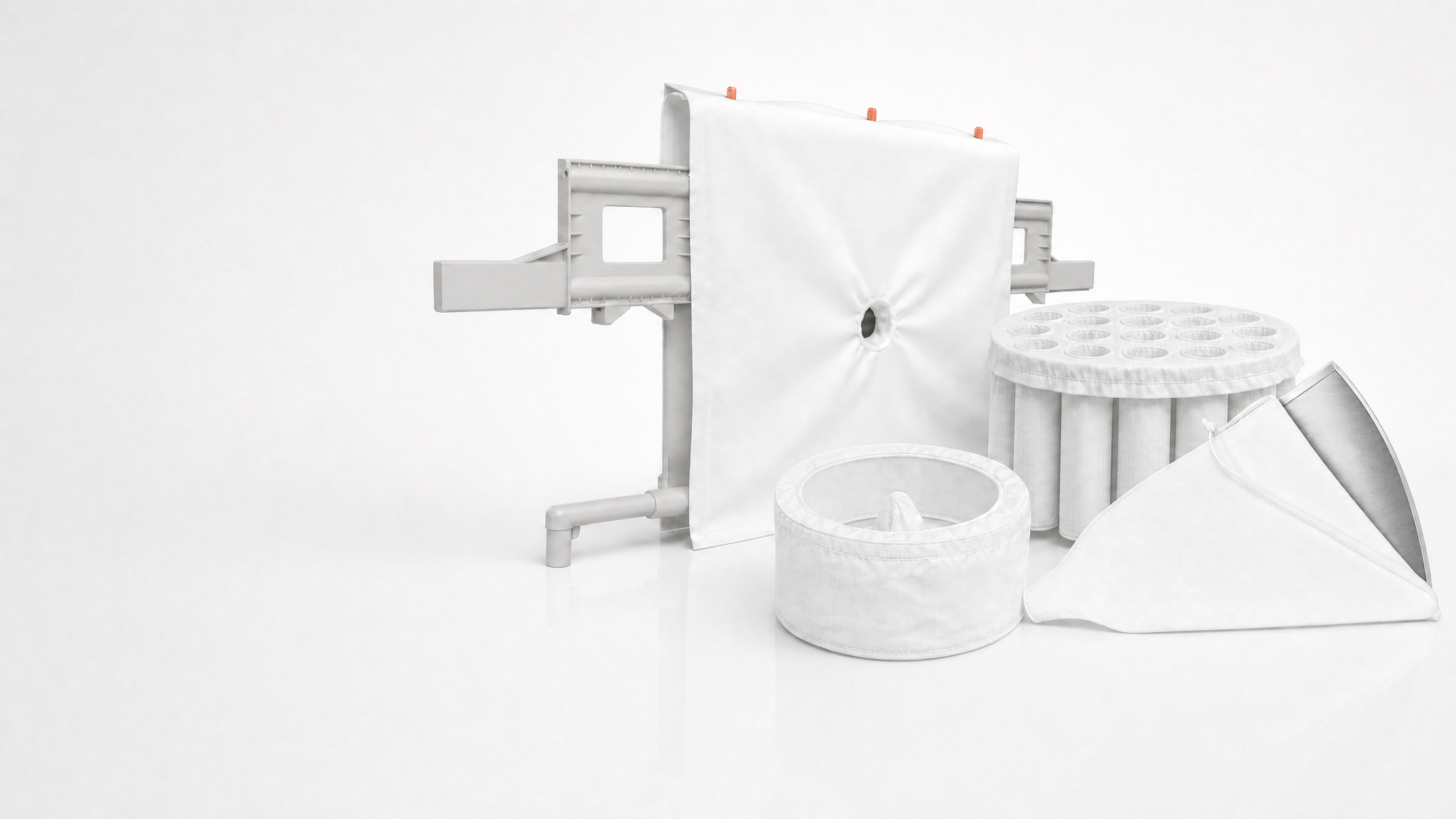
For example, a high-speed centrifuge can generate strong frictional charging, while a filter press may need antistatic cloths to protect against ignition risks during cake discharge and cloth handling. In a fluid bed dryer, dust movement and air flow can make static dissipation equally important.
| Machine / process | Why static matters | Typical antistatic solution |
|---|---|---|
| Filter press | Cake release, dry solids, cloth handling | Conductive yarns or fibres in woven fabric |
| Centrifuge | High rotational speed, friction, dry solids | Antistatic weave with reliable grounding |
| Belt filter | Continuous solids movement and dry zones | Conductive fabric zones or grid structures |
| Fluid bed dryer | Airborne particles and electrostatic charging | Static-dissipative media and system grounding |
🛠️ How to Select the Right Fabric for Your Machine
The right antistatic filter fabric depends on more than the ATEX label. Operators should also consider cake release, chemical resistance, cleaning frequency, temperature, and wear. A robust fabric may solve both static and lifespan issues, while a poor match can create short filter lifespan or poor cake release.
For press and pressure-driven systems, the RF-FF Series filter press fabrics are often a good starting point. For continuous systems, the RF-BF Series belt filter fabrics can be matched to the solids load and static risk. If you are unsure which machine type or fabric structure fits your installation, you can find and configure the right filter fabric with our Solution Finder and send a pre-filled, non-binding inquiry.
Check whether the product is combustible, dry, dusty, or processed in an ATEX zone.
Match weave or felt construction to the filter press, centrifuge, belt filter, or dryer.
Ensure the whole filtration setup can dissipate charge effectively.
✅ Operator Checklist Before You Specify Antistatic Media
📋 Pre-selection checklist
- Is the process atmosphere ATEX-relevant?
- Is the product dry, fine, combustible, or easily chargeable?
- Does the machine run at high speed or with strong friction?
- Is grounding documented and maintained?
- Do you need a woven fabric, felt, or special machine-specific design?
- Is the cloth also exposed to abrasion, chemicals, or frequent cleaning?
If you operate a specialty system like a Nutsche filter or pressure leaf filter, static control must be evaluated together with product purity, sealing, and discharge behavior. For some installations, a dedicated product design such as RF-ANF Series Nutsche Pharma fabrics may be the right choice.
💡 Tip: Keep records of fabric type, grounding checks, and replacement intervals. This makes audits and troubleshooting much easier when ATEX compliance is reviewed.
📩 Need Help Choosing the Right Fabric?
Our technical team at R+F FilterElements can help you find the perfect filter fabric for your specific application. Get in touch for a free consultation — we will recommend the right solution based on your machine, process, and operating conditions.
Or use our online tool to find and configure the right filter fabric with our Solution Finder and receive a pre-filled, non-binding specification and inquiry in just a few steps.